Pakistan is far too often a very dangerous place for women. This is particularly the case when it comes to public spaces and the fact that the very concept of women’s rights is still controversial in this country. When these two elements are combined, the risk to any woman can be quite high indeed. Unfortunately, the country got a reminder of this earlier this week, when eight Aurat March activists were allegedly mistreated and arrested by the police after they gathered outside the Karachi Press Club for a press conference. Some reports say that the conference was being held in connection with obtaining an NOC for an upcoming march in Karachi. While the women were eventually released after the intervention of high-ranking officials in the provincial government, three police officers have now been suspended, and the whole incident is under investigation, one must ask why things even got to this stage.
This was not even a protest or a march. It was a group of women trying to hold a press conference outside a press club. The latter is perhaps the most appropriate place for the former. What was the threat over here? It is hard to characterise this as anything other than the unwarranted suppression of the right to free assembly. While the prompt response of the authorities is encouraging, in a nation where women have faced oppression and obstacles for so long, such show of force will still have a chilling effect. In one of the several tweets/posts the Aurat March posted in response to the incident, they rightly noted that they have successfully conducted large, non-violent protests and that this is why many faithfully attend their events, expecting their safety and security will not be compromised. This isn’t some banned organisation or a group with a history of getting violent when they gather in large numbers. And if the public space can be dangerous and unfair, it is not like the home is a safe haven. Domestic violence is widespread, but victim blaming and fear have helped ensure that it remains unreported. Then there is the fact that sometimes it is those closest to women, the ones meant to offer them ‘protection’, that end up taking their lives.
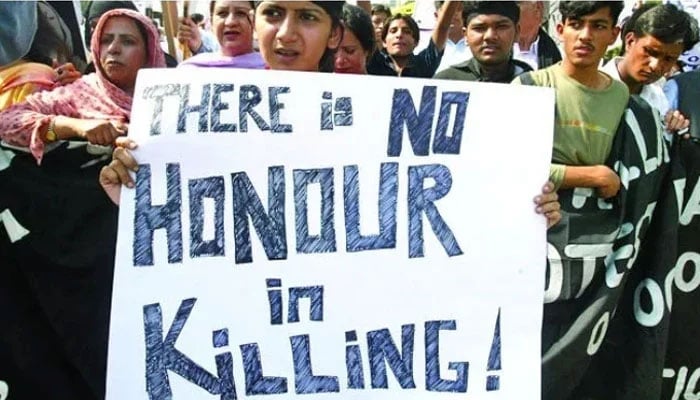
The Sindh Assembly on Monday reportedly raised urgent concern over honour killings, with the law and parliamentary affairs minister calling for both federal and provincial legislation to eradicate the practice. This discussion comes on the heels of a reported brutal honour killing of a woman in the Tando Masti area of Sindh. Honour killing remains a national problem, with the annual report of the Human Rights Commission of Pakistan saying that 470 women were killed in honour-related violence across the country in 2025 alone. In many such cases, it is the families of the women themselves responsible for ending their lives. The reasons usually involve women seeking to live their lives independently by pursuing their own jobs or choosing their own spouses. There are already many laws on the books. But until this becomes a country where people genuinely respect women and see them as equals, it is unlikely that the laws made to protect women will ever be properly implemented.