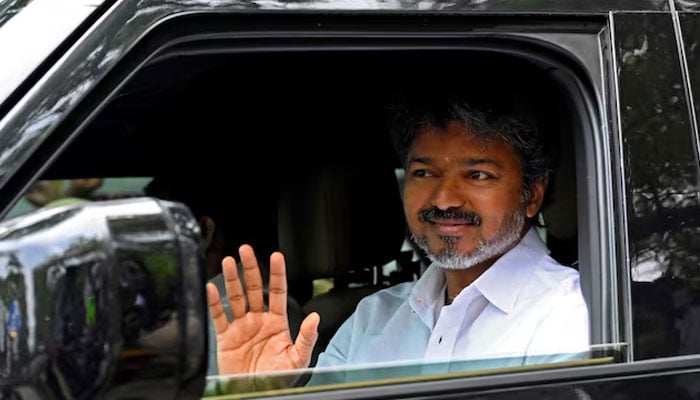
The results of India’s 2026 Assembly elections have once again revealed an increasingly troubling political landscape across the country. While the outcomes in Assam and Kerala largely met expectations, those in West Bengal and Tamil Nadu sent shockwaves through Indian politics. The BJP’s victory in West Bengal for the first time in the state’s history, alongside actor-turned-politician Chandrasekaran Joseph Vijay’s sweeping triumph in Tamil Nadu, has redrawn political calculations nationwide. The BJP’s return to power in Assam for a third consecutive term was anticipated, as was the defeat of the Left Democratic Front in Kerala by the Congress-led United Democratic Front. But West Bengal was different. For decades, Bengal resisted the saffron wave that swept much of India under Prime Minister Narendra Modi and the BJP. That resistance has now collapsed.
The reasons behind this political earthquake are deeply contested. Critics point to the Election Commission of India’s controversial revision of electoral rolls, which reportedly removed millions of names from voter lists in several states. West Bengal appears to have been particularly affected, losing nearly 12 per cent of its electorate. Questions regarding transparency and fairness have inevitably emerged. Such developments are bound to weaken public trust in democratic institutions. Yet reducing the BJP’s victory solely to electoral manipulation would oversimplify the matter. There was also visible anti-incumbency sentiment against Mamata Banerjee and the Trinamool Congress. Allegations of corruption, accusations of authoritarian political culture and frustration over inadequate industrial growth created fertile ground for change. Many appeared willing to embrace political uncertainty simply to punish the status quo. The BJP, meanwhile, did what it has consistently done across India: combine aggressive political organisation with polarising rhetoric. Its anti-Muslim and anti-immigrant messaging once again became central to its campaign strategy in a state with a significant Muslim population.
Equally important is the opposition’s failure. Since the 2024 general elections, when the BJP suffered setbacks and lost its aura of invincibility, the Modi camp appears to have focused relentlessly on rebuilding momentum through state-level victories. In contrast, opposition parties in India have remained fragmented, reactive and uninspiring. There has been little ideological clarity, no unified strategy and no compelling national narrative capable of challenging the BJP’s dominance. Many of India’s institutions have seen their credibility eroded amid perceptions of political alignment with the ruling party. Whether fully accurate or not, such perceptions are damaging for any democracy. But institutional decline alone cannot explain the opposition’s weakness. On leadership, political energy and organisation – the opposition has struggled. The Congress party has failed to emerge as a credible national alternative. Regional parties, though influential in their own states, have not been able to build sustained collective resistance. Meanwhile, the BJP continues expanding its footprint far beyond its traditional northern strongholds. A stronger BJP, emboldened by repeated victories, is likely to push even harder on its majoritarian political project. This may deepen social polarisation, further marginalise minorities and weaken already strained democratic institutions. India’s opposition still has time to regroup, but only if it recognises the scale of the challenge before it.