It has been one year since South Asia witnessed one of its most dangerous military confrontations in recent history. The events of May 2025 – beginning with India’s Operation Sindoor and culminating in Pakistan’s retaliatory Operation Bunyanum Marsoos – pushed these two nuclear-armed neighbours to the edge of a wider catastrophe. While both countries have since stepped back from direct confrontation, this anniversary should serve as a timely and sobering reminder of how fragile peace in the region really is. India’s strikes inside Pakistani territory following the Pahalgam attack in Indian Illegally Occupied Jammu and Kashmir (IIOJK) were a serious and completely unprovoked escalation. Pakistan had unequivocally condemned the attack and denied any involvement, yet New Delhi chose military action before presenting any credible evidence (it has still not managed to present any such evidence). In doing so, the Modi government pretty much fell back on its tendency to pander to hyper-nationalist politics and to public pressure in dictating strategic decisions. Its unfounded accusations against Pakistan were treated as proof. The reality is that India just wanted to flex its muscle. The whole thing backfired though.
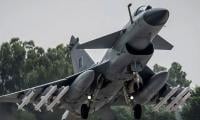
Pakistan’s response showed that any attempt to establish a ‘new normal’ through such unilateral strikes would not go unanswered. The downing of multiple Indian aircraft, including Rafales, and subsequent retaliatory operations revealed both Pakistan’s preparedness and the continuing logic of deterrence in South Asia. Matters escalated further when India reportedly targeted Pakistani airbases on May 10, crossing a major red line. Pakistan then launched Operation Bunyanum Marsoos, targeting multiple military facilities and installations in India. Ultimately, it took international diplomatic intervention – as US President Trump has reminded the world for the nth time – to pull the region back from the brink. The ceasefire announcement highlighted a reality that should concern policymakers in both Islamabad and New Delhi: escalation between India and Pakistan can move faster and further than either side may anticipate. In a nuclearised environment, even a few days of conflict carry immense risks not only for the two countries but for the wider world.
At the same time, we must remember that the economic costs, diplomatic uncertainty and psychological toll of conflict are borne by ordinary citizens on both sides. South Asia cannot afford to normalise periodic military confrontation as a substitute for diplomacy. Still, one lesson from last year remains difficult to ignore: India’s increasingly aggressive posture under the Modi government has made the region more unstable. The rise of Hindutva-driven politics and the accompanying media rhetoric have shrunk the space for restraint and dialogue. The danger is that domestic political considerations may continue to encourage adventurism, especially if military escalation is seen as electorally rewarding. Pakistan, for its part, has repeatedly stated that while it seeks peace, it remains prepared to respond forcefully to aggression. The reality of the current regional environment is that deterrence remains central to preventing another conflict. Yet deterrence alone is not enough. Sustainable peace requires functioning diplomatic channels, crisis-management mechanisms and serious political engagement on unresolved disputes – foremost among them Occupied Kashmir. Without these, the region risks remaining trapped in a cycle of accusation, retaliation and escalation. One year later, the most important lesson of May 2025 is not that war is manageable but that South Asia came dangerously close to a disaster whose consequences could have been irreversible. Statesmanship, not spectacle, is what the region desperately needs now. And this is something Modi’s India needs to remember as it continues with its politics of belligerence.