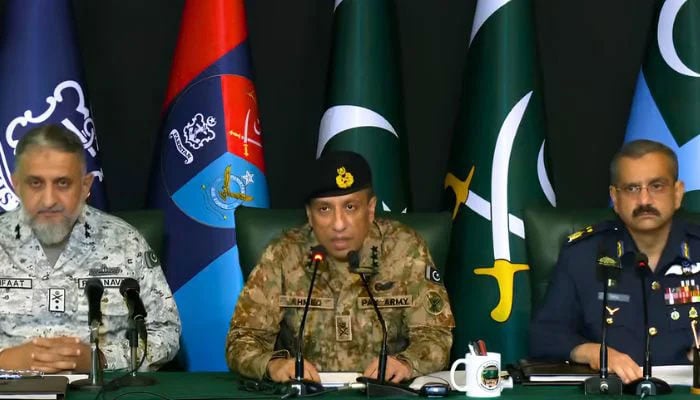
A year after the conflict that pushed South Asia to the brink, Pakistan’s message is remarkably consistent: deterrence must not replace dialogue and military preparedness cannot become a substitute for peace. The recent briefing by Pakistani military officials on the outcomes of Marka-e-Haq sought not only to highlight operational readiness and strategic capability, but also to reinforce a broader political point: there is no viable future for perpetual confrontation between two nuclear-armed neighbours. And this is a fact everyone needs to realise, especially in India – nuclear powers just cannot afford miscalculation, especially in a region already burdened by poverty, climate crises, political instability and growing economic pressures. Yet despite this obvious truth, relations between Islamabad and New Delhi continue to swing between hostility and dangerous escalation. Pakistan demonstrated restraint during last year’s conflict while also showing that it possesses the capability and resolve to respond decisively to aggression. India’s long-standing attempt to establish a so-called ‘new normal’ – carrying out cross-border strikes without facing significant consequences – was effectively challenged. That is the truth. And whether India fully accepts this or not, it is undeniable that the cycle of accusation, retaliation and nationalist posturing has brought the region no closer to stability.
Indeed, one of the most troubling features of Indian politics in recent years has been the tendency to weaponise tragedy for political gain. From the Pulwama attack to the more recent Pahalgam incident, terrorist attacks have repeatedly become flashpoints for immediate blame and military brinkmanship before credible investigations can run their course. Such reactions may serve domestic political narratives, particularly during periods of rising nationalism, but they narrow the already shrinking space for diplomacy. There is also growing concern that the ideological direction of the Modi government led by has further hardened attitudes. The rise of Hindutva politics has not only intensified anti-Muslim rhetoric within India but has also complicated prospects for reconciliation with Pakistan. But here’s something Modi needs to understand: political polarisation and hyper-nationalism may energise electoral bases, but they make statesmanship increasingly difficult. Peace requires political courage — the willingness to engage adversaries despite public pressure and entrenched hostility.
Yet even amid official silence and public hostility, the existence of reported Track 1.5 and Track 2 engagements between Pakistani and Indian officials, experts and former diplomats offers a glimmer of hope. Such back-channel contacts are often dismissed by hardliners, but they always serve a critical purpose. They keep communication alive when formal diplomacy freeze and allow both sides to explore possibilities without the burden of public grandstanding. History has repeatedly shown that breakthroughs in South Asia often begin quietly, away from television studios and nationalist slogans. Pakistan and India are neighbours bound not just by geography but by history, culture, trade potential and shared regional challenges. Climate change, water scarcity, extremism and economic insecurity cannot be addressed through missile exchanges or media wars. For India, especially, there is little strategic wisdom in maintaining permanent hostility with Pakistan while simultaneously aspiring to global leadership. Likewise, Pakistan must continue strengthening its own democratic, economic and diplomatic institutions so that calls for peace are matched by internal stability and credibility abroad. Terrorism, Kashmir, trade, water disputes and regional security are all difficult issues, but refusing to discuss them only guarantees further deterioration. South Asia has already lost too many decades to suspicion and conflict. Another generation should not have to inherit the same unresolved bitterness.