As the world marks Labour Day or May Day this year, the symbolism feels sharper, even urgent. For much of the last century, May 1 has been a reminder of hard-won labour rights – fair wages, reasonable hours, dignity at work. Today, however, the ground beneath workers is shifting again, this time not just because of industrial exploitation, but also because of rapid technological change that threatens to make entire categories of labour obsolete. Artificial intelligence, celebrated globally as a breakthrough, is also quietly restructuring the meaning of work itself. Companies are investing staggering sums into automation, often with little regard for the human cost. For workers who have spent decades building skills within rigid corporate systems, this transition is unsettling. From customer service to content creation, from design to data processing, roles once considered stable are now increasingly vulnerable to replacement by algorithms.
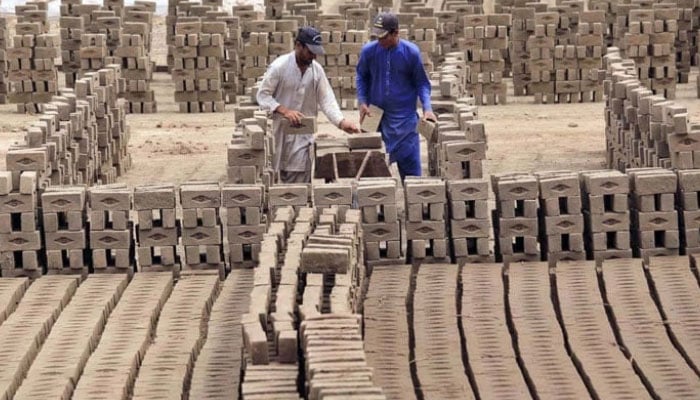
What is needed now more than ever is collective worker agency, something the world has not seen at scale in decades. The idea of unionisation, long dismissed in many sectors as outdated or inconvenient, is relevant again. Workers, fragmented and often competing against one another, often fail to realise that without collective bargaining power, the transition to an AI-driven economy risks becoming deeply unequal. In Pakistan, the crisis is even more pronounced. Years of economic instability have already eroded the financial security of ordinary workers. The minimum wage falls far short of covering basic living costs in urban centres. For daily wage labourers, the concept of job security is almost meaningless. For the educated middle class, the situation is scarcely better. Degrees no longer guarantee employment. The rise of AI is compounding existing vulnerabilities. Skilled workers such as animators, graphic designers and writers are now finding themselves competing not only with each other but with machines capable of producing work faster and cheaper. Government assurances of reskilling programmes and AI training offer some hope, but remain largely aspirational. The question is not really whether technology should advance because let’s face it: it will. The real question is who benefits from that advancement. Systems that concentrate wealth while displacing workers cannot sustain themselves indefinitely without deepening inequality and social unrest.
Today – Labour Day – is not merely ceremonial then. History has shown us that meaningful change comes when workers organise, speak collectively and challenge systems that marginalise them. This principle remains as relevant in the age of AI as it was during the industrial era. For Pakistan, and indeed for the world, the path forward must balance innovation with inclusion. Economic progress cannot come at the cost of human dignity. Any future that sidelines workers is not progress but rather a more sophisticated form of regression. If Labour Day is to retain its meaning, it must evolve alongside the challenges of the present. The struggle today is not only for better wages or safer conditions, but for the very right to remain relevant in an economy increasingly shaped by machines.