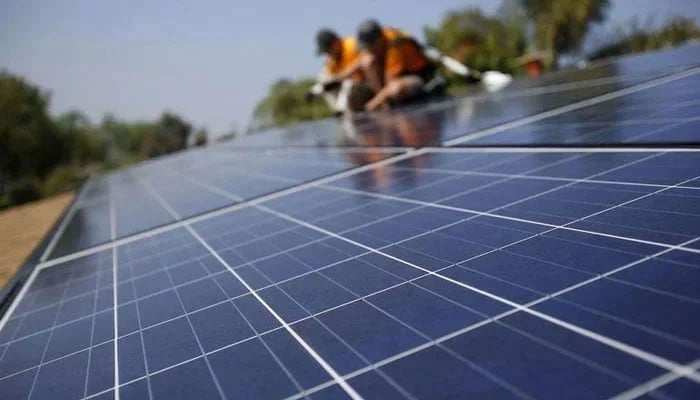
If there was ever a time for Pakistan to hit the accelerator on the transition to renewable energy it is now. The Middle East conflict has unleashed an energy crisis that is set to send energy costs up by 24 per cent this year and Pakistan is among the worst affected by the energy shock. The fuel hikes, power and gas outages and early market closures are piling the economic pain on consumers and businesses alike. Fossil fuel addiction has never been more expensive. If there is anyone whose pockets are somewhat less drained right now, it is those with the money to shift to solar in recent years. One would think that this is a shift that makes financial sense and the government would like to encourage, however, that is not the message that one seems to be getting. On Tuesday, Nepra abolished the abolished the licence requirement and application fee for solar consumers with systems of up to 25 kilowatts. The move follows recent regulatory changes that centralised approvals with Nepra and imposed fees even on small-scale solar systems, prompting the Power Division to push for a rollback amidst intense public backlash.
Under the previous 2015 regulations, distributed generation facilities of 25 kilowatts or below did not require a licence from Nepra. Applications were processed directly by DISCOs without any fee, serving as a major fiscal incentive for residential users. With the rollback, justice may have been done for now, but the fact that a punitive hurdle for solar consumers was even pushed through in the wake of a national fuel crisis in the first place is cause for concern. It only adds to the growing perception since the net-billing shift that the government is trying to discourage solar users and keep people on an expensive and inefficient grid. Aside from household solar, the move towards EVs is also facing obstacles. Private-sector stakeholders have concerns over regulatory barriers affecting the import and deployment of electric vehicle (EV) charging infrastructure. They are warning that ‘non-tariff barriers’ that provide undue protection to certain local manufacturers could jeopardise government plans to shift to convert 30 per cent of new vehicle sales to electric by 2030. One would think that the government would be scrambling to clear any obstacles in the way of renewables given what is happening now.
The irony amidst all this is that renewable energy is, in fact, a big part of the state’s plans. The revised Indicative Generation Capacity Expansion Plan (IGCEP) 2025-35 signals a clear shift in the energy mix towards domestic and renewable sources with projected to account for 34 per cent of installed capacity, while variable renewable energy will make up 27 per cent by 2035. None of this is to say that renewables do not pose their own set of problems. There are strong indications of declining grid consumption while solar, for now, is largely the preserve of those with money and roof space. However, the solution here has to be both facilitating renewables and doing something about the ailing grid. And while the government is working on both, bad regulations only serve to create confusion and mistrust, even if quickly backtracked.