Economic inequality is often measured by income. Households are compared across earnings, consumption, and wealth accumulation. Yet an equally important and less visible shift is underway in Pakistan.
Opportunity itself is becoming increasingly privatised. Access to quality education, healthcare, housing and even basic urban services is no longer mediated primarily through public systems. It is increasingly determined by the ability to pay.
This transition has not occurred abruptly. It has emerged gradually, shaped by demographic pressure, fiscal constraints and rising expectations. Over time, parallel systems have developed. Public institutions continue to exist, but private alternatives have expanded in scale, scope and perceived reliability. For many households, participation in these private systems is no longer a choice. It is a necessity.
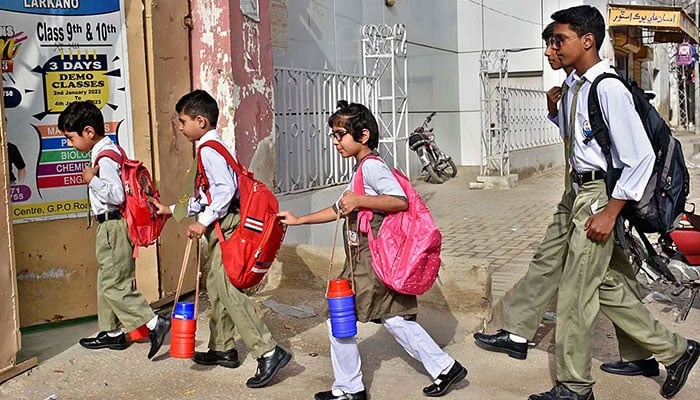
Education illustrates this shift most clearly. Public schooling remains the primary provider for a majority of the population, yet private institutions increasingly define perceived quality. According to estimates from the Pakistan Bureau of Statistics and independent education surveys, more than 40 per cent of students in urban Pakistan are now enrolled in private schools. At the tertiary level, private universities dominate key professional disciplines, often charging fees of Rs1-2 million or more for undergraduate degrees.
The implication is not simply higher cost but a redefinition of access. Educational outcomes, and by extension employability, are increasingly linked to private expenditure. For middle-income households, this creates a sustained financial commitment that spans over a decade. For lower-income households, it creates a barrier that is difficult to overcome. Opportunity, in this sense, becomes tiered.
Healthcare follows a similar pattern. Public hospitals continue to provide essential services, but constraints in capacity, staffing and infrastructure have led to the expansion of private healthcare networks. For many families, routine medical care is now sought in private clinics and hospitals, where costs are significantly higher but waiting times and perceived quality are improved. According to the World Bank, out-of-pocket expenditure accounts for over 50 per cent of total health spending in Pakistan. This places a disproportionate burden on households, particularly in the absence of comprehensive insurance coverage.
Housing further reinforces this trend, with urban development increasingly driven by private developers offering gated communities and managed infrastructure. Public housing initiatives exist, but their scale and accessibility remain limited relative to demand. Projects such as the Ashiana subsidised loan scheme aim to address affordability, yet rising costs have made even these options difficult for the salaried middle class. As a result, access to reliable utilities, sanitation and security is often bundled into privately developed spaces, effectively linking quality of life to purchasing power.
This gradual shift extends beyond traditional sectors. Even access to safety, clean environments, and efficient urban services is increasingly mediated through private arrangements. Gated communities provide their security personnel and backup power systems. Private transport fills gaps left by limited public transit. Digital platforms offer paid access to convenience and reliability. Across sectors, the pattern is consistent. Where public systems face constraints, private alternatives expand.
Private provision is not inherently negative as it can introduce innovation, efficiency and investment. It can complement public systems and expand overall capacity. In many cases, private institutions have filled critical gaps and improved service delivery. The issue is not the presence of private options, but the extent to which access to essential opportunities becomes contingent on them.
When opportunity is increasingly tied to private expenditure, inequality takes on a different form. It is no longer limited to differences in income. It becomes embedded in access to systems that shape long-term outcomes. A student’s educational trajectory, a family’s access to healthcare, or an individual’s exposure to safe and well-managed environments are influenced by financial capacity at multiple stages.
For the middle class, this creates sustained financial pressure. Participation in private systems requires ongoing expenditure across multiple categories simultaneously. Education fees, healthcare costs, housing instalments and transport expenses combine to reduce disposable income and limit savings. Over time, this constrains upward mobility. The middle class is not excluded from opportunity, but it must continuously purchase it.
For lower-income groups, the implications are more pronounced. Limited access to private alternatives can result in reliance on overstretched public systems, reinforcing disparities in outcomes. This creates a divergence not just in income, but in life trajectories. Opportunity becomes unevenly distributed, even when basic services formally exist.
Macroeconomic conditions further shape this dynamic. Inflation, which peaked above 30 per cent in 2023 according to the Pakistan Bureau of Statistics, has increased the cost of both public and private services. At the same time, wage growth has remained relatively constrained. For households, this means that maintaining access to private systems requires a growing share of income. What was once aspirational becomes obligatory, and what was once affordable becomes burdensome.
The quiet privatisation of opportunity is not a sudden shift, but a gradual reconfiguration. It reflects an economy where access is increasingly layered, and where participation in opportunity requires sustained financial commitment. Recognising this trend is important not as a critique, but as a basis for understanding how economic and social mobility are evolving.
In the long run, the strength of any economy depends not only on growth but on how widely opportunity is distributed. Ensuring that access to essential services remains broad-based is central to that objective. The challenge is not to reverse private participation, but to maintain a balance in which opportunity remains accessible, rather than exclusively purchasable.
The writer is a transnational educational consultant, freelance columnist and policy analyst based in Lahore.