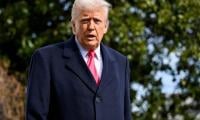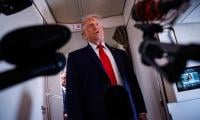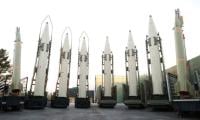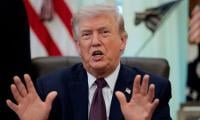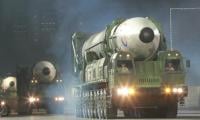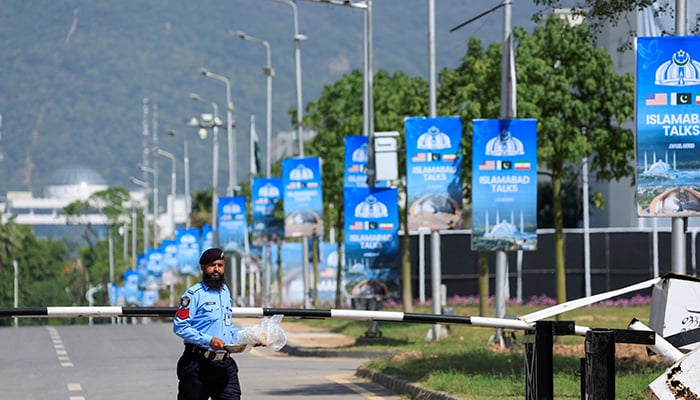
US President Donald Trump cancelled his envoys' trip to Pakistan for peace talks with Iran on Saturday, saying there was no point "sitting around talking about nothing" but adding the war would not immediately resume.
Trump said he scrapped the visit after being unimpressed with Tehran's negotiating position, adding that a revised proposal followed within minutes of his decision.
"They gave us a paper that should have been better and — interestingly — immediately, when I cancelled it, within 10 minutes, we got a new paper that was much better," he told reporters, without elaborating.
The White House had said Trump's son-in-law Jared Kushner and special envoy Steve Witkoff were heading to Pakistan for talks with Iran aimed at moving "towards a deal" but Trump told Fox News he had scrapped the trip.
"We have all the cards. They can call us anytime they want, but you´re not going to be making any more 18-hour flights to sit around talking about nothing," the president said he had told his team.
Asked separately whether the cancellation meant a return to hostilities, Trump said: "No, it doesn't mean that. We haven't thought about it yet."
Shortly beforehand, Iranian Foreign Minister Abbas Araghchi wrapped up a visit to Islamabad after meeting Prime Minister Shehbaz Sharif, Foreign Minister Ishaq Dar and Chief of Army Staff and Chief of Defence Forces Field Marshal Asim Munir.
Iran said Araghchi had left for Muscat and would return to Pakistan after meetings in Oman before travelling on to Russia for talks on ending the war launched by the United States and Israel on February 28.
Araghchi described his Pakistan trip as "very fruitful" but signalled scepticism over Washington's intentions.
"Have yet to see if the US is truly serious about diplomacy," he said.
Even before Trump's move, prospects for talks were uncertain, with Iranian state television saying Araghchi had no plans to meet US officials and that Islamabad would act as a conduit for proposals.
PM Sharif said he had spoken to Iranian President Masoud Pezeshkian and reiterated Islamabad's commitment to facilitating "durable peace".
Iranian state TV said Pezeshkian told Sharif the Islamic republic would not be coerced by Washington's "hostile actions" into negotiations.
Pressure to end the war has intensified as the Strait of Hormuz — a vital oil and gas route — remains closed.
But Iran's powerful Revolutionary Guards said they had no intention of lifting their blockade, which has roiled energy markets.
"Controlling the Strait of Hormuz and maintaining the shadow of its deterrent effects over America and the White House's supporters in the region is the definitive strategy of Islamic Iran," the Guards said on their official Telegram channel.
The United States has imposed a blockade of Iranian ports in retaliation.
In a statement carried by state media, Iran's military warned that continued US "blockading, banditry and piracy" would draw a response.
Efforts to resume US-Iran talks have stalled, with Tehran refusing to engage while the naval blockade remains. Iran has allowed only limited shipping through the strait.
European Council President Antonio Costa said the waterway "must immediately reopen without restrictions and without tolling," insisting that it was "vital for the entire world."