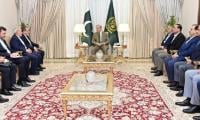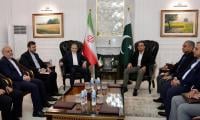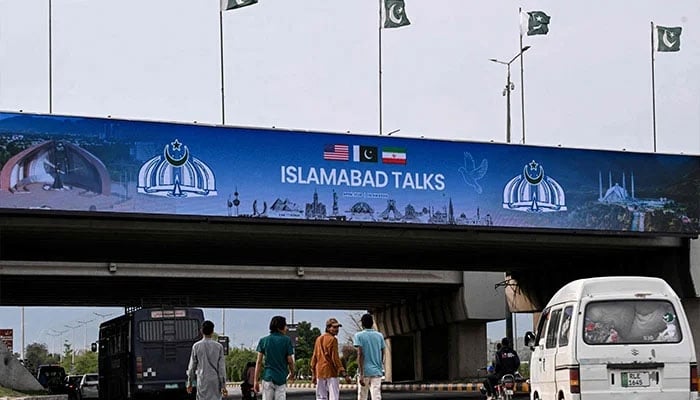
Pakistan has saved the world from falling. Pakistan offered the table when the room was empty. Pakistan connected capitals that could not speak. Pakistan became the meeting point where confrontation paused.
Pakistan has gained visibility. Pakistan has gained strategic relevance. Pakistan has gained diplomatic access. Pakistan has gained leverage.
Cold truths: Visibility is not value. Strategic relevance is not revenue. Diplomatic access is not a contract. Leverage is not a cash flow. Until each is priced, packaged and converted, Pakistan remains seen, but not paid.
Is Pakistan a pillar or a bridge? A bridge connects others. A pillar anchors value. A bridge carries traffic. A pillar carries weight. A bridge facilitates passage. A pillar sets terms. A bridge is used by others. A pillar is paid for by others.
Yes, Pakistan has become a repeat-use mediator. Yes, Pakistan has secured seats at select negotiation tables. But Pakistan remains balance-sheet dependent.
Ground reality: Pakistan has no monetisation framework. Pakistan has no pricing mechanism. And Pakistan has no contract pipeline.
Remember, Pakistan is not mediating out of choice. Pakistan is mediating out of necessity. For Pakistan, a destabilised Iran expands space for militants across our western flank. For Pakistan, a Saudi-Iran escalation risks triggering treaty obligations. For Pakistan, a regional war imports sectarian stress into domestic politics. For Pakistan, mediation is risk containment.
Monetisation of strategic relevance is nothing abstract – it is concrete. It is energy intermediation contracts. It is reconstruction mandates. It is transit and logistics corridors. It is security and training services. For Pakistan, diplomacy must move from meetings to mandates, from access to assets, from visibility to value.
History has it that visibility fades, relevance decays, access expires and leverages erode. Lo and behold, the window is narrow. If Pakistan does not build a pricing mechanism now, it will return to the margins just as quickly as it arrived at the centre. The difference between a pillar and a bridge is simple: one gets paid, the other gets used.
In the Soviet-Afghan War (1979–1989), Pakistan converted geography into an $85 billion (inflation-adjusted) inflow. After 9/11, Pakistan again converted geography into a $45 billion (inflation-adjusted) inflow. In both cases, geography was monetised – systematically, deliberately and at scale.
What is missing is not opportunity, but architecture. A sovereign deal desk. A single window. Contracts across governments. A pipeline from diplomacy to contracts. Remember: Without structure, every diplomatic gain evaporates. Remember: Every moment of relevance fades without leaving a lasting economic footprint.
Hard truth: Diplomacy that does not generate cash flows is not strategy; it is theatre.
In geopolitics, bridges are crossed – pillars are compensated. In geopolitics, bridges are temporary – pillars are priced. In geopolitics, a bridge is transited – a pillar is monetised.
A pillar gets paid. A bridge gets used. Which one are we?
The writer is a columnist based in Islamabad. He tweets/posts @saleemfarrukh and can be reached at: [email protected]