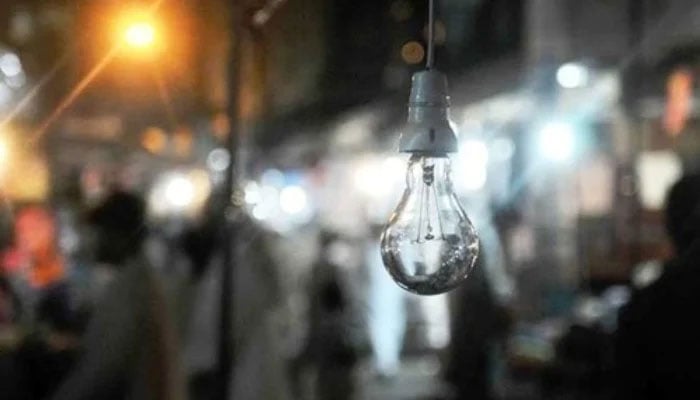
A week back, Pakistan once again faced extreme loadshedding, after nearly a decade – 8-10 hours in urban areas and 12-18 hours in rural areas. The Power Division formally announced a suspension of electricity supply for approximately 2.25 hours daily during peak hours. However, despite this announcement, consumers in major urban centres have reported outages lasting 8-12 hours, even beyond peak hours.
The shortfall blame lies with the Iran-US conflict, which led to the closure of the Strait of Hormuz and to Qatar’s force majeure declaration. Qatar is Pakistan’s main LNG supplier. The second reason cited for the electricity shortfall was the slump in hydel generation due to limited water releases from major dams. The government called it a "peak relief strategy" rather than loadshedding.
While the situation improved after a few days in some areas, attributed to increased water inflows from dams, it has raised serious concerns about the sustainability of Pakistan’s power system – structural shortcomings and imbalances, primarily stemming from inadequate management, misguided decision-making and a lack of integrated planning.
Pakistan today has installed generation capacity (41121MW) that exceeds summer peak demand (28306MW) (reported for FY2025), yet consumers are facing shortages. The huge difference suggests that the underlying issue is not a deficiency in generation capacity, but rather inefficiencies in the planning, operations and management of the electricity system. These have adversely affected dependable capacity, which stood at 24,733MW, a 26 per cent decline compared with the 4.0 per cent drop in peak demand, making the sector vulnerable to disruptions. Transmission bottlenecks reflect a major planning failure. Despite the addition of cost-effective power sources, transmission constraints limit power flow from the south to the north’s demand centres, leaving thousands of megawatts stranded.
The total installed capacity in the south exceeded 13,400MW. However, the limited capacity of HVAC lines (4,500MW), along with frequent load curtailments of approximately 1,750MW of cheaper power due to overloaded grids and associated transmission lines, poses significant challenges. Additionally, the newly constructed HVDC Matiari-Lahore transmission line is underutilised, operating at only 35 per cent of its 4,000MW capacity due to operational issues and delays in the necessary grid and transmission line infrastructure. Constraints in transformation capacity across three major 500 kV lines further restrict the effective flow of this 13,400MW capacity.
This transmission/transformation inadequacy leads to reliance on imported RLNG and on expensive FO power plants, resulting not only in increased costs but also in supply shortfalls, as happened this month. In addition, inadequate coordination between southern power generation and transmission due to fragmented decision-making and governance issues in the relevant entities is causing billions in idle capacity payments, not just for power plants but also for the Matiari-Lahore transmission line – consumers are paying for full capacity even when it is not used.
Another notable structural weakness is the energy mix, which relies heavily on hydropower – 33 per cent of the total installed capacity. In the IGCEP-2025 rationalised capacity addition scenario, this share is projected to increase to 48 per cent by 2035. Hydropower is regarded as a low-cost option. It varies significantly, contributing 30-40 per cent of the energy mix in summer but dropping sharply in winter. It relies on the Indus River System, making it vulnerable to climate variability.
Heavy reliance on hydropower creates a consistent gap between installed capacity and actual energy delivered, casting doubt on its cost-effectiveness. When factoring in issues of intermittency, reliability and the environmental impact of large dams, the costs may surpass those of many thermal power plants. Beyond this, mismanagement has led to the underperformance of several hydroelectric plants.
Another critical gap lies in demand-side management, which is ignored in our energy strategies. Pakistan’s electricity demand follows a predictable pattern, with a sharp peak in the evening hours. Despite this, there has been no change in tariff design. Similarly, there is no smart metering or demand response programmes. The failure to manage consumption behaviour worsens system stress during peak hours, increasing reliance on expensive generation.
When we talk about the power sector, we cannot ignore the distribution side. Recent power interruptions are partly due to distribution constraints (operational inefficiencies, mismanagement, and obsolete grid infrastructure), which are often misrepresented as supply shortfalls. Distribution companies struggle with high commercial losses and operational issues, frequently resorting to loadshedding, pointing to governance failure rather than a genuine electricity shortage; circular debt further highlights the crisis.
Given the challenges in the present setup, reliance on imported LNG becomes unavoidable. The highest ramping capability is found in RLNG-based power plants located near demand centres; disruptions in supplies halt plant operations, causing a significant shortfall during peak hours.
This points to another serious, often overlooked dimension: the lack of coordination between the two divisions within the same ministry. LNG procurement, pipeline gas allocation and power generation planning are closely interlinked. Yet, decisions are frequently made in silos, leading to underutilisation of LNG cargoes due to low power demand or off-the-grid levies. Inadequate synchronisation of fuel supply planning with power dispatch needs has exacerbated both shortages and cost inefficiencies. The lack of an integrated energy planning framework causes mismatches between fuel availability and generation needs, turning manageable challenges into crises. Long-term fuel contracts and capacity payment obligations have reduced the system’s flexibility.
Governance failures have led to poor transmission planning, inefficient distribution, financial mismanagement, inadequate demand-side policies and a lack of coordination between the power and gas sectors, and imbalances in the energy mix. All collectively undermine the power sector’s performance. To tackle these issues, coordinated reforms are essential, particularly decentralising authority within energy companies to enhance performance and create a strong accountability framework for failures. Tariff design reforms and the vast deployment of smart meters for demand management.
The recent energy crisis has shown that a significant reliance on LNG is unsustainable. Pakistan’s future power system should not be about choosing one fuel over another, but combining the strengths of different sources: nuclear, hydro, Thar coal, wind and solar can provide low-cost, reliable energy, while storage, and to a smaller extent gas/LNG/FO, provide the flexibility needed to handle fluctuations and meet evening peak. Strategically placing storage near demand centres can ease pressure on constrained transmission corridors. But it does not mean ignoring improvement in the transmission system.
Finally, decision makers must remember: an economy can survive costly electricity, but it cannot function without it.
The writer is an economist and researcher with expertise in the energy sector.