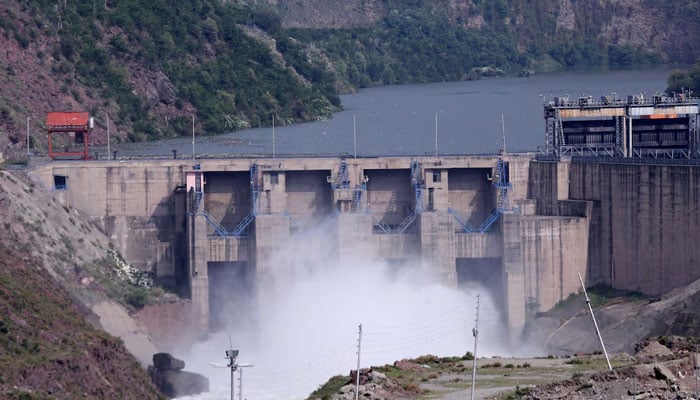
Pakistan’s decision to take India’s suspension of the Indus Waters Treaty to the United Nations Security Council may seem to some a technical disagreement over a decades-old water-sharing framework. It is, in fact, a warning about the unravelling of a system that has long kept one of the world’s most fragile regions from tipping into deeper instability. In his communication to the UNSC, Foreign Minister Ishaq Dar has outlined the stakes with clarity: the risks are not only diplomatic but environmental, humanitarian and strategic. For a country whose lifelines are tied so closely to the Indus Basin, uncertainty in river flows is an immediate, tangible and deeply destabilising issue. Pakistan has also said that the issue goes beyond allegations and counter-allegations and strikes at the very mechanisms that ensure predictability between upstream and downstream states. That predictability is precisely what made the treaty exceptional. Signed in 1960, it endured wars and prolonged hostility because it separated water from politics and embedded cooperation through clear rules, data-sharing obligations and dispute-resolution pathways.
India’s unilateral move to suspend the treaty is a break from a long-standing understanding that certain shared resources must remain insulated from coercion. The implications are difficult to overstate. The Indus system supports the overwhelming bulk of Pakistan’s agriculture and sustains millions of livelihoods. Any disruption, whether through altered water flows or the withholding of critical hydrological data, reverberates across food systems, energy production and economic stability. In a country already grappling with climate stress, erratic weather patterns and declining per capita water availability, such uncertainty compounds existing vulnerabilities to dangerous levels. This is why Pakistan’s recourse to the UNSC is significant. Water, increasingly, is inseparable from peace and security. The erosion of a treaty as foundational as the IWT risks setting a precedent that extends well beyond South Asia. If cooperative frameworks can be unilaterally set aside, the consequences will not be confined to one basin or region.
Pakistan has continued to emphasise that it seeks restoration, not escalation. We have consistently called for the resumption of treaty-mandated cooperation, data-sharing and adherence to obligations. Even ongoing legal and procedural efforts – including demands for greater transparency in upstream projects – are really a consistent position: that rules, once agreed upon, must be honoured in both letter and practice. For India, persisting with a posture of unilateralism and opacity would risk undermining not only the treaty but also its own credibility as a responsible upper-riparian state. Re-engagement, by contrast, would reaffirm a framework that has demonstrably served both sides, even in times of conflict. The international community, too, cannot afford indifference. At a time when global warnings of intensifying water scarcity are growing louder, the weakening of one of the world’s most durable water-sharing agreements would carry implications far beyond the Subcontinent. Let’s be clear; the IWT has long been held up as proof that cooperation is possible even in the most adversarial contexts. Its current strain suggests the opposite: that even the strongest agreements can falter when political will gives way to expediency. That can’t be good for anyone.