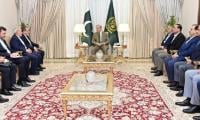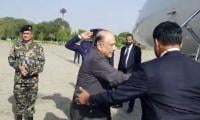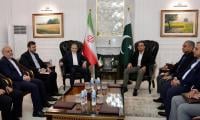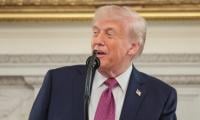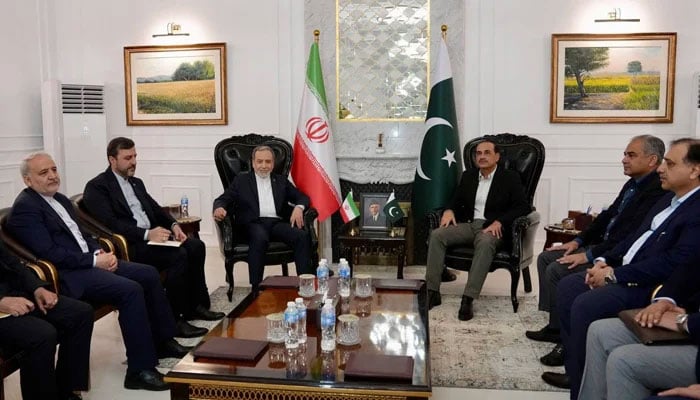
As diplomatic traffic intensified between Tehran, Islamabad and Washington on Friday and Saturday, Pakistan once again found itself in a familiar -- and intensely fraught -- role: that of a mediator in a conflict not of its making, but one whose consequences it cannot escape. The visit of Iranian Foreign Minister Abbas Araghchi to Islamabad, followed by reports that a US delegation led by Jared Kushner and Steve Witkoff may be arriving too signaled a renewed, if tentative, push to revive stalled Iran-US negotiations. However, by Saturday night, the Iranians had gone to Muscat and the Americans had said no one was visiting just yet. Per speculation, Iran has conveyed both its demands and its reservations regarding US positions, opting for in-person communication with Islamabad amid deepening mistrust of Washington. This is probably why Iran has chosen to convey its points via Pakistan for now, choosing to not engage directly with the Americans in this current round. To be fair, that mistrust has not emerged in a vacuum. It has been exacerbated, if not actively fuelled, by the erratic and often counterproductive public messaging of US President Donald Trump. At a moment when diplomatic openings seemed possible, particularly around the reopening of the Strait of Hormuz, Trump’s inflammatory social media interventions undercut any fragile progress. His insistence on continuing a naval blockade, even as Iran signalled flexibility, triggered a predictable backlash: Tehran reversed course, and the already elusive second round of direct talks collapsed before they could materialise.
Diplomacy, by its very nature, demands restraint, consistency and credibility -- qualities that have been in short supply in Washington’s recent approach. But the fact is that Trump’s bluster is less a show of strength than an attempt to mask perceived setbacks in the confrontation with Iran. Posturing has costs, though and in this case, it has stalled a process that could have de-escalated tensions in a volatile region. Against this backdrop, Pakistan’s role has become even more critical. Islamabad has maintained a steady, measured posture, reiterating its commitment to facilitating dialogue and reducing tensions. Importantly, Foreign Minister Ishaq Dar’s emphasis on relying solely on official statements -- and rejecting the growing tide of anonymous-source reporting -- is a welcome understanding of how easily narratives can spiral out of control in such a charged environment. And yet, that is precisely what appears to be happening elsewhere. Sections of the US media, citing unnamed officials and speculative leaks, have over the past few days continued to churn out stories that muddy the waters rather than clarify them. At a time when diplomacy hangs by a thread, such reporting risks hardening positions, amplifying mistrust and ultimately prolonging conflict. There is a growing perception that parts of the Western mainstream media ecosystem are not merely reporting on the crisis, but shaping it -- often in ways that align with a pro-conflict, pro-Israel stance.
None of this diminishes the complexity of the situation, though. Iran’s grievances, US strategic calculations and Israel’s role in the broader conflict all intersect in ways that make resolution rather difficult. But that was to be expected in a situation where two countries decided to wage war on a third nation, martyr its leaders, its children and its citizens. If anything, this only highlights just how important careful, deliberate engagement is. That would be the very opposite of impulsive policymaking and speculative reporting. For now, the focus is on whether Islamabad can translate its consultations with Tehran into a framework that Washington is willing to engage with seriously. The window for diplomacy has not yet closed, but it is narrowing. What happens next will depend less on grandstanding and more on the quiet, painstaking work of negotiation -- the kind that rarely makes headlines and breathless 'breaking news' obsessions.