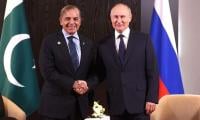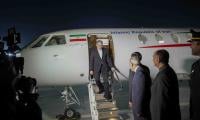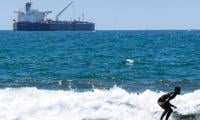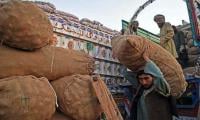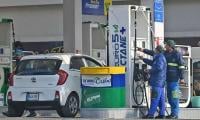
Pakistan’s tireless diplomatic effort may eventually bring a permanent end to the US-Iran war. Sadly, while the worst of the fighting might hopefully be behind us, there is still no final resolution and the economic fallout of the conflict is only compounding. With the world still awaiting another round of talks and the Strait of Hormuz still mostly closed, fuel remains pricey and hard to obtain. Asian economies, heavily dependent on the Middle East, have been particularly hard hit by the crisis and this is doubly the case for poorer countries like Pakistan that were not in the best of shape even before the conflict started. The country has already had to deal with painful fuel price hikes and, while these have receded somewhat in recent weeks, the situation remains volatile and the longer the conflict drags on the higher the chances of a reversal. The fuel shock has steadily moved up the energy supply chain, with much of the country experiencing loadshedding and a shortage of gas. It has already been reported that the power regulator will collect the Rs1.42 per unit rise for February’s fuel adjustment from this month’s bills. One can only wonder what the fuel adjustment will look like if the war drags on with the hottest months of the year still to come.
While the government has taken several steps to try and blunt the impact of the fuel hike, even these measures are now beginning to bite. The Chainstore Association of Pakistan (CAP) has warned that early retail closing hours have already led to an estimated Rs200 billion loss in economic activity within just two weeks of implementation, calling for an urgent review of the policy. CAP claims that organised retail – comprising documented businesses with fixed costs such as rent, payroll and utilities – is bearing the brunt of the restrictions, while informal segments remain largely unaffected. So, instead of reduced energy demand, what we see is a market distortion where consumers remain active in the evening but simply shift their shopping patterns, at least according to the CAP. One can only hope that the policy has actually generated energy savings valuable enough to make up for the loss in economic activity being claimed. This is also an example of how pre-existing weaknesses in the economy, in this case the vast informal sector and the distortions it creates, are being exacerbated by the current crisis.
However, even with wiser policies and a stronger economy, there is simply no getting around the economic pain. The UNDP estimates that more than 30 million people will be pushed back into poverty by the impacts of the Iran war including disruptions to fuel and fertiliser supplies just as farmers are planting crops and that even if the war were to stop tomorrow, its economic impacts would still linger. This is perhaps the most troubling scenario and, if it is indeed the case, the government needs to start coming up with a plan to deal with the prolonged impacts of this war. The priority must be keeping energy prices as low as possible and protecting food security by ensuring farmers get the immediate help they need. Over the long term, this war proves that Pakistan is far too dependent on imported energy for the multi-polar world that is emerging. Energy independence now has to be treated as a national security priority because what is happening in the Middle East now could be the first of many shocks to come.