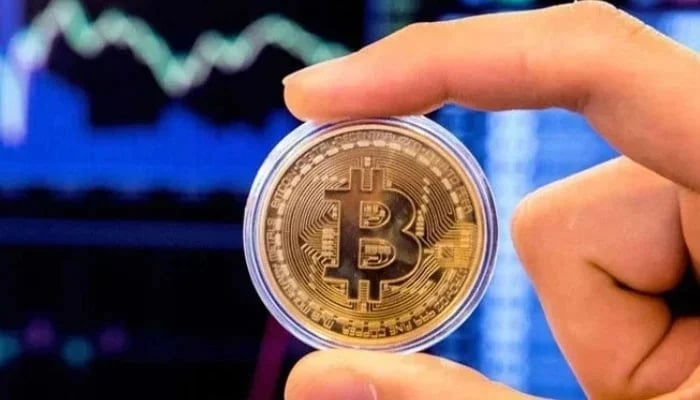
Eight years after the State Bank of Pakistan (SBP) imposed a ban on virtual currencies, the central bank has now issued directives allowing regulated entities to open and maintain bank accounts for Pakistan Virtual Asset Regulatory Authority (PVARA)-licensed virtual asset service providers (VASPs) and their customers. For Pakistan, this moment indicates the country’s willingness to provide a roadmap for new currencies and cautiously align itself with evolving global financial systems. Back in 2018, when the SBP decided to ban virtual currencies, the country faced a series of challenges. Terrorist elements were using cryptocurrencies and other such means to evade the watchful eyes of the government and carry out their transactions easily. Similarly, the mode of payment also played a big role in facilitating money laundering. Of course, what the authorities did then was not satisfactory. Instead of working out a plan, they made the currencies illegal, pushing people away from adoption.
This new regulation is subject to strict compliance and anti-money laundering (AML) requirements. And this is how our future action should be. One disadvantage of our country is that it carries the trauma of the challenges of the past. As a result, it is less adaptive to innovation and remains always wary of change, often reacting late to global technological and financial shifts. But change is not always a bad thing and while caution is important (as the State Bank did in this case), it is equally essential to ensure that our risk analysis does not drown out the many advantages of a financial instrument. According to independent surveys, Pakistan has around 40 million crypto users. If they are brought into the mainstream, there is a chance this number will increase and most people who remain hostage to currency fluctuations will be able to provide a safety net for their savings. All of this does not mean that the SBP’s initial concern was invalid. In fact, if anything, this should serve as a reminder that a lot more needs to be done to ensure that all such transactions are safe.
Recent reports show that the rise of crypto has created opportunities for scammers, who try to hack digital wallets and steal money. There are also familiar threats, such as Ponzi schemes designed to cheat people out of their savings. Financial literacy in Pakistan still needs improvement. At a time when people are struggling with rising inflation and declining purchasing power, crypto investments can seem attractive for the promise of high returns, often without fully understanding the underlying risks. This makes it even more important for authorities to clearly explain what this asset class is and how people should approach it. Globally, opinions on crypto remain divided. Some dismiss it because of its volatility, while others strongly support it and overlook potential risks. There is a need for a more balanced approach – one that encourages informed decisions and treats caution as a strength – and it is important for the country to decide which way to go.