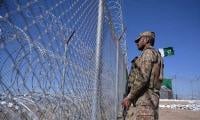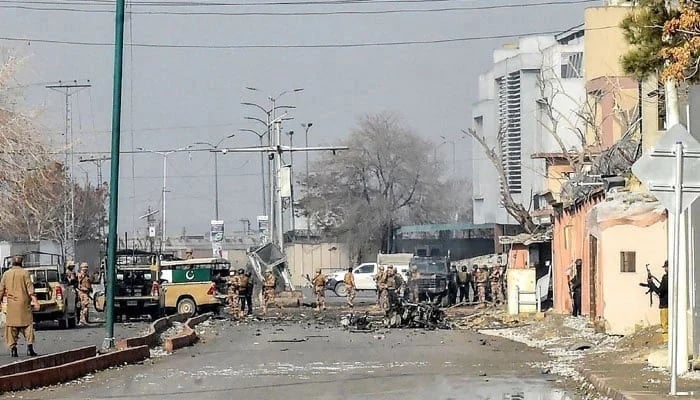
On Tuesday, President Asif Ali Zardari spoke during an interaction with the participants of the National Workshop Balochistan-19 in Islamabad. Emphasising the importance of unity and internal reflection to address Balochistan’s challenges, the president said that dialogue and democratic engagement remained the only viable path forward. He also highlighted the need for improved governance, to create an environment of ‘workability’ and to handle security challenges responsibly. The president’s comments come in the wake of an attack on a Pakistan Coast Guard patrol boat on Sunday that martyred three personnel. The attack was claimed by the BLA and described as the first-ever on a maritime unit, highlighting Balochistan’s serious security challenges. It is no coincidence that the areas where terror groups have gained the strongest foothold tend to be among the country’s most deprived and, in this sense, the president’s emphasis on the need to address employment, development and governance issues is quite timely.
While Balochistan’s struggles on the development and governance fronts are not new, they have long been neglected and are showing signs of accelerating. Earlier this month, the province’s health secretary reportedly claimed that over 80 per cent of Balochistan’s population was deprived of primary healthcare facilities and that the health sector faced serious challenges due to the province’s geographical spread, difficult access and limited resources. While lack of access to primary healthcare is a major concern throughout the country, with some reports estimating that half of all Pakistanis lack access to basic primary healthcare services, based on the figures reportedly shared by the secretary, Balochistan still manages to stand out. While factors like geography and the challenges presented by a difficult terrain are likely important, access to healthcare in Pakistan is often defined by privilege and Balochistan consistently ranks as the country’s poorest province. It also finds itself in an awkward position as the least populous province in a nation where population is a major factor in how revenues are distributed. As such, the province’s health secretary reportedly claimed that Balochistan’s total development budget was about Rs250 billion.
The picture that emerges is one of a province with unique geographical and security challenges but without access to the revenues needed to address them. While Balochistan is mineral-rich, simply using the province as an extraction point will likely not help. The authorities seem to be cognizant of this, with the president pointing out that what Balochistan really needs is sustained long-term development initiatives rather than short-term measures. And long-term development will probably not be viable without strong local partners and a political culture that fosters inclusivity. The people of Balochistan should not have any doubts that their life outcomes are a matter of utmost importance to Pakistan and that they will have a meaningful stake in the country’s future and the progress of their province. Balochistan is an integral part of Pakistan and its people should be treated accordingly.