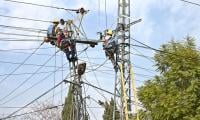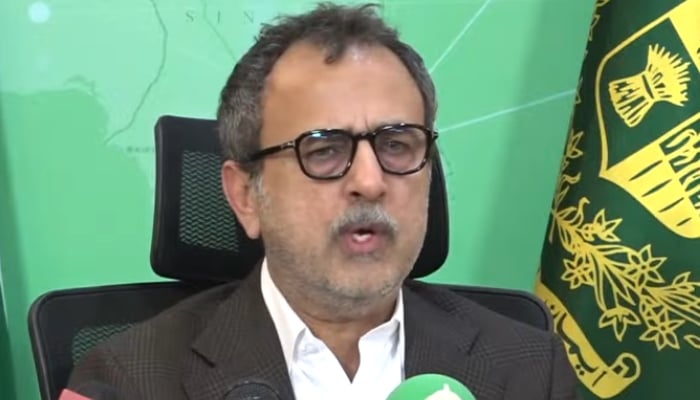
ISLAMABAD: Federal Minister for Energy Awais Leghari has expressed optimism that increased hydropower output in the coming days would help reduce prolonged loadshedding nationwide.
Addressing a news conference in Islamabad on Thursday, the minister attributed the increase in loadshedding to fuel shortages and reduced hydropower generation, saying the issue was temporary.
Leghari apologised to the public for the inconvenience caused by hours-long loadshedding, including during peak hours.
He said that a significant drop in hydropower generation has created a shortfall of nearly 1,600 megawatts, while the suspension of liquefied natural gas (LNG) supplies has further widened the gap by more than 3,000 megawatts.
He added that LNG unavailability following recent tensions in the Gulf region has also contributed to the crisis.
The minister noted that electricity demand in April fluctuated between 9,000 and 20,000 megawatts, saying loadshedding intensifies when demand exceeds 16,500 megawatts.
Every 500-megawatt shortfall results in one additional hour of loadshedding, he explained.
The minister said the government was currently generating around 1,400 megawatts of electricity using furnace oil to bridge the gap.
However, he warned of an increase in fuel price adjustment due to the use of the costly fuel for electricity generation.
Fuel price adjustment may increase by up to Rs1.30 per unit due to the use of furnace oil, he said.
The minister reiterated that the recent decision to enforce up to two-and-a-half hours of loadshedding was aimed at preventing an increase in electricity tariffs.
He added that the industrial sector is also facing outages, although K-Electric and Hyderabad have not been subjected to additional cuts.
Leghari expressed optimism that improving global conditions and increased hydropower generation in the country would help ease the crisis.
On Wednesday, Petroleum Minister Ali Pervaiz Malik told Reuters that the federal government was considering buying LNG on the spot market to offset supply disruptions caused by the Iran war but would favour government-to-government deals to avoid having to pay steep premiums.
Qatar's force majeure has forced Pakistan to make costly spot purchases or find alternative fuels ahead of summer demand.
Spot LNG cargoes have surged to $20 to $30 per mmBtu amid the Middle East conflict, the petroleum minister told Reuters on Wednesday.
Purchases would depend on whether prices are acceptable to the power sector, including under existing government-to-government arrangements with Azerbaijan's SOCAR.
Pakistan has also been routing some crude supplies via Saudi Arabia's Red Sea port of Yanbu to bypass the Strait of Hormuz, with Malik saying insurance costs on that route were lower than routes crossing or near Hormuz.
"We have arrangements in place to meet domestic and industrial requirements," Malik said, adding that gas disruptions have not led to major curbs, with eight of 10 fertiliser plants operating.