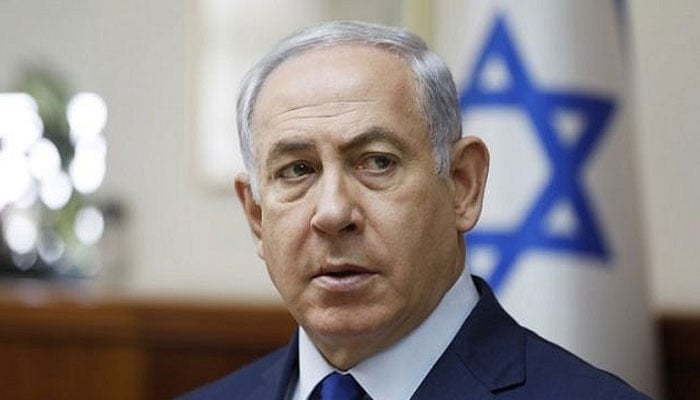
Away from the headlines of war, genocide blockades and invasions Israel usually seems to find itself in, its prime minister has been fighting his own personal war. Last Friday, the Israeli PM asked to postpone giving testimony in his long-running corruption trial that was set to resume this week, citing the ongoing security situation in the region. Many have spoken about how keeping the Middle East simmering suits Israel on a strategic level, but few have pointed out the strong personal stake PM Netanyahu has in ensuring that there is no peace in Iran, Lebanon or Gaza. A nation is unlikely to convict a sitting PM while it is at war in at least three places simultaneously. And while much of the world’s focus has, understandably, remained on the Pakistan-brokered US-Iran talks in Islamabad and the question of the Strait of Hormuz, Israel’s slaughter in Gaza continues and its attacks on Lebanon are turning out to be every bit as barbaric as what it did in the Strip. According to reports, the Israeli assault on Lebanon since March 2 has killed over 2000 people, wounded over 6000 and displaced 20 per cent of the country’s population, including over 39,000 children. The pattern of the strikes has raised concerns of ‘domicide’, a term used to describe the mass destruction of the homes of the native population.
This attempt at making entire civilian areas uninhabitable has the usual cover of ‘targeting militant infrastructure’, in this case, Hezbollah being swapped in for Hamas, but it should raise alarm about just how long the Israelis plan to stay in South Lebanon. Do they intend to leave? They are yet to clear out of Gaza and violate the so-called ‘ceasefire’ in that region so frequently that the UN rights chief was compelled to issue a condemnation last week. Israel and its PM have proven that they have little respect for ceasefires. Perhaps that is why the attacks on Lebanon actually seemed to intensify just as a ceasefire between the US and Iran was announced, almost ending the Islamabad talks before they even started. Now, PM Netanyahu remains adamant that the war with Iran is not over and that there is still ‘more to do’.
One does not need much of an imagination to figure out what ‘more to do’ means here. In that sense, the Israeli PM will likely have been pleased that the Islamabad talks over the weekend ended without a firm resolution and with US President Trump now threatening to blockade the Strait of Hormuz. According to some reports, Netanyahu, during a cabinet meeting, claimed US Vice President JD Vance had spoken to him about the Islamabad talks and told him that removing all enriched material and ensuring that there is no more [nuclear] enrichment in Iran was the US’s top priority. How much stock can one put in this? It would be convenient for Netanyahu that Israel and US priorities are so aligned, prolonging his stay in power and ensuring that the US sticks around as a bodyguard. His statement also avoids how Israel’s actions in Lebanon are making it harder to reach a deal. The question now is if the US will actually realise what an unreliable actor Israel is and that ending the conflict with Iran is, in fact, in their own and the world’s best interest? How long will Israel be allowed to be the spoiler of world peace?