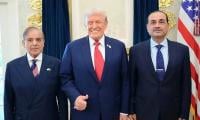
The ongoing war in Iran may have calmed at least to some degree following Pakistan and China’s intervention. But the tentacles of this wicked war expand far beyond the Middle East and the surrounding region. They extend across oceans and continents, affecting countries with which the US has battled in some cases for many decades.
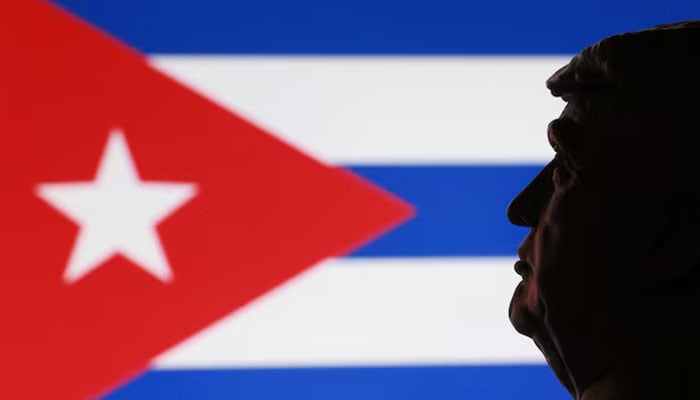
One of these is the tiny island of Cuba in the Caribbean Sea, with a population of less than 11 million. For decades, the US has insisted Cuba is a threat to it, notably following the communist coup led by Fidel Castro in 1959 and the changeover to an essentially pro-Soviet socialist system. Following the collapse of the Soviet Union in 1991, Cuba has been increasingly isolated and has suffered as a result of US sanctions.
The situation worsened earlier this year when the US, imposed a harsh oil embargo on Cuba, attempting to block off Venezuelan and Russian oil which had for ages been Cuba’s main source of energy. Though Russian vessels continued to deliver oil, Cuba has experienced massive power blackouts and other energy crises, resulting in hospitals in a country known for some of the best healthcare in the world going into emergency mode. Healthcare, like education in Cuba, is completely free of cost for citizens and many from around the world travel to the island for its health services.
Cuba has also provided doctors and medical staff at no cost to countries around the world, including those in Latin America, Africa and Asia. Some in Pakistan will recall the joint medical corps, which arrived from Cuba following the 2005 earthquake. Cuba also offers scholarships to students from Pakistan for health studies and medical degrees on the island, but these have often not been taken up by Pakistan or the offer made available to its students for fear of angering its other allies in the world.
It has to be seen if any ceasefire of a more lasting nature is to bring a re-alteration in Cuba. We hope that this will indeed be the case. We also hope that US President Trump, having learnt some lessons from Iran, will not go on to wage war on other nations. In this he has, of course, been encouraged by persons such as US Secretary of State Marco Rubio, who belongs to the Cuban diaspora, having long been a part of the essentially white oligarchy which ruled the island.
Cuba is also in the midst of a change at present. Its president, Miguel Diaz-Canel, is the first president of the country born after 1959 and represents a handover to a younger generation. While he follows the same socialist line as his predecessors, he is seen as being relatively modernist and has introduced new laws allowing for same-sex marriages, same-sex adoptions and altruistic surrogacy. This came after a referendum in which the people of Cuba voted in favour of such reforms.
We can only hope that the US will, from this point on, veer away from war outside its own borders and towards other policies. But Donald Trump is still in charge. It is also true that without the support of Russia and Venezuela, both long-term allies, Cuba will not be able to fend off a US offensive with any effective force. It is a far smaller country than Iran and also one which has suffered year after year harsh sanctions preventing its people from acquiring even the most basic goods from any other nation. It has, however, survived.
This survival is now in question. We can only hope that voices which have risen from around the world can prevent the US from waging further war and that the current ceasefire will lead towards an era of greater peace and calm, at least on the part of the US, although it is unlikely that Israel, its key partner in the current efforts, will follow the same line of action.
There has to be some question over some policies in Cuba, such as its one-party system. But at the same time, we need models such as those presented by the island. Over the years, it has provided the world with an image of a country where people come first. It has also presented an idea of a world where people can come first. Cuba has at different times sent out aid to the world’s poorest countries in the form of expertise, notably in the medical field but also in other areas and has been a part of the non-aligned movement in the years after the 1959 revolution that changed the shape of the island. We do not wish for these changes to be thrown back by any hostile invasion of the island. This time, unlike previous years’ attempts to influence politics in the island, such as those that took place in the 1960s using Cuban mercenaries, there is little real possibility of Cuba defeating an army as massive and as close to its shores as that of the US.
But there is a reason to hope. The Middle East ceasefire agreed on must go beyond the present moment and the war in Iran. The US has to be stopped from simply invading and altering the shape of any country that comes under the vision of Trump and his team. It is for the people of each country to determine how to achieve any changes they believe would serve them better, and to work towards them. Certainly, it is not the task of US warships, jets and possibly troops to make this happen, no matter what the intentions of the current government in that country may be.
It is welcome to see a world in which multiple countries have collaborated to make the hope of peace possible. We can now only hope that the US will be sensible enough to see its policies of war and cries of supremacy framed in the most ugly language cannot work. The world has seen through these slogans and the only alternative is an equal order in a place where many powers now stand strong.
The writer is a freelance columnist and former newspaper editor. She can be reached at: [email protected]