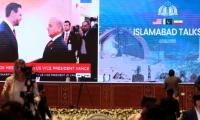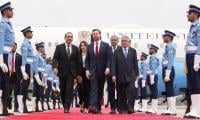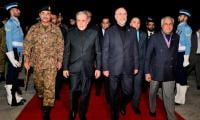
Do we Pakistanis realise what we have given to the world? Do we Pakistanis fully grasp what just happened? What happened happens once – maybe once – in the life of a nation’s existence. On April 8, Pakistan stood between the world and catastrophe. Millions of lives that would have been extinguished, an oil market that would have collapsed into chaos, a global economy that was ninety minutes from a shock it would have spent decades recovering from.
Million dead – prevented. Global oil chaos – prevented. Global economic shock – prevented. And Pakistan’s fingerprints are everywhere on this peace. This is a moment to understand, clearly and without qualification, what Pakistan just gave the world. And then to own it.
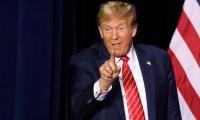
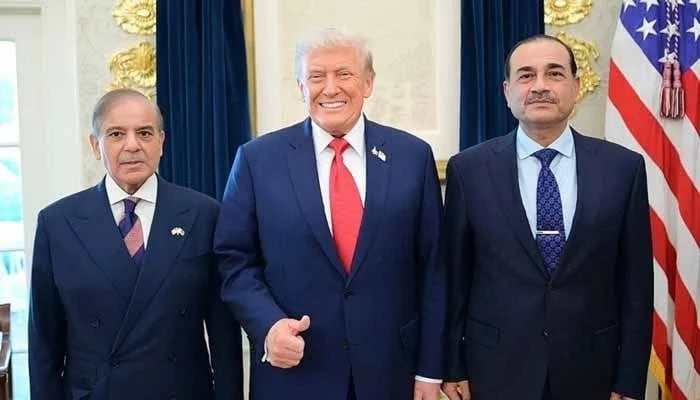
On April 7, at 6:30pm Washington time – 4:23am in Islamabad – US President Donald Trump talked to COAS Field Marshal Asim Munir to end a war. The call reportedly lasted 17 minutes.
In those 17 minutes, US offensive military operations in Iran were suspended. Iranian defensive operations ceased. Israeli strikes paused. Oil prices fell 15 per cent in after-hours trading, the steepest single-day drop in six years. Dow futures surged over 1,000 points. Stock markets from Seoul to Frankfurt to London opened sharply higher. The word ‘ceasefire’ replaced the word ‘civilisation’ in the same sentence that had, hours earlier, threatened annihilation. Millions of lives that had been ninety minutes from catastrophe were no longer in the calculus of destruction.
Seventeen minutes. One call. One army chief. One country that had spent months quietly building the only architecture that could make those seventeen minutes possible.
Why Pakistan? Why not the UN? Why not the EU? Why not Saudi Arabia, Turkiye or Qatar? The UN was structurally paralysed from the start. The EU had no credible access to either Washington or Tehran at the level this crisis required. Saudi Arabia had the deepest structural conflict of interest of any candidate. Turkey’s Nato membership was a fatal credibility problem with Iran. Qatar had tried and quietly stepped aside.
So why Pakistan? First, Field Marshal Munir’s personal relationship with Trump that no other Muslim-world leader could match. Second, Pakistan’s access to Iran. Third, China’s explicit endorsement.
The answer to ‘why Pakistan’ is ultimately this: every other candidate was either too aligned, too compromised, too small, too paralysed, or too reluctant. Pakistan was the only country on earth that had Trump’s personal trust, Iran’s historical confidence, China’s endorsement, a shared border with Iran, and the institutional will to act before being asked. That combination existed nowhere else.
On the night of April 7, Pakistan redefined itself. Not through a speech. Not through a declaration. Through a phone call at 4:23 in the morning that stopped a war. The country that the world had long examined through the narrow lens of its difficulties stepped forward, in the darkest hour of a global crisis, and turned the lights back on.
Islamabad is no longer merely a capital. It is, for this moment in history, the heartbeat of global peace. That is what Pakistan gave the world. Now Pakistan must understand what it gave – and rise to meet it.
The writer is a columnist based in Islamabad. He tweets/posts @saleemfarrukh and can be reached at: [email protected]