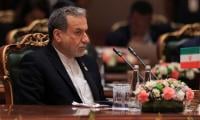
Iran's Parliament Speaker Mohammad Bagher Ghalibaf on Sunday said that his country's delegation raised "forward-looking" initiatives during negotiations in Islamabad, but the US failed to gain the trust of the delegation in the talks.
"The US has understood Iran's logic and principles and it's time for them to decide whether they can earn our trust or not," Ghalibaf, who was among Iran's negotiating team, said in a post on X.
Delegations from the US and Iran held more than 20 hours of high-stakes talks in Islamabad starting Saturday, with Pakistan mediating after brokering a two-week ceasefire.
The talks ended without a deal, with US Vice President JD Vance stating that Tehran rejected Washington's terms, which Iranian state media labelled "unreasonable".
Addressing a press conference following the talks, Vance said negotiations with Iran covered a range of critical issues.
"The bad news is that we have not reached an agreement, and I think that's bad news for Iran much more than it's bad news for the United States of America," Vance said.
"So we go back to the United States having not come to an agreement. We've made very clear what our red lines are," he added.
Iran's foreign ministry spokesman Esmail Baghaei later said that no one had expected Tehran and Washington to reach an agreement in a single meeting.
Meanwhile, Ghalibaf said that Iran had no trust in the "opposing side" before entering the negotiations due to the experiences of the previous two wars.
He vowed that the Iranian delegation "will not for a moment cease" its efforts to consolidate Iran's achievements during the six-week war.
Ghalibaf also acknowledged Pakistan's crucial role in facilitating the talks and extended his regards to the Pakistani public.
He concluded his statement by praising both the Iranian public and negotiating team, citing public support and the intensity of the discussions.
"To my colleagues in these intense 21-hour negotiations, I say: well done… Long live and enduring be our dear Iran," he said.
The conflict, which began on February 28 following joint US-Israeli strikes targeting Iran’s leadership and infrastructure, has resulted in more than 2,000 deaths and widespread regional instability.
Tehran responded with retaliatory operations, including the disruption of shipping through the Strait of Hormuz and attacks on Israeli and US bases in the region.
A ceasefire was announced on April 8, with Pakistan playing a central role in mediation between the two sides.
Washington then proposed a 15-point framework focusing on nuclear and missile issues, sanctions relief and reopening of the Strait of Hormuz, while Tehran has presented a 10-point plan seeking greater control over the Strait of Hormuz, transit fees, and comprehensive sanctions removal.