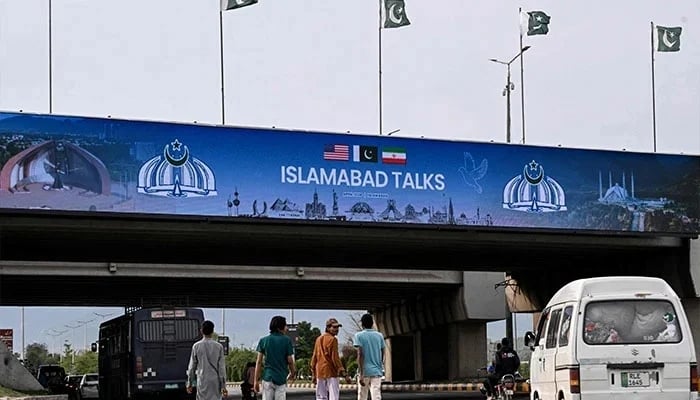
As the dust settles on nearly 21 hours of intense negotiations in Islamabad, the outcome of the Islamabad talks is at best inconclusive and, at worst, a reflection of how fragile the prospects for peace remain. That said, the mere fact that the two sides even sat across from each other is significant. But the absence of a deal does highlight just how deep the mistrust runs and how many competing interests continue to pull the process apart. The talks themselves, by all accounts, were serious and sustained. Yet any cautious optimism that may have emerged from Islamabad was quickly overshadowed by US President Donald Trump’s usual social media disruption, announcing that the US Navy would begin blockading the Strait of Hormuz. By most accepted interpretations of international law, a blockade of this nature would constitute an act of aggression. Tehran’s response, via the Islamic Revolutionary Guard Corps, was a warning of severe retaliation. This is a familiar pattern: diplomacy on the one hand, escalation on the other.
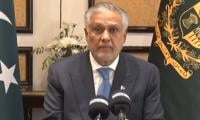
Yet, despite these tensions, the Islamabad talks were not without value. Pakistan’s role as mediator and facilitator has rightly drawn international praise. At a moment when diplomatic channels are narrowing globally, Islamabad provided a rare platform where these adversaries could engage directly, even if only to better understand the contours of their disagreements. Foreign Minister Ishaq Dar’s emphasis on the need for both sides to honour ceasefire commitments is correct and a pragmatic recognition that de-escalation, however limited, must precede any durable agreement. The reasons for the lack of a conclusive agreement have been debated over the past day. While some narratives point to familiar sticking points such as Iran’s uranium enrichment programme or tensions in the Strait of Hormuz, others suggest that the real impediment lies elsewhere. Increasingly, attention is turning to the situation in Lebanon and Israel’s role. The apparent backtracking on commitments related to a Lebanon ceasefire has also led to the justified perception that the negotiations were undermined not solely by US-Iran differences, but by external factors that neither delegation could fully control. This raises an uncomfortable but unavoidable point: any serious attempt at resolving the Iran-US standoff cannot ignore the stranglehold Israel has on the US. To pretend otherwise is to negotiate in abstraction.
Still, it would be premature to declare the Islamabad process a failure. Both sides have indicated that diplomacy is not over. Iranian officials have pointed to areas of understanding, even as they acknowledge remaining differences. As have the Americans, especially the American vice president. The truth is that diplomatic progress is hardly linear and one would have to be naive to think that a ‘deal’ would have been reached in 20 hours. For now, the situation remains fluid. Reports suggest that further meetings may take place, though no timeline has been set. In such a volatile context, developments can shift rapidly – even within days, if not hours. A breakthrough remains possible, just as easily as another round of escalation. What is clear, however, is that peace will require restraint, consistency and a willingness by all involved – including influential regional actors – to prioritise stability over short-term strategic gains. In the end, a word of credit is due to all involved from the Pakistan side in the Islamabad talks. If there is one concrete result, it is this: Islamabad has emerged as an adult capable of negotiating peace.