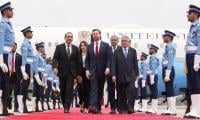
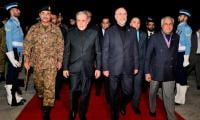
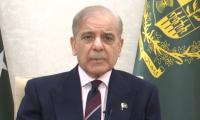
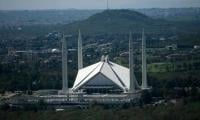
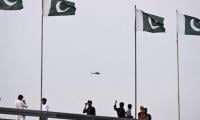
There are moments in international politics that reveal not just the fragility of the global order, but also the quiet power of those willing to hold it together. Islamabad is witnessing one such moment. The Iranian and American delegations are finally in Pakistan for ceasefire talks, arriving within hours of each other – Iran late Friday night, the US on Saturday morning. On one side stands Iran, represented at the highest level by Parliament Speaker Mohammad Bagher Ghalibaf and Foreign Minister Abbas Araghchi. On the other is the US delegation led by Vice President JD Vance, accompanied by special envoy Steve Witkoff and Jared Kushner. Each delegation met Prime Minister Shehbaz Sharif separately ahead of the negotiations. But the defining development – and one that may well reshape diplomatic expectations going forward – is that Iranian and American officials agreed to engage in direct talks in Islamabad, with Pakistan as mediator. This alone marks a significant breakthrough. Until recently, there was widespread scepticism about whether the two sides would even come face-to-face. That they are now seated at the same table is a diplomatic feat and for that most of the hard work was done by Pakistan.
All of this is unfolding in real time. As these lines are being written, the talks are underway in Islamabad. The situation remains fluid; positions may shift, breakthroughs may emerge, or setbacks may occur. A resolution could come tonight, tomorrow – or not at all. That uncertainty is inherent to diplomacy at this level. Prime Minister Shehbaz Sharif has expressed hope that these negotiations will serve as a stepping stone towards durable peace in the Middle East. Islamabad has positioned itself carefully and consistently as a facilitator of dialogue, seeking to ensure that peace prevails not only in the region but across a wider, increasingly volatile region. The stakes could not be higher. Meanwhile, Pakistan’s role is rightly being lauded across much of the international community, with only a few dissenting voices. At the same time, the challenges ahead are formidable. Bringing parties to the table is only the beginning. A wide range of critical issues remains under discussion. These include the reopening of the Strait of Hormuz, the question of reparations for Iran and the release of its frozen assets. The composition of the Iranian delegation – which includes political, economic and security experts – signals seriousness and preparedness for substantive negotiations. On the American side, updates are surely being relayed to DC.
Yet, perhaps the most delicate and decisive factor lies beyond the negotiating room. Israel’s opposition to any ceasefire arrangement between Iran and the US is the spectre that haunts the moment. There are concerns, particularly among Gulf states, about the possibility of destabilising actions aimed at derailing progress. Iran, for its part, is seeking firm guarantees against further attacks – whether by Israel or the US – as a condition for any lasting agreement. This places the burden squarely on Washington. If these talks are to succeed, the US will need to demonstrate not only diplomatic commitment but also strategic restraint and influence over its allies. For now, Pakistan has pretty much done its job. By bringing two deeply opposed sides into direct engagement, we have already altered the trajectory of this moment. Whether this space leads to lasting peace will depend on what happens next. But for now, Islamabad has offered a timely reminder: that even in the most fraught of conflicts, the first step towards resolution is the willingness to talk.