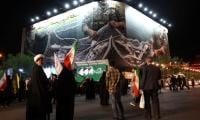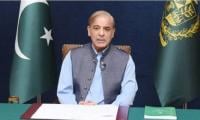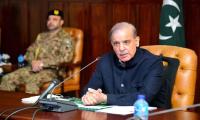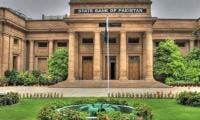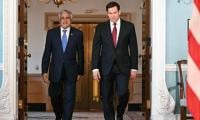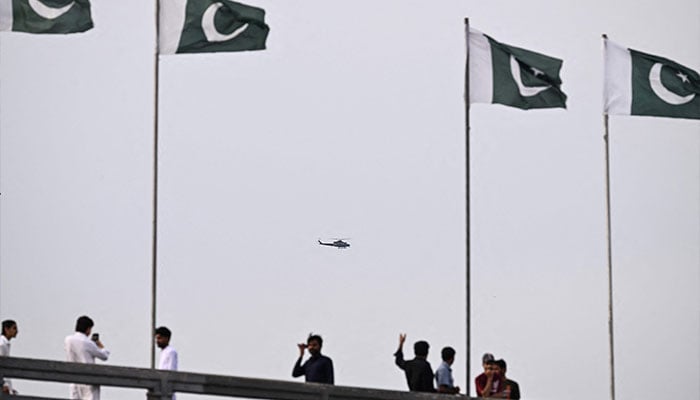
For a country more accustomed to being lectured than listened to, this is an unfamiliar (and quietly consequential) moment. As delegations arrive in Islamabad for talks between Iran and the US, the world’s eyes are on Islamabad. That alone says something about how global alignments and expectations are changing. The lead here is Pakistan – a facilitator attempting to steady a dangerously tilting geopolitical landscape. The arrival today of US Vice-President JD Vance to lead the American delegation, armed with assurances of ‘positive’ negotiations and an ‘open hand’, offers some reassurance, but one can’t disregard recent history, which shows that words from Washington are often received with caution, not comfort. This scepticism is not without basis. Iran has repeatedly emphasised that diplomacy cannot be built on selective commitments or reversible promises. Its insistence that ceasefire obligations – particularly in Lebanon – be honoured is not obstructionism.
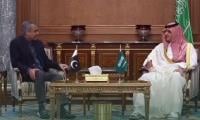
This is precisely where Pakistan’s role becomes both delicate and indispensable. Islamabad is not a guarantor of peace – nor should it be expected to assume that burden. It is, however, one of the few capitals that retains working trust across a deeply fractured geopolitical spectrum: from Tehran to Washington to Saudi Arabia to China. That trust was not built overnight and is the product of a calibrated foreign policy that, during a deeply polarising conflict, reached out to all while refusing to abandon principle. Pakistan’s position has been a careful balancing act. It maintained solidarity with Iran, upheld its commitments to Gulf partners and engaged in relentless behind-the-scenes diplomacy to secure even a temporary ceasefire. That effort came at a cost, not least in terms of heightened security risks and diplomatic pressure. Yet Islamabad persisted, driven less by self-interest than by the recognition that unchecked escalation would have consequences far beyond the immediate theatre of conflict. And that is the larger point. These talks are not just about Iran and the IS. They are really about whether diplomacy itself still holds value in a world where military adventurism is overriding everything else. And whether smaller or middle powers can meaningfully intervene to de-escalate crises, or whether global stability will remain hostage to the impulses of a few.
There is, of course, a hard limit to what Pakistan can achieve. It can convene, facilitate and encourage but can hardly compel compliance. The responsibility for that lies squarely with the international community – and most immediately with Washington and its allies. If the US is serious about dialogue, it must show consistency. That includes reining in Israel, whose actions have repeatedly threatened to derail fragile diplomatic openings. The broader context cannot be ignored. The ongoing devastation in Gaza Strip has already eroded faith in the so-called rules-based international order. Perceptions of selective outrage and uneven enforcement of international law have deepened mistrust across the Global South. In such an environment, any negotiation that appears insincere or strategically manipulated risks both failure and further destabilisation. Pakistan’s role in such a situation is important: the country represents the possibility that diplomacy can still emerge from outside traditional power centres. If these talks succeed, the dividends will extend far beyond Islamabad. A sustained ceasefire would literally save lives. If they fail – and one hopes they will not – it will not be for lack of effort on Pakistan’s part. For now, we can safely say that when the world looked like it was about to implode, Pakistan stepped up. All the onus now is on the two parties that are supposed to talk today in Islamabad.