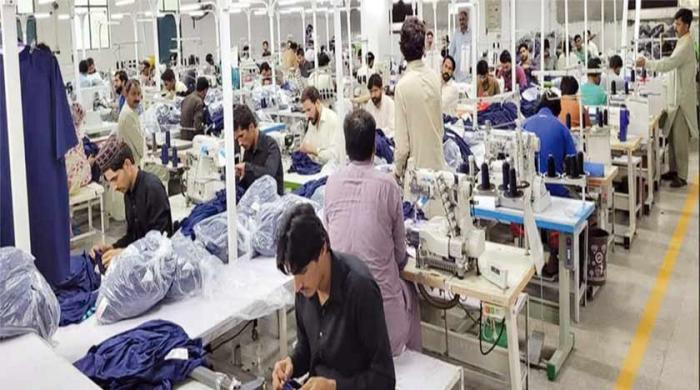
Pakistan is witnessing a brain drain of an unprecedented scale, increasingly described as one of the most severe episodes in the country’s history and among the worst seen globally in recent times.
BRAIN DRAIN

Pakistan is witnessing a brain drain of an unprecedented scale, increasingly described as one of the most severe episodes in the country’s history and among the worst seen globally in recent times.
According to the Bureau of Emigration and Overseas Employment, as many as 763,526 Pakistanis secured overseas employment during the calendar year 2025 alone. As the country entered 2026, this trend not only persisted but appeared to intensify. The government has set a target of facilitating overseas employment for more than 800,000 individuals during the year, exceeding the figures of the past two years, while the bureau currently lists over 153,000 foreign job openings for the Pakistani workforce.
In 2024, a total of 727,381 Pakistanis left the country for employment abroad. This number rose to 763,526 in 2025, an increase of 36,145 persons or about 5.0 per cent. The most pronounced outflow, however, occurred in 2023, when 862,625 Pakistanis migrated for work, primarily to traditional manpower markets such as Saudi Arabia, the UAE, Qatar, Bahrain, Oman, Kuwait, Syria and Iraq. While labour migration has long been a feature of Pakistan’s economy, the scale and composition of recent departures mark a disturbing shift.
Of particular concern is the accelerating exodus of highly educated and trained professionals. In 2023 alone, over 100,000 skilled individuals found employment abroad, including 8,741 engineers, 7,390 accountants, 3,486 doctors, 1,533 teachers and roughly 45,600 IT experts, managers, nurses and other technical professionals. This trend continued unabated in 2024, when nearly 200,000 emigrants were classified as highly skilled or qualified, among them about 12,000 engineers, 5,000 doctors and thousands of accountants, teachers, nurses and managers.
The sustained outflow of young and skilled professionals over the past three years should have triggered serious concern and policy introspection. Instead, no meaningful corrective measures were introduced to stem the tide. Successive governments appeared more inclined to celebrate rising inflows of foreign remittances than to confront the long-term implications of losing critical human capital. More recently, the government reduced the minimum age for women seeking overseas employment from 35 to 25 years, a move largely aimed at facilitating the migration of nurses and other medical professionals, further underscoring the official emphasis on exporting manpower rather than retaining talent.
The consequences of this trend are already visible across key social and economic sectors. Pakistan is rapidly losing its educated and trained workforce, severely affecting healthcare, engineering, manufacturing and the IT industry. In 2025 alone, some 18,352 highly educated and another 13,657 highly trained individuals left the country. This group included 5,946 engineers, 5,659 accountants, 3,795 doctors, 1,725 teachers, 1,640 nurses and more than 12,700 IT professionals and other technical workers.
While traditional destinations continue to attract Pakistani workers, new markets are also opening up. Japan, South Korea and several European countries, including Germany, Italy and Romania, have emerged as important destinations, alongside Malaysia and Turkiye. China is increasingly positioning itself as a potential market for Pakistani professionals, having recently offered 20,000 scholarships in various fields and established the China Global Professional and Technical Certification Centre, a multilateral platform of which Pakistan is a founding member, to facilitate cross-border mobility of skilled human resources.
If left unaddressed, this relentless brain drain will continue to hollow out Pakistan’s productive capacity and undermine its prospects for sustainable growth. It is imperative that the government urgently formulate and implement a bold, comprehensive and credible strategy
At the same time, remittances from overseas Pakistanis have shown strong and consistent growth. In 2023, remittances stood at $26.3 billion, rising sharply to $34.63 billion in 2024 and reaching a record $40 billion in 2025. For 2026, remittances are projected to exceed $41 billion. While these inflows provide short-term relief to the balance of payments, economists have repeatedly cautioned against Pakistan’s growing dependence on remittances at the expense of export-led growth. This concern is reinforced by the persistent decline in exports, which fell from $35.9 billion in 2023 to $32.32 billion in 2024 and further to $30.65 billion in 2025, marking a significant year-on-year decline.
It is therefore deeply ironic that official discourse continues to frame the migration of skilled workers as an economic success. The minister for overseas Pakistanis and human resource development, seemingly oblivious to the long-term national cost, recently cited with pride that a Pakistani technician employed in South Korea remits an average of $1,800 per month. Such statements reduce human capital to a remittance-generating commodity, ignoring the structural damage caused by the depletion of domestic skills and expertise. By contrast, Bangladesh’s legal framework for overseas employment allows the state to regulate who leaves, potentially restricting migration from critical professions when required in the national interest.
Historically, the highest-ever export of Pakistani human resource occurred in 2015, when 946,571 individuals left the country for overseas jobs. This surge was driven largely by massive demand in foreign labour markets such as Saudi Arabia and the UAE, as these countries invested heavily in construction and infrastructure. The majority of emigrants at that time were skilled, semi-skilled and unskilled workers. A total of 522,750 Pakistanis went to Saudi Arabia and another 326,986 to the UAE. Notably, there was no significant exodus of highly qualified professionals such as engineers, doctors and financial managers of the kind witnessed in recent years.
The drivers of the current mass exodus are well known. Prolonged economic stagnation, unemployment exceeding 7.0 per cent, youth joblessness nearing 30 per cent, limited career prospects, stagnant real wages, declining purchasing power, widespread poverty affecting an estimated 42-45 per cent of the population, persistent inflation, insecurity, poor governance, high taxation and stifling professional and social environments have made staying in Pakistan increasingly untenable for many skilled individuals. In contrast, overseas employment offers higher incomes, better living standards, political stability, professional growth and access to modern technology. It is estimated that this brain drain costs Pakistan about $4.2 billion annually in lost economic activity and foregone tax revenues.
If left unaddressed, this relentless brain drain will continue to hollow out Pakistan’s productive capacity and undermine its prospects for sustainable growth. It is imperative that the government urgently formulate and implement a bold, comprehensive and credible strategy to address the root causes driving skilled migration. Retaining talent through economic revival, institutional reform, improved governance and meaningful professional opportunities is no longer a policy choice but a national necessity. Without such intervention, Pakistan risks trading its future development for short-term remittance gains, a bargain the country can ill afford.
The writer is a retired chairman of the State Engineering Corporation.