High-quality, granular socioeconomic data enable analyses to inform economic decisions. Pakistan, however, lacks many economic data sources that provide a granular view of economic activity.
MANUFACTURING DATA
High-quality, granular socioeconomic data enable analyses to inform economic decisions. Pakistan, however, lacks many economic data sources that provide a granular view of economic activity.
Thus, the recently launched Economics Census 2023 is a welcome addition. Before the latest economic census, the previous report was released in 2005. By comparison, Bangladesh’s fourth economic census was conducted in 2024, preceding the 2013 census. India conducts the economic census approximately every 7 years; its 7th, the latest, was conducted in 2020. Frequent iterations of such data allow policymakers to track structural shifts and design timely interventions
The 2023 economic census data is very rich and can be used for diverse analyses. The tables in the census launch report contain useful information. For instance, it shows the total number of economic enterprises in Pakistan by category, size, employment size, workforce and many other variables. Although the Economic Census 2023 data is not directly comparable to the Economic Census 2005 data, one can make broad comparisons to see how economic activity has evolved since 2005.
Currently, according to the 2023 census, there are 7,142,941 establishments in Pakistan. Of these, 15.43 per cent, 73.78 per cent and 9.75 per cent are agricultural, services and manufacturing establishments, respectively. In comparison, in 2005, the agricultural, services, and manufacturing establishments were 1.57 per cent, 78.64 per cent and 19.72 per cent, respectively.
The increase in the number of manufacturing establishments from 9.75 per cent to 19.72 per cent is a welcome sign for the economy. However, the distribution of establishments by employment size is not encouraging. Large establishments (251 and above employees) have marginally increased from 0.01 per cent in 2005 to 0.10 per cent in 2023, while medium enterprises (11-250 employees) have increased from 0.05 per cent to 0.49 per cent. The rest, 99 per cent, are small establishments (1-10 employees).
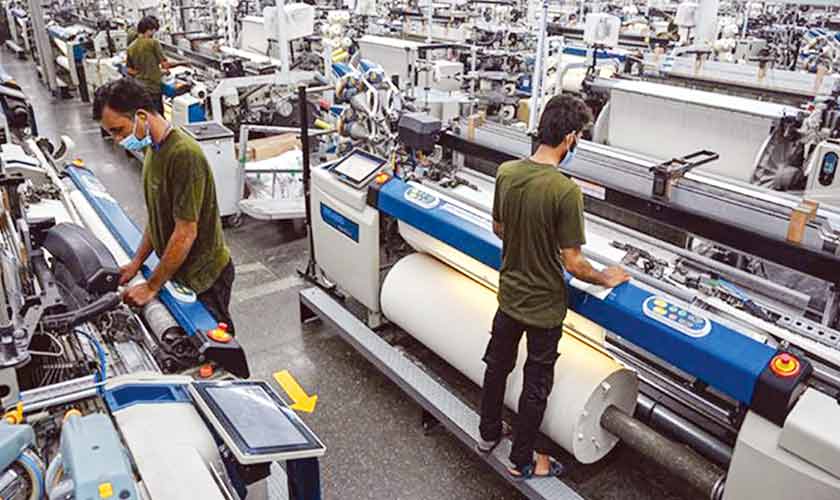
Manufacturing, regardless of how advanced the services sector becomes, remains the backbone of an economy. According to the Economic Census 2023, there are 696,558 manufacturing establishments in Pakistan, which employ 12.53 per cent of the workforce. Some advanced economies, such as Germany, Italy and South Korea, have considerably higher shares of employment in manufacturing. This is a worrying economic statistic given Pakistan’s youth bulge and youth unemployment.
While detailed policy prescriptions require separate analysis, the immediate priorities are clear: Pakistan needs to lower the cost of doing business, ease access to finance, improve energy costs and efficiency and reduce regulatory burden
An analysis of manufacturing establishments in the 2005 and 2023 economic censuses reveals several notable trends. From 2005 to 2023, while manufacturing establishments have grown at 0.99 per cent per annum, large-scale manufacturing establishments (with more than 10 employees according to the definition used by Pakistan’s national accounts) have grown at 4.61 per cent per year, while those with fewer than 10 employees (small-scale manufacturing) have grown at less than 1.0 per cent per year. During the same period, the real value added by the overall manufacturing, large-scale manufacturing, and small-scale manufacturing has grown at 3.82 per cent, 8.18 per cent and 2.90 per cent, respectively.
These figures can be used to back-of-the-envelope estimate a proxy for the productivity of the manufacturing sector by dividing value added by the growth in the number of establishments. The resulting estimate is approximately four. Intuitively, this indicates that, on average, each manufacturing establishment contributes approximately four times more to value-added growth than would be expected from the increase in establishment numbers alone.
One can interpret this as indicating that manufacturing GDP is growing at 3.82 per cent, while the number of establishments is growing at only 0.99 per cent, implying that the difference -- 2.83 per cent -- comes from existing firms becoming more productive. On a positive note, this implies productivity gains, capital deepening and economies of scale in the manufacturing sector. However, this also implies that manufacturing growth in Pakistan appears increasingly less employment-intensive.
In other words, growth is more capital- and productivity-intensive than employment-intensive. Furthermore, as has been endlessly argued, Pakistan is missing the ‘manufacturing miracle’ pattern. Evidence shows that economies such as China, Vietnam and South Korea, during their rapid development phases, created new manufacturing firms and increased productivity growth. Hence, their impressive sustained economic growth.
The growth of manufacturing establishments in Pakistan, the growth of their value added, and the resulting productivity figures (albeit rough) are hallmarks of developed economies. Economies, once they develop and mature, show such traits as they transition from manufacturing to a services-based economy. But has Pakistan’s economy matured enough to exhibit such trends?
While detailed policy prescriptions require separate analysis, the immediate priorities are clear: Pakistan needs to lower the cost of doing business, ease access to finance, improve energy efficiency and reduce regulatory burdens that prevent small firms from growing into medium and large firms. Otherwise, Pakistan risks remaining in a suboptimal equilibrium without first realising the employment and growth benefits of a robust manufacturing base.
The writer is a senior researcher at the Pakistan Institute of Development Economics (PIDE), Islamabad. He can be reached at: [email protected]