Pakistan sits atop one of the world’s largest lignite coal reserves, particularly in the Thar region of Sindh, with estimates of around 175-186 billion tonnes.
COAL RESERVES
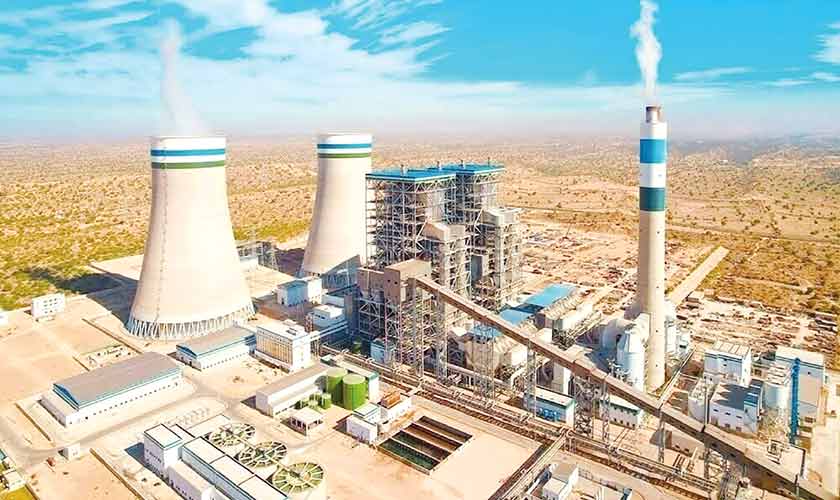
Pakistan sits atop one of the world’s largest lignite coal reserves, particularly in the Thar region of Sindh, with estimates of around 175-186 billion tonnes.
Yet despite this enormous potential, much of the country’s coal-fired power generation continues to rely on imported coal or mixed fuel sources. This dependence not only drains precious foreign exchange reserves but also exposes the power sector to global commodity price volatility.
For Pakistan to secure its energy future, reduce the burden of costly imports, and stabilise electricity tariffs, it is vital to build a robust local coal ecosystem where the power generation industry is positioned as the anchor customer.
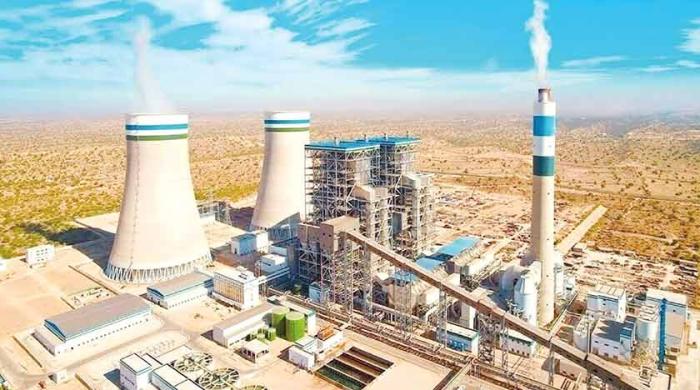
Thar coal has already started to play a significant role. Approximately 2,640MW of electricity are currently being generated from operational projects in Block I and II, a figure that is expected to rise to around 3,280MW.
In a high-level meeting chaired by Sindh Chief Minister Murad Ali Shah, he highlighted Thar coal’s critical role towards attaining energy security considering the low-cost indigenous power generation which is possible. He mentioned that the use of Thar coal has saved the country over $680 million worth of foreign exchange as a result of reducing dependence on imported coal. He further mentioned that electricity generated from Thar coal costs Rs4.8 per unit which is about three times less compared to electricity generated using imported coal.
By contrast, generation from regasified liquefied natural gas or furnace oil is far more expensive, ranging between Rs41 and Rs51 per unit in many cases. The clear price advantage demonstrates why anchoring domestic coal within the national power generation mix is essential. When power producers commit to long-term demand for indigenous coal, the resulting investments in mining, transport infrastructure, beneficiation facilities and plant retrofits become economically viable.
Building such an ecosystem will require large upfront investments. Mining capacity in Thar and other identified reserves must be scaled up. Rail and road links are necessary to ensure coal can be efficiently transported from mine mouth to major power plants. Many of the existing imported coal plants will need to be retrofitted to handle the unique characteristics of local lignite, which contains higher moisture content and lower calorific value.
Alongside this, modern emission control systems must be integrated to ensure environmental standards are met. The government has already taken steps by forming committees to prepare feasibility studies for the conversion of imported coal-based independent power producers to Thar coal. Yet progress is constrained by financing challenges. Domestic banks, wary of environmental risks and international climate policy headwinds, have been reluctant to extend credit for such projects. Without addressing this bottleneck, the transition will remain slow.
Estimates suggest that switching power generation to indigenous coal could save Pakistan as much as $1.5-2 billion annually by cutting down on coal imports
The long-term benefits of developing an integrated coal ecosystem are substantial. Estimates suggest that switching power generation to indigenous coal could save Pakistan as much as $1.5-2 billion annually by cutting down on coal imports. The increasing share of local coal in the generation mix has already translated into measurable gains as in March 2025, the average fuel cost per unit of power dropped from about Rs16.8 to Rs12.2 compared with the same period the previous year, a 27 per cent reduction largely driven by greater utilisation of Thar coal.
This shows that even modest shifts toward local resources can yield significant national savings. In addition to cost reduction, an expanded coal ecosystem would create thousands of direct and indirect jobs across mining, logistics, power plant operations and allied services, particularly in underdeveloped regions like Thar, Lakhra and Duki. These benefits extend well beyond the energy sector, spurring regional development, boosting purchasing power through lower tariffs and creating multiplier effects in manufacturing, transport, and small enterprise growth.
International experiences provide valuable lessons. Indonesia, once a struggling economy, transformed its energy and industrial base by systematically exploring and developing its vast coal reserves in Sumatra and Kalimantan. Coal now contributes significantly to its GDP and sustains millions of livelihoods, while powering one of the world’s most populous nations. Pakistan has similar potential if it leverages its reserves with strategic planning and investment. It is important to acknowledge the environmental debate.
Coal remains a carbon-intensive fuel, and Pakistan is particularly vulnerable to climate change. Yet the country’s overall carbon footprint is negligible at the global scale, and advanced technologies are available to mitigate emissions. High-efficiency, low-emission power plants can achieve efficiency rates nearly 20 per cent higher than older subcritical plants, while flue gas desulphurisation and selective catalytic reduction can dramatically cut sulphur dioxide and nitrogen oxide emissions.
Over time, carbon capture, utilisation and storage can further reduce the environmental burden. Responsible development of indigenous coal, integrated with environmental safeguards and gradual adoption of cleaner technologies, offers a balanced pathway that combines energy security with sustainability.
The choice before Pakistan is therefore not whether to use coal, but how to use it responsibly and effectively. By treating the power generation industry as the anchor customer of a fully developed coal ecosystem, the country can align energy policy with long-term economic interests. Investment in mining, logistics and plant conversion will demand capital and coordinated planning, but the resulting benefits in lower electricity tariffs, reduced foreign exchange outflows, job creation and enhanced industrial competitiveness will far outweigh the initial costs.
With coherent policy direction, collaboration between government, industry and financiers, and adoption of modern technologies, Pakistan can transform its indigenous coal into a cornerstone of national progress.
The writer is a freelance journalist. He can be reached at: [email protected]