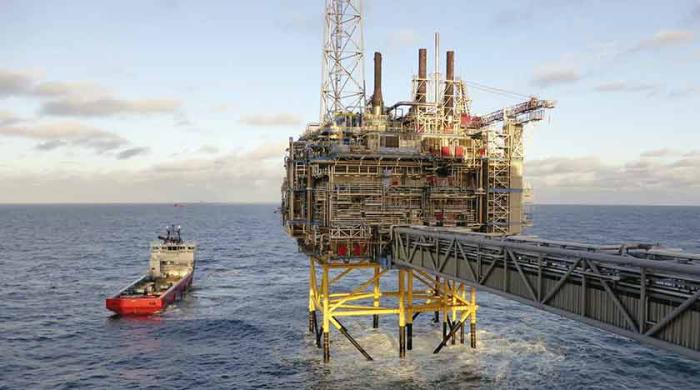
Pakistan’s chemical industry, long neglected by successive governments, now appears poised for accelerated growth under the umbrella of China–Pakistan Economic Corridor (CPEC), provided the emerging opportunities are effectively harnessed.
CHEMICAL INDUSTRY
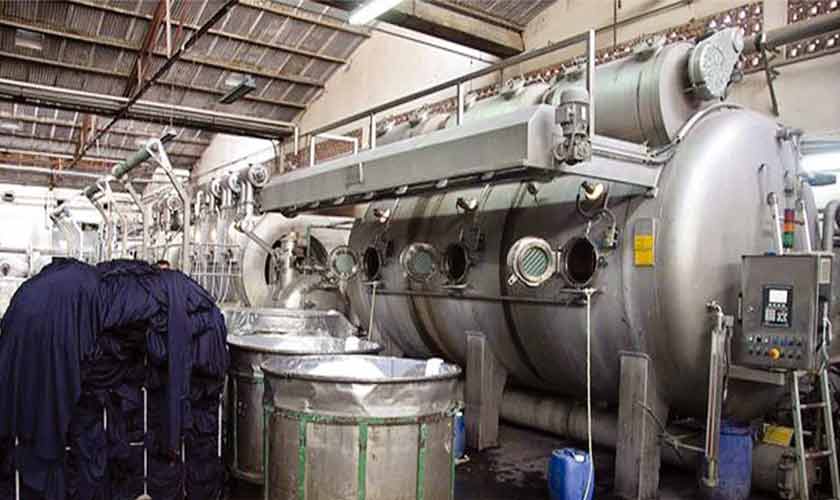
Pakistan’s chemical industry, long neglected by successive governments, now appears poised for accelerated growth under the umbrella of China–Pakistan Economic Corridor (CPEC), provided the emerging opportunities are effectively harnessed.
CPEC 2.0, the revised second phase of the programme, places renewed emphasis on industrial cooperation, with the chemical and petrochemical sectors identified as key pillars for Pakistan’s economic modernisation and long-term socio-economic development.
In September 2025, Pakistan and China signed bilateral agreements worth $8.5 billion, including major joint ventures in chemical and petrochemical manufacturing. Of this, China has committed an initial investment of $2.5 billion specifically to promote Pakistan’s chemical sector. The objective is to shift the country from importing finished chemical products to indigenous production through technology transfer arrangements aligned with international quality standards, greater value addition, and improved efficiency. Under these arrangements, Pakistan’s chemical producers will also gain access to global markets through a digital trading and supply chain platform developed in collaboration with Chinese companies.
The CPEC 2.0 framework envisages the development of Special Economic Zones (SEZs) with dedicated industrial clusters to attract targeted investments. According to current plans, the SEZs at Rashakai in Khyber Pakhtunkhwa and Gwadar in Balochistan are being designed with specialised zones for the production of a wide range of chemicals. In the short term, Chinese investment is also expected to support optimal local production of fertilisers and pesticides, thereby reducing import dependence and strengthening agricultural productivity.
Globally, the chemical industry is a multi-trillion-dollar sector, valued at over $6 trillion in 2024, with projections indicating sustained growth. The Asia-Pacific region remains the largest market, led by China. Often described as the ‘mother of industries’, the chemical sector is indispensable to overall industrial development and national self-reliance, supplying essential raw materials to nearly every segment of manufacturing. It produces an estimated 350,000 different chemicals and mixtures worldwide and continues to evolve through innovation to meet rising demand for advanced and sustainable materials.
Chemicals are embedded in everyday life and form the backbone of nearly all manufacturing processes. Industrial chemicals in solid, liquid, and gaseous forms are extensively used across pharmaceuticals, rubber, soaps and detergents, cosmetics and toiletries, food and beverages, cement, fertilisers, ceramics, glass, sugar, pulp and paper, iron and steel, oil and gas, leather and tanneries, coatings and inks, textiles and engineering industries. Millions of new chemical compounds are being synthesised globally at an accelerating pace.
The sector also provides critical technological linkages to industries such as automotive manufacturing, engineering, consumer durables, food processing, and petrochemicals. Around 70 per cent of a country’s industrial chemical output -- basic, formulated and intermediate products -- is absorbed by the broader manufacturing sector, making growth in chemicals directly proportional to overall industrial expansion.
Often described as the ‘mother of industries’, the chemical sector is indispensable to overall industrial development and national self-reliance, supplying essential raw materials to nearly every segment of manufacturing
Despite operating in highly competitive global markets and enduring prolonged policy neglect, Pakistan’s chemical industry has grown steadily and demonstrated remarkable resilience. Today, 25 listed companies are engaged in the production and marketing of a wide range of chemical products, employing thousands of workers, alongside numerous units operating in the informal sector. Major players include Lucky Core Industries, Lotte Chemical Pakistan, Engro Polymer & Chemicals, Nimir Industrial Chemicals, Sitara Chemicals, Ghani Chemical Industries and Archroma Pakistan.
While Pakistan is not a major global producer, its chemical industry plays a significant domestic role, contributing substantially to manufacturing. The sector is characterised by the production of chlor-alkali products such as caustic soda, chlorine, and soda ash; polymers and resins including PVC; fertilisers; industrial gases; and a growing range of speciality chemicals.
In 2025, the industry demonstrated resilience despite modest declines in output and a limited share of GDP, supported by export growth, particularly to China. By June 2025, listed chemical companies reported profits of around $40 million, with fertilisers and agrochemicals displaying strong growth potential. High demand and relatively low competition have traditionally supported healthy margins, with profitability continuing to improve.
Exports recorded notable growth in 2025, driven primarily by a sharp surge in shipments to China. Pakistan supplied chemicals valued at $13.19 million to China during January–June 2025, compared with $4.38 million in the same period of the previous year. Other export destinations include the Middle East, South and Southeast Asia, Europe and the US. Exported products range from plastic materials and pharmaceutical inputs to other industrial chemicals.
The scope for further development of Pakistan’s chemical industry remains vast. In 2025 alone, the country imported industrial chemicals -- excluding fertilisers and pharmaceuticals -- worth $5.45 billion, including plastics, PTA, and organic chemicals. With sustained growth in the large-scale manufacturing sector, Pakistan’s chemical market is projected to reach $20 billion by 2030. Despite its inherent strengths and growth potential, Pakistan’s chemical industry continues to face formidable challenges. These include persistent exchange-rate volatility, high energy costs, shortages of locally available raw materials such as PVC and polymers, rising production costs, and, above all, the absence of a consistent and supportive industrial policy.
This unfavourable business environment has compelled several multinational corporations to exit Pakistan over the years. Lotte disinvested its chemical business in 2025, while Pfizer and Procter & Gamble exited in 2024. Earlier departures included ICI in 2022, Clariant in 2013 and Sandoz as far back as 1995.
Credit must be given to the domestic chemical industry, which absorbed these shocks and successfully continued the operations of these entities following their takeovers, ensuring uninterrupted production under Pakistani ownership, control, and management. The sole global company operating in the chemicals sector is Archroma Pakistan, a subsidiary of Archroma Textiles GmbH of Switzerland, the producer of colour and speciality chemicals.
The chemical industry stands at a pivotal moment in Pakistan’s industrial trajectory. Strategic investment under CPEC 2.0, coupled with technology transfer, focused SEZ development and consistent policy support, can transform the sector into a cornerstone of industrial self-reliance and export-led growth.
Reducing import dependence, strengthening downstream industries and integrating Pakistan into regional and global chemical value chains will be critical. If these opportunities are seized with clarity and commitment, the chemical industry can emerge as a powerful driver of sustainable industrialisation and economic resilience.
The writer is a retired chairman of the State Engineering Corporation.