Reality check. Accept it or not. Low worker productivity, inefficiency and absenteeism are endemic in Pakistan’s industrial sector.
LABOUR PRODUCTIVITY
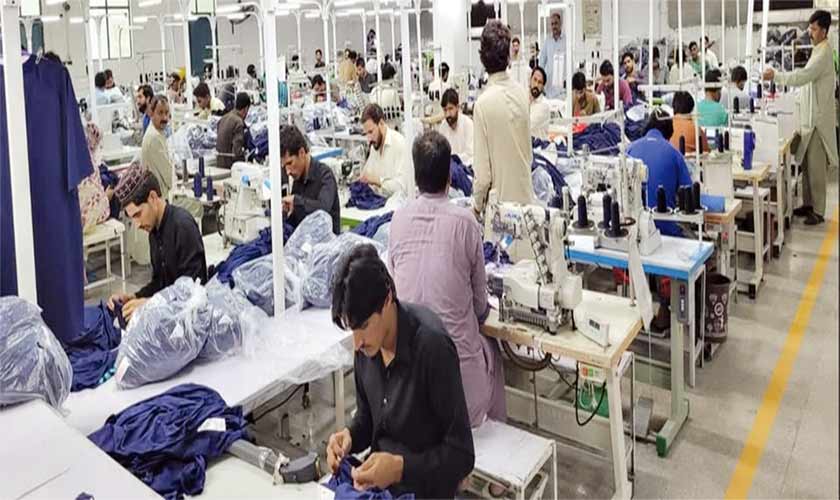
Reality check. Accept it or not. Low worker productivity, inefficiency and absenteeism are endemic in Pakistan’s industrial sector.
This sweeping statement is not directed at industries where focused attention is maintained and practised, but rather at most SMEs and even large industrial units, where human resource management is not fully focused on efficiency and productivity. The usual mode of achieving production goals is to rely on working overtime, hiring more workers than required, and seeking shortcuts to meet the target. Add to this the menace of worker absenteeism.
This scenario exacerbates the plant ecosystem, where work stoppages are often due to the non-availability of water, frequent power outages and loadshedding, and suspension or low-pressure natural gas. To add to these, there are an excessive number of statutory holidays and last-minute public holiday announcements. Imagine the hair-pulling and thumb-chewing frustration of exporters who have to meet shipment deadlines. Consequently, this negatively affects the enterprise's sustainability and viability, resulting in increased production costs.
At bilateral and tripartite meetings, employers' representatives often raise productivity, efficiency and absenteeism, stating that they are aligned, yet no concrete measures are implemented to address these issues. Labour leaders whose previous mantra was always ‘appointment letters’ are now mostly talking about minimum wage and contract labour. Why did many enterprises, even multinationals and large domestic industries, switch to external service providers instead of keeping workers on their rolls? Why is there a minimum wage for unskilled workers, many of whom are inept and unable to perform in their true form?
There is always a call for job security for workers and employers do not deny this, as secure workers benefit the health and success of the enterprise. Employers are comfortable retaining long-tenured employees who are well-versed in the enterprise's culture, management and operations. The downside is that workers regard job security as a fundamental right and thus ignore the basic principle of giving 100 per cent to their tasks.
Over time, a lethargic, casual attitude becomes customary and newcomers to the enterprise succumb to this system, resulting in overall inefficiency in the workflow. The supervisors then tend to display a lackadaisical attitude because the culture of low productivity and blatant inefficiency has become the norm. Moreover, for whatever reason, the workflow is also affected by absenteeism, particularly when the absent worker is pivotal to the operation of specific machinery or equipment.
Managers and even owners often disregard positive employee feedback and avoid open communication channels that are essential for building trust and confidence
Outsourcing of workers became an alternative and service providers soon began to make inroads into the industries. They ensured that the workers they sent to industry were skilled, productive, and efficient. They also ensured that if any workers was absent, there was a substitute available. The enterprise did not have to worry about EOBI, Social Security, unionisation, slowdowns, or retaining workers on its payroll when production had to be reduced. More importantly, the service providers guarantee the quality of their work.
On the other hand, labour leaders complain that job outsourcing is a cost-cutting measure in contravention of existing labour practices. There is always friction between outsourced and on-roll workers, and supervisors and managers sometimes have to walk a tightrope. What is often overlooked is that even an outsourced person is a worker who is employed and receives wages, and is registered with EOBI and social security.
Enhancing labour productivity and efficiency is incumbent upon management, particularly the human resource manager and department managers. It is their responsibility to develop performance-based strategies and systems, mentor workers, understand workers, address workers' feedback, and communicate the benefits of higher productivity and efficiency. Achieving genuine commitment from workers and then providing them with satisfaction through incentives and praise are essential to boosting productivity.
The psychological well-being of workers must be recognised by management, as low productivity is a direct consequence of insufficient sleep, transportation issues, children’s education and health, and financial fatigue, all of which affect workers' well-being. Because workers are at the workplace year-round, except for statutory and weekly holidays, they often take more days off, whether for family reasons or exhaustion, while some simply prefer to take leave without explanation.
A favourable workplace for labour and management should be the objective. Therefore, employee engagement and participation in the work process positively influence overall productivity and efficiency. Sidelining or using strong-arm tactics, or even showing disrespect to workers, negatively impacts the enterprise's environment and reduces workers’ sense of ownership and loyalty.
Managers and even owners tend to disregard positive feedback from employees and shun open communication channels that are essential for building trust and confidence. The result is inevitably a lack of enthusiasm, leading to productivity and efficiency issues.