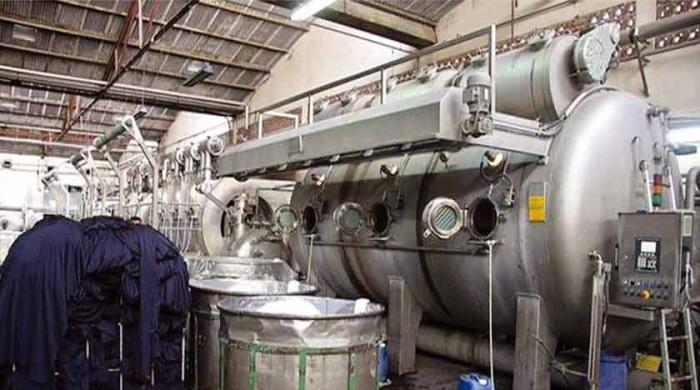
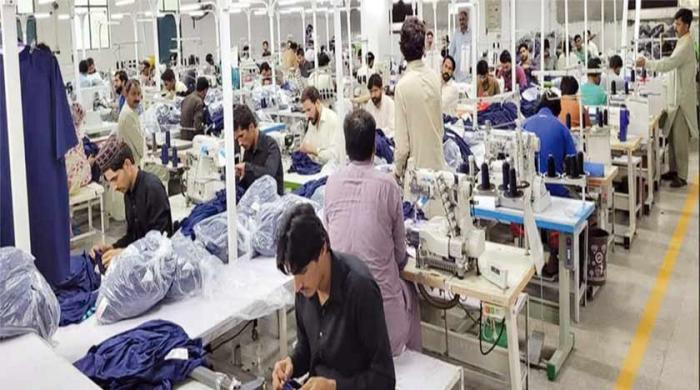
The elephant in the dark room’ is an ancient metaphor that illustrates how impaired vision changes individual perspectives due to darkness, as the full reality, the elephant, remains unseen. This symbolises ignorance or the creation of masked views.
IMF
‘The elephant in the dark room’ is an ancient metaphor that illustrates how impaired vision changes individual perspectives due to darkness, as the full reality, the elephant, remains unseen. This symbolises ignorance or the creation of masked views.
The elephant of economic failure is not an abstraction but a reality built and controlled by those who enormously benefited from the creation of Jinnah’s Pakistan. They intentionally switched off the lights, making the room darker and hiding its true reality. Whoever braves the subject of economic collapse tends to dissect failures into different segments and offer various remedies, yet remains indifferent to the concealed elephant itself, which prevents them from isolating the source of persistent economic failure.
There is a lesson rooted in Pakistan’s humblest beginnings, when many believed that ‘Pakistan will not survive’. This was proved wrong, barring the destruction we brought upon ourselves. The early period was marked by the absence of financial, industrial and trade infrastructure, no central bank or currency and skewed agriculture towards cash crops. Yet the country survived 1947-58 through grit, geopolitics and providence. It achieved modest 1-2 per cent GDP growth without IMF or World Bank support or so-called brilliant planning like Uraan Pakistan 2030, which has since lost its way.
Why did this survival triumph not take root? Because “the governance of the country has been shaped by feudal, industrial, military and bureaucratic elites besides politics and faith” (IMF, GCD 2025). Jinnah, aware of such risks in this unequal multipolar society, launched ‘golden reforms’ for land redistribution, merit-based bureaucracy and military subordination to civilians. These eroded after his death and exacerbated inequality, which greatly impacted Bengal and led to its breakaway in 1971.
Against a backdrop of self-interest, institutional capacity was eroded to formulate socioeconomic policies derived from ground realities. Not only do such policies continue, but their unintended consequences have wreaked havoc in terms of macro instability, weak growth and poverty. This was compounded by abnormalities that flooded the economic scene. Structural flaws. Weak regulatory regimes. Complex compliance requirements. Poor governance. Rampant corruption. Those pleading for reform, along with common people, eventually resigned themselves to a transactional relationship with governance. This became the only means of survival, or they chose to leave the country altogether. Meanwhile, the elephant was kept in the dark, hidden, and all remedial engagement proved unproductive.
The IMF’s role in Pakistan began with a $25 million standby arrangement in 1958, though withdrawal never occurred given US military aid of $400-450 million (1954/55). Despite failing to bring economic change, the IMF stayed, as it safeguards exposure and debt repayment, besides Pakistan’s geopolitical alignment with US interests plus institutional inertia marked by decades of presence and Western cultural comfort. Even volatile Pakistan proved a useful partner in the orbit of US, Saudi Arabia, UAE and China interests.
Though IMF penetration was limited to soft targets such as tax and tariff hikes, import liberalisation, circular debt reduction and phasing out of subsidies, hard targets conflicting with elite interests remained out of reach
The cycle of various types of funding arrangements masks deeper complicity. Ironically, the IMF serves as a blessing for the country, lending international credibility without directly challenging its ruling structure. It acts as a multipurpose tool for bureaucratic patronage, economic stabilisation, an easy source of bridge financing and a key that opens doors for catalytic effects of multilateral trade and funding. Pakistan entered into 23–24 IMF programmes funded at over $31.1 billion. It paid back $28 billion in principal and interest, with around $9 billion still outstanding. Initial involvement was for economic stabilization but extended into shaping macro stability and reform.
Since 1958, most IMF recommendations have been repeated dozens of times across programmes. Reserves buildup and a market-based forex rate (1958). Broadening the tax base, especially agriculture and real estate (1980). SOE privatization and governance (1980). Energy sector viability (1988). Fiscal surplus or deficit reduction (1993). Anti-corruption, governance, AML CFT (1997). Climate resilience (2010). These repetitions signal well-established resistance, not policy ignorance. Though IMF penetration was limited to soft targets such as tax and tariff hikes, import liberalisation, circular debt reduction and phasing out of subsidies, hard targets conflicting with elite interests remained out of reach.
Overburdened by donor conditions and hundreds of expert recommendations, successive governments reset the reform mantra and created new committees and task forces for even more or rehashed recommendations. This allows them to earn political mileage, but the task eventually slows down due to institutional pushback and implementation delays, ending in what I call ‘a sea of abandoned reforms’.
This pattern of reset and abandon explains Pakistan’s dismal reform track record and renders the IMF’s recent $1.2 billion tranche approval under the ongoing EFF or ESF (December 2025) bailout, citing stability and reform momentum, apologetic and sugarcoated. Luckily, it coincided with the Governance and Corruption Diagnostic 2025, whose outcome is not a smoking gun but a snapshot of ongoing economic malice tied to foregone growth of around 6 percent of GDP over five years. It proposes a custom-focused 15-point reform agenda, largely leaving the politically hardest core reforms untouched.
Notably, the IMF used night vision goggles, departed from its traditionally cautious language and explicitly identified Pakistan-specific elite capture as the main driver of economic dysfunction. For the first time in its 67-year engagement, the elephant of Pakistan’s economic failure was named in headline language rather than its variants appearing in governance footnotes. This IMF candour could push long-avoided core changes in taxing agriculture and real estate, curbing subsidy misuse and wasteful expenditure, thereby unlocking indigenous capital for growth rather than debt-driven endeavours that lead to BOP crises, default threats and reductions in fiscal space for development.
Where do we go from here? Economic failure becomes intelligible only when the true reality of the elephant is owned by all stakeholders, structural flaws are acknowledged and stagnant abnormalities are recognised. This vector empowers the government to implement game-changing measures across the board, replacing pick-and-choose reforms and half measures.
If the past is any guide, tangible outcomes will sadly remain a pipedream. The Pakistan-IMF relationship is likely to endure in codependence, just short of divorce. Limited to survival, not transformation. The lights remain off. The elephant continues to bleed.
The writer is a former president of the Employers Federation of Pakistan.