Trade is entering a new era in which carbon is no longer an invisible externality but a tradable attribute with a price. The EU’s Carbon Border Adjustment Mechanism (CBAM) shifts the logic of market access from ‘what you sell’ to ‘how you made it’, and the mechanism is designed to tighten over time.
TRADE & CARBON
Trade is entering a new era in which carbon is no longer an invisible externality but a tradable attribute with a price. The EU’s Carbon Border Adjustment Mechanism (CBAM) shifts the logic of market access from ‘what you sell’ to ‘how you made it’, and the mechanism is designed to tighten over time.
During the transitional period (2023–2025), firms were primarily asked to report embedded emissions; yet this ‘reporting-only’ phase has already required supply chains to disclose, measure and verify emissions at scale, with large importers rapidly shifting from default values to actual emissions data.
From January 1, 2026, the instrument becomes financially consequential, and from that point onward, Pakistan’s competitiveness in EU markets will increasingly be measured in tonnes of CO2, priced at the EU ETS margin.
The CBAM charging logic is brutally mathematical. It begins with product-level emissions accounting because the EU cannot regulate an overseas installation as it regulates an EU plant under the EU ETS. Therefore, CBAM assigns ‘specific embedded emissions’ to each covered good, steel, cement, fertilisers, aluminium, hydrogen and electricity, by defining system boundaries for production routes and requiring documentation and third-party verification, while still allowing default values where data is unavailable.
In practical terms, the cost of an EU-bound shipment is computed by multiplying the imported quantity, the verified carbon intensity (tCO2e per tonne), and the prevailing carbon price proxy (CBAM certificates aligned with the EU ETS), while adjusting for the free allowance phase-out. Put simply, a producer with higher embedded emissions will require more certificates, and as free allowances decline, the same product becomes progressively more expensive even if volumes remain constant. The commercial consequence is not subtle: cleaner producers can sustain prices and market share, while high-emission producers face margin compression and an incentive to either decarbonise or exit the premium market segment.
The most consequential clause for Pakistan is also the most easily misunderstood: CBAM is applied to the absolute embedded emissions, not to a comparative ‘EU versus origin’ performance benchmark. The only meaningful ‘comparison’ is price-based. CBAM allows a deduction for any carbon price effectively paid in the country of origin, meaning countries that establish credible domestic carbon pricing can retain revenues locally rather than exporting those rents to the EU fiscal space. For Pakistan, which is still building the architecture of MRV and carbon pricing at scale, the risk is that CBAM becomes a one-way transfer: exporters bear the cost through tighter contracts and buyer pressure, but the fiscal and investment dividend accrues abroad.
Electricity is the silent multiplier in this equation, because it shapes the embedded emissions of almost everything Pakistan exports, whether or not the product is formally inside CBAM today. The EU has framed CBAM not only as a border instrument, but also as an incentive for third countries to decarbonise grids and supply chains, and it has explicitly set out a roadmap to strengthen and extend CBAM, including steps that involve electricity and, over time, broader treatment of indirect emissions and downstream products.
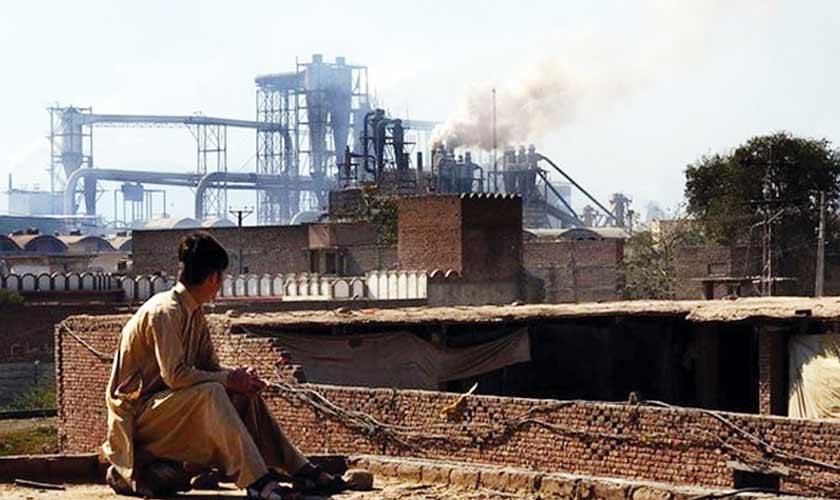
In a country where industrial power often sits at the intersection of capacity payments, tariff distortions, and fuel import exposure, CBAM creates a new national-security-adjacent reality: an emissions-intensive grid becomes an export competitiveness liability, while a cleaner grid becomes a strategic asset that lowers the carbon content of every unit of output simultaneously.
In a country where industrial power often sits at the intersection of capacity payments, tariff distortions, and fuel import exposure, CBAM creates a new national-security-adjacent reality: an emissions-intensive grid becomes an export competitiveness liability, while a cleaner grid becomes a strategic asset
The textile sector illustrates the point. Textiles are not yet in the first-wave CBAM list, but they are not immune. First, European buyers are already embedding carbon disclosure and decarbonisation expectations into sourcing decisions, often faster than regulation, as border carbon measures spread and firms seek predictable compliance pathways.
Second, textiles sit atop an electricity-heavy value chain: spinning, weaving, processing, dyeing, finishing, and captive generation all translate grid emissions into product emissions. Even if textiles remain outside CBAM’s legal scope for a period, ‘carbon conditionality’ arrives through procurement standards, brand ESG screening, and the cost of upstream CBAM-covered inputs and infrastructure. The endgame is straightforward: Pakistan will increasingly be asked not merely for a certificate of origin, but for a credible certificate of carbon.
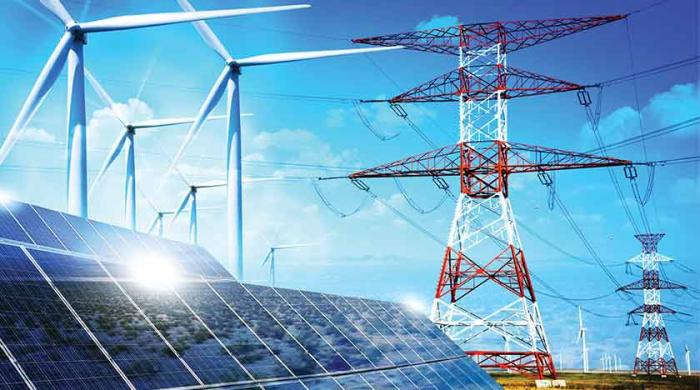
This is why national electricity planning is no longer a domestic utility debate; it is an export strategy. A cleaner grid reduces embedded emissions across sectors, improves the viability of low-carbon manufacturing pathways, and creates room for Pakistani exporters to negotiate on price and quality rather than accept a carbon penalty embedded in contracts. Conversely, if Pakistan decarbonises slowly, CBAM and its global cousins will treat the grid as a shadow tax on exports, paid indirectly through reduced margins, lost orders and preferential sourcing away from emissions-intensive supply bases. The EU’s experience from the transitional period is instructive: once reporting systems mature and supply chains adjust, carbon data becomes as routine as customs documentation, and the market starts pricing it, quietly, persistently, and at scale
First, Pakistan should treat rooftop solar and net metering not merely as consumer relief but as export-competitiveness infrastructure. A well-designed net metering regime can transform prosumers into aggregated ‘virtual power plants’ that inject verifiably clean electricity into DISCO networks, reducing the grid’s average emissions factor over time and enabling DISCOs to offer cleaner electricity products to industrial users.
This should be linked with the Competitive Trading Bilateral Contract Market (CTBCM): DISCOs (or suppliers under CTBCM) can procure and bundle low-carbon electricity, sourced from distributed solar and other renewables, and sell it to manufacturers through green supply contracts, thereby lowering the embedded emissions of export goods and reducing future CBAM-related commercial penalties. The key is to pair net metering with MRV-grade measurement and certificates so that ‘clean electrons’ are not a slogan but an auditable attribute that buyers will pay for.
Second, Pakistan should accelerate early retirement of the most carbon-intensive coal generation and repurpose sites into variable renewable energy (VRE) hubs backed by grid-scale storage. Coal retirement is not simply a climate gesture; under the CBAM logic, it is an industrial policy to reduce the carbon content of electricity, the universal input. Repurposing coal sites for solar, wind, and battery energy storage leverages existing grid interconnections and land availability, reduces curtailment risk, and improves dispatchability.
A storage-backed VRE strategy also improves reliability for industrial feeders, which is important because export contracts penalise interruptions as much as emissions. If the grid becomes cleaner and more stable, Pakistani manufacturers gain a structural advantage that shows up simultaneously in unit costs, carbon footprints and delivery performance.
Third, Pakistan should move towards efficient domestic carbon pricing so that the ‘carbon rent’ remains in the domestic economy and exporters can credibly claim deductions when CBAM recognises carbon prices effectively paid.
A practical pathway is to start with an administratively feasible carbon levy aligned with IMF RSF reform logic, targeting, initially, the most measurable fuels and sectors, while MoCC simultaneously builds a high-integrity carbon market framework that can scale MRV, crowd in finance, and steer investment into grid decarbonisation and industrial upgrades.
The objective is not to burden industry; it is to replace an externally imposed carbon cost with a domestically governed instrument that recycles revenue to enhance competitiveness, modernise grids, fund storage, improve energy efficiency and support exporters in decarbonising before the market compels them to do so.
The writer has a doctorate in energy economics and serves as a research fellow at the Sustainable Development Policy Institute (SDPI). He tweets/posts @Khalidwaleed_ and can be reached at: [email protected]