Mikhail Gorbachev, the first and last president of the Soviet Union, introduced the policy reforms of perestroika (restructuring) and glasnost (transparency) in 1991.
GROWTH & DEVELOPMENT
Mikhail Gorbachev, the first and last president of the Soviet Union, introduced the policy reforms of perestroika (restructuring) and glasnost (transparency) in 1991.
A spectacular outcome of these reforms was the emergence of five Central Asian states as independent and sovereign nations. Kyrgyzstan, Tajikistan, Turkmenistan, and Uzbekistan gained independence in August 1991, and Kazakhstan declared independence a few months later. Gradually, these nations began to develop and over the past 25-30 years have evolved into, or are becoming, strong economies.
Uzbekistan is a case study. Its economy was once a state-controlled, agrarian-industrial system, highly dependent on cotton and natural resources. Today, the economy is in a rapid growth mode, developing into a diversified, market-oriented system, with strong growth in the services and industrial sectors and a substantial increase in GDP and living standards.
Over the last 7-8 years, structured reforms have liberalised the economy and driven unprecedented progress. Foreign investors are being encouraged through pragmatic government policies ranging from independent energy regulation to key privatisation projects in strategic sectors. Spearheading this process has been the ‘Uzbekistan-2030’ strategy, a future-focused roadmap designed to transform every facet of the national economy. The envisaged theme is ‘The Big Country with Big Opportunities – Reform in Action’. At its core, it is a commitment to fostering a dynamic, innovation-led environment that champions private enterprise, green energy and digital technology.
In a WhatsApp message to this writer, Ambassador of Uzbekistan H E Alisher Tukhtaev, a passionate votary of strong and dynamic bilateral relations, wrote that “between 2017 and 2025, Uzbekistan’s economic structure underwent profound transformations. These far-reaching changes are directly linked to the election of Shavkat Mirziyoyev as president of the Republic of Uzbekistan. Under his leadership, comprehensive sectoral reforms reflecting the processes of modernisation and diversification, aimed at enhancing the stability and competitiveness of the economy, were successfully implemented.
“As a result of these large-scale reforms, Uzbekistan’s economy has been fundamentally reshaped, market relations have been strengthened, social protection expanded and rule of law firmly upheld. In 2025, exports increased by 23 per cent, reaching $34 billion. Leading international rating agencies upgraded its sovereign credit rating from ‘BB-’ to ‘BB’. Notably, the outcomes of these economic reforms are clearly reflected in Uzbekistan’s development trajectory and in the tangible improvement of the population’s well-being”.
One key litmus test of global recognition is usually the interest of foreign investors. Over the past seven years, Uzbekistan received $120 billion in foreign direct investment, including a significant $37 billion in 2024 alone. FDI inflows are increasing due to growing confidence in the government, whose policies are driven by progressive amendments in the legal framework along with well-defined initiatives aimed at attracting foreign companies.
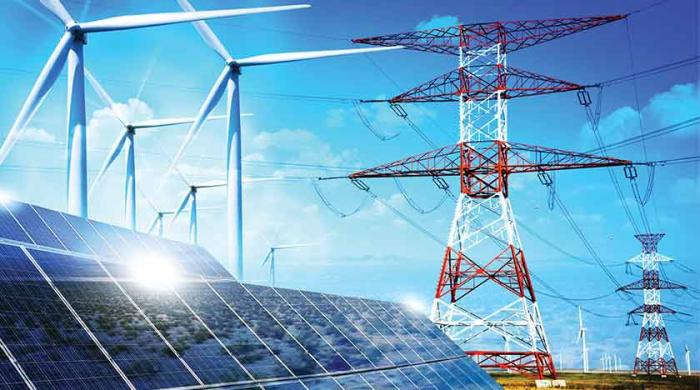
Particular attention is being given to strategically critical sectors such as renewable energy and mining, which are appealing to large global enterprises. Moreover, interest rates below 10 per cent are intensifying economic activity and ensuring access to credit for both foreign and domestic businesses. Prudent financial management and maintaining a sustainable GDP growth rate of 6.0-7.0 per cent have enabled Uzbekistan to build foreign exchange reserves approaching the $60 billion threshold.
To further cut proverbial red tape, simplify approval procedures, fast-track certifications and permissions, and improve ease of doing business, Uzbekistan has introduced, effective January 1, 2026, a unified digital platform
Uzbekistan has announced new investment policy priorities to attract an additional $50 billion in foreign investment in 2026. The stipulation is that future investment must not only finance projects but also bring advanced technologies and boost the production of high-value-added goods. Uzbekistan is also promoting public-private partnerships, viewing them as essential to improving public services and attracting critical investment and expertise. Today, the country has seen significant growth in PPP projects, with more than 400 infrastructure initiatives valued at approximately $16 billion. This marks a radical departure from the past, when there was little private sector interest in such projects.
To further cut proverbial red tape, simplify approval procedures, fast-track certifications and permissions, and improve ease of doing business, Uzbekistan has introduced, effective January 1, 2026, a unified digital platform for comprehensive business registration. Entrepreneurs will be able to access key services through a single window.
These include the issuance of an electronic digital signature, opening and activation of bank accounts, submission of licence and permit applications, digital execution of lease agreements, online registration of cash registers, automatic issuance of VAT payer certificates and registration of a company’s CEO or director in the Unified National Labour System. All services will be available at the entrepreneur’s discretion, with payments processed through a single QR code.
A flourishing IT industry is a testament to the culture of creativity, innovation and entrepreneurialism among educated youth. Policymakers are focusing on addressing youth unemployment through job creation and development in the SME, agriculture and tourism sectors. A Youth Industrial and Entrepreneurial Zone has been created, similar to small industrial zones, aimed at supporting youth entrepreneurs. A Special Scientific and Technological Zone has also been established as an innovation hub comprising scientific organisations, technology parks, technology transfer centres, innovation clusters, venture funds and business incubators to develop advanced technological infrastructure and promote breakthrough innovation.
Uzbekistan-Pakistan bilateral relations have been further solidified through strong interaction between political leaders and the private sector. Although bilateral trade in 2024 stood at $400 million, with Uzbekistan exporting $300 million and importing around $100 million, and despite both countries granting Most Favoured Nation status and signing a Preferential Trade Agreement, the volume of trade remains far below potential.
Pakistani decision-makers can learn much from Uzbekistan’s experience. Emphasis should be placed on a market-oriented economic framework that encourages private-sector participation and investment. When Tashkent reduced key tax rates, such as value-added tax, corporate income tax, and property tax, from more than 20 per cent to 12 per cent, the treasury doubled its tax collection.
For the information of leaders of APTMA, KCCI and others, electricity costs just seven cents per kilowatt hour while natural gas is priced at thirteen cents per cubic metre, less than half of what Pakistani industries are charged. In a nutshell, the cascading impact of high infrastructure costs has proven detrimental to the objectives of increased exports, employment generation and foreign direct investment. Pakistan can best achieve economic prosperity by learning from Uzbekistan, removing obstacles to growth and allowing markets to function freely.
In a message to this writer, visionary entrepreneur Sohail Moten, chairman of the Uzbekistan & CIS Trade Centre established in Karachi, stated that “Uzbekistan is implementing its Vision 2030 strategy to transform the economy through structural reforms, investment-friendly policies and modernisation across key sectors. The Uzbekistan & CIS Trade Center is actively supporting this process by facilitating trade, promoting high-quality Uzbek products and fostering strategic partnerships within Uzbekistan and across the CIS region. Its mission is to connect Uzbek and Pakistani businesses, attract investment and create sustainable growth opportunities.
“By leveraging its industrial base, geographical location and technical knowledge, it aims to contribute to Uzbekistan’s long-term economic competitiveness and strengthen its position in regional and global trade”.
The writer is a former president of the Employers Federation of Pakistan.