To use or not to use -- that is the question still being debated in power corridors. The utilisation of indigenous coal reserves is ‘light’ for Pakistan over the next couple of centuries, but this depends on our realisation and subsequent utilisation.
COAL ENERGY
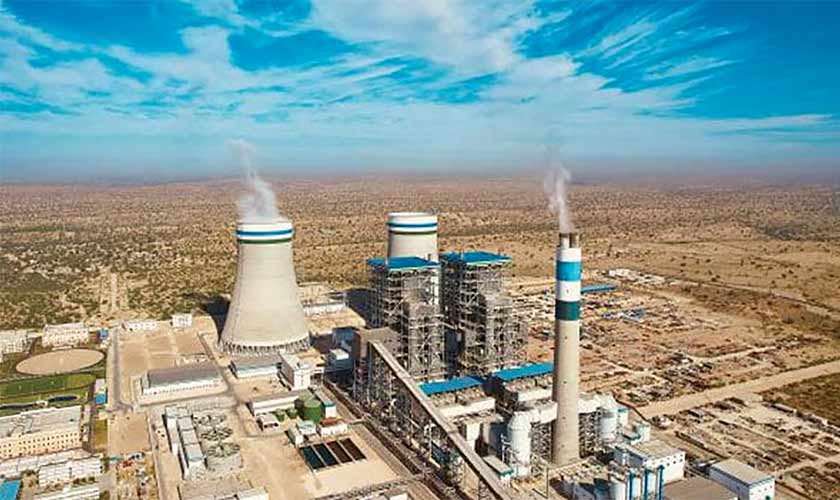
To use or not to use -- that is the question still being debated in power corridors. The utilisation of indigenous coal reserves is ‘light’ for Pakistan over the next couple of centuries, but this depends on our realisation and subsequent utilisation.
With the world’s seventh-largest coal reserves totalling 180 billion tonnes concentrated in Thar, the country possesses untapped resources that could fuel power generation for centuries. Yet the question remains: can coal development truly drive national prosperity?
A strong example to follow is that of Indonesia. Their coal success story began in the early 1980s with systematic exploration programmes that discovered massive reserves in Sumatra and Kalimantan. These programmes were highly successful in identifying coal resources suitable for export development within licensed areas that produced more than 130 million tonnes in 2015. What started as exploration transformed into an economic engine that now powers the world’s fourth-most populous nation. Today, coal mining accounts for around 6.6 per cent of Indonesia’s national GDP, making it one of the country’s most important commodities. In 2023, the GDP from coal and lignite mining in Indonesia amounted to around 1.1 quadrillion Indonesian rupiah, demonstrating the sector’s massive economic contribution.
The employment impact has been equally transformative. The domestic coal value chain maintains hundreds of thousands of jobs, concentrated in a few regions, creating economic hubs that have lifted entire communities out of poverty.
The government of Pakistan has decided to shift its existing imported coal-fired power plants to operate on indigenous coal. These include the Port Qasim, Sahiwal and China Hub plants -- each with a generation capacity of 1.32 GW. With the country’s fuel import bill exceeding $20 billion in FY2021–2022, the move aims to reduce import costs and dependence on imported fuel for electricity generation.
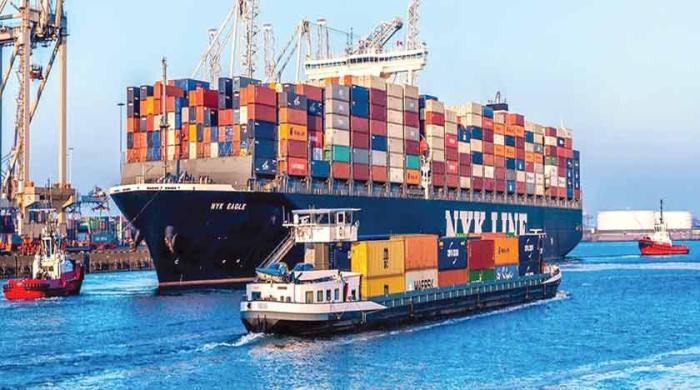
Pakistan’s coal imports have surged threefold since 2015, reaching 18.7 Mt in 2020, largely due to the commissioning of several coal-fired power stations. In contrast, domestic coal and lignite production stood at about 5.0 Mt, while total coal consumption hit 24 Mt in the same year.
Energy experts at a seminar organised by the US-Pakistan Centre for Advanced Studies in Energy (USPCAS-E) at NUST reached consensus that converting imported coal-based power plants to indigenous Thar Coal could save billions of dollars in outflows from the national exchequer, reduce electricity tariffs, and help attain energy security.
Pakistan’s coal development should target ambitious yet achievable goals, linking indigenous resource development to evolving economic trends
The employment potential is staggering. Coal infrastructure development in the Thar, Lakhra, Eastern Salt Range and Duki regions would create thousands of direct jobs in extraction, processing, and transportation. Each major coal project typically employs 2,000-5,000 people directly, with indirect employment multiplying this figure by three to five times. For historically marginalised regions like Thar, coal development could serve as an economic catalyst, transforming rural communities into industrial hubs. We are looking at cascading economic benefits. Energy security through indigenous resources enhances industrial competitiveness, making products more attractive in global markets. Manufacturing sectors benefit from stable, affordable power, while lower electricity costs improve household purchasing power, stimulating domestic consumption and economic growth.
With cheaper electricity, lower tariffs, the expansion of Small and Medium Enterprises (SMEs), an increasing number of schools, the scaling up of home-based entrepreneurs, and the integral mechanisation of the agri-landscape, the picture of a prosperous Pakistan may be closer than we calculate. Not only would the supply chain improve but the foreign exchange savings from reduced fuel imports could be redirected towards infrastructure development, education, and healthcare.
What stops us from targeting and achieving the above is a rather worn-out argument for climate impact. Pakistan’s carbon footprint is almost non-existent; this is not to imply that we need one, but rather to direct the conversation toward technological advances that can minimise adverse effects. On the other hand, with additional railway networks connecting mine mouths to coal terminals and highways to carry bulk, we may be looking at a highly efficient country with infrastructure optimisation.
Responsible coal development will definitely bring prosperity, and modern technology is available to create pathways to minimise climate impact through clean coal solutions.
High-Efficiency, Low-Emission (HELE) Technologies represent the foundation of responsible coal development. Modern supercritical and ultra-supercritical power plants achieve efficiency rates of 45-47 per cent compared to 33-35 per cent in older subcritical plants, translating to 20-25 per cent fewer emissions per unit of electricity generated. Carbon Capture, Utilisation and Storage (CCUS) technology can capture up to 90 per cent of CO2 emissions from coal plants. Proven emission control systems like Flue Gas Desulfurization and Selective Catalytic Reduction dramatically reduce sulphur dioxide and nitrogen oxide emissions.
The investment will also go towards enhancing grid infrastructure, high-voltage transmission lines, water management systems, including closed-loop cooling and dry cooling technologies, ash utilisation facilities, etc. And yes it will be a phased implementation. The immediate priority however, should involve deploying High-Efficiency, Low-Emission technology in all new plants while retrofitting existing facilities. Advanced emission control systems must be mandatory for all significant coal plants. Phase two focuses on Carbon Capture, Utilization, and Storage implementation, beginning with demonstration plants in Thar region. Smart grid and distribution infrastructure development will ensure efficient power delivery, while circular economy integration maximizes resource utilization.
The ultimate goal extends beyond energy generation to technology innovation and export capability. Pakistan’s coal development should target ambitious yet achievable goals, linking indigenous resource development to evolving economic trends and doing so to achieve an immediate impact on the well-being of the nation that is the proud owner of these natural resources.
The writer is a freelance journalist and can be reached at [email protected]