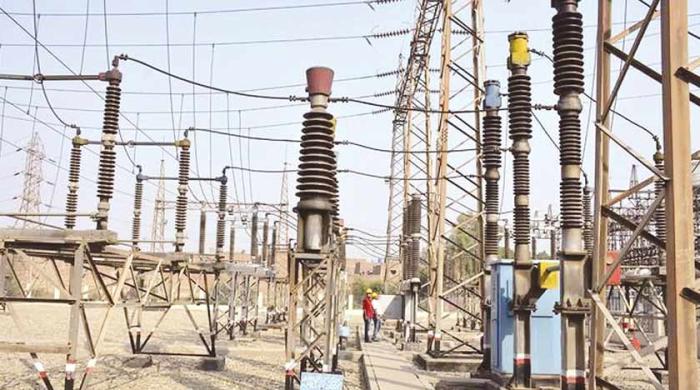
Pakistan’s national electricity grid is often criticised as obsolete, inadequate, unstable and unreliable. While such descriptions may sound harsh, these reflect genuine concerns rooted less in generation shortages and more in long-standing weaknesses of the transmission and distribution system.
ELECTRICITY SUPPLY
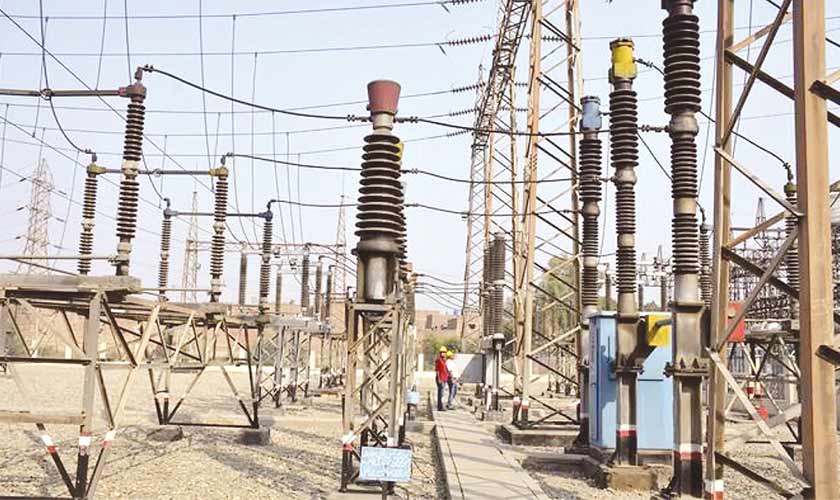
Pakistan’s national electricity grid is often criticised as obsolete, inadequate, unstable and unreliable. While such descriptions may sound harsh, these reflect genuine concerns rooted less in generation shortages and more in long-standing weaknesses of the transmission and distribution system.
Over the years, successive governments prioritised adding power plants to overcome shortages but paid far less attention, if any, to strengthening the grid required to carry, balance and deliver electricity safely and efficiently across the country. This imbalance lies at the heart of today’s power sector dysfunction.
At the most basic level, the grid was never designed for the scale, diversity and geographic spread of generation that now exists. Power plants are located far from major demand centres, yet the transmission network connecting those remains thin, congested and unevenly developed. Northern hydropower, southern coal-based plants, and a growing base of renewable capacity all feed into a system that lacks sufficient alternative power-flow routes. As a result, electricity is often available but cannot be reliably transported, leading to load shedding in some regions while capacity remains underutilised in others.
One of the major weaknesses of Pakistan’s grid is its limited resilience to disturbances. In a well-planned power system, the failure of a single line or transformer should not disrupt supply to large areas. In Pakistan’s case, however, the grid often operates with little margin for error. When a key component trips, power is abruptly diverted to other already stressed lines, triggering a chain reaction of outages. This is why relatively minor faults have repeatedly escalated into nationwide blackouts. The issue is not merely bad weather or operator error, but a structural lack of redundancy built into the system over decades.
Stability has become an even greater concern as the energy mix evolves. The growing share of solar and wind power is a positive development, but it also places new demands on the grid. Renewable generation fluctuates with weather and time of day, requiring faster system response and better coordination to maintain balance. Pakistan’s grid, designed around conventional power plants, struggles to cope with these variations. Without complementary investments, however, the system becomes more sensitive to sudden changes and more prone to outages.
To its credit, the government has taken some important steps in recent years. The commissioning of the 660-kV Matiari–Lahore high-voltage direct current transmission line, 886 kilometres, stands out as a major technical milestone. This line is designed to transmit electricity from coal-based power plants in Sindh, including Port Qasim and Thar, to demand centres in Punjab. Unlike conventional lines, it provides greater control over power flows and reduces pressure on existing transmission corridors. It has significantly improved south-to-north power transfer and demonstrated that modern transmission solutions can work in Pakistan.
However, while the Matiari-Lahore line has eased a critical bottleneck, it is not a cure-all. Its effectiveness depends on the strength of the surrounding network, including substations and regional lines feeding into it. Without adequate reinforcement at both ends, even the most advanced transmission link cannot deliver its full benefits. Heavy reliance on a few large corridors without sufficient backup also continues to leave the system vulnerable when faults occur.
In the final analysis, Pakistan’s electricity crisis is not a problem of generation capacity alone but a failure to modernise the grid that carries, balances and delivers that power
Another often overlooked aspect is the condition of the distribution network, where consumers experience the grid’s shortcomings most directly. Ageing equipment, overloaded feeders and poor maintenance contribute to frequent breakdowns, voltage fluctuations and high losses. The rapid spread of rooftop solar has added further strain, as local networks were never designed to handle bidirectional electricity flow.
Under net-metering arrangements, surplus electricity flows back through the same distribution lines to nearby users or to the wider grid. In effect, equipment designed to push electricity downstream must now also cope with electricity being pushed upstream. This can cause voltage levels to exceed safe limits, impose undue stress on transformers, and interfere with the operation of protective devices. In a modernised grid, these challenges are manageable, but in Pakistan’s case often not.
The way forward requires a shift in mindset. Pakistan no longer needs to chase megawatts alone; it must invest seriously in the grid as national infrastructure, much like highways or water systems. Transmission expansion should focus on eliminating weak links, creating alternative power-flow paths, and strengthening interregional connections.
Distribution networks must be modernised to accommodate changing demand patterns and decentralised generation. At the same time, better monitoring and control systems are needed to enable operators detect problems early and to respond before spiralling into large-scale failures.
Equally important is the development of technical capacity within power-sector institutions. Planning, operation and maintenance of a modern grid demand specialised skills, continuity and professional autonomy. Without strengthening these foundations, even well-funded projects risk delivering limited results. Treating the national grid as critical infrastructure rather than a peripheral concern is essential if Pakistan has to achieve energy security, economic stability and public confidence in its power system.
The government plans to reshape the energy sector around stability, renewables and technological modernisation, including large-scale utility battery storage to help stabilise the grid. Ongoing initiatives include upgrading and expanding 500-kV grid stations and addressing key transmission bottlenecks, investments that are crucial to integrating both conventional generation and distributed renewables. International support is also forthcoming.
The Asian Development Bank has approved a $330 million loan for transmission strengthening, including the construction of 290 kilometres of new 500-kV lines. Germany has also pledged additional funding to decarbonise and digitalise the transmission and distribution network, which could further improve operational efficiency.
In the final analysis, Pakistan’s electricity crisis is not a problem of generation capacity alone but a failure to modernise the grid that carries, balances and delivers that power. What is required is a sustained national commitment to grid reliability, built around redundancy, modern control systems and gradual yet consistent upgrades from transmission through distribution.
Without a resilient and flexible grid, additional power plants, renewable ambitions and tariff reforms will continue to yield diminishing returns. Addressing this challenge requires a long-term commitment to technical excellence, disciplined planning and sustained investment in infrastructure. Without such a transformation, the promise of a reliable and affordable power supply will remain elusive.
The writer is a retired chairman of the State Engineering Corporation.