Print Story
X




Directed by Mehreen Jabbar, Farar is a six-episode web series that simmers, withholds and gradually closes in on its characters, making for an arresting watch.
| F |
arar isn’t your usual run-of-the-mill web series, particularly one that makes your blood boil. It’s a project that feels like it’s having a conversation with its past and reinventing itself at the same time.
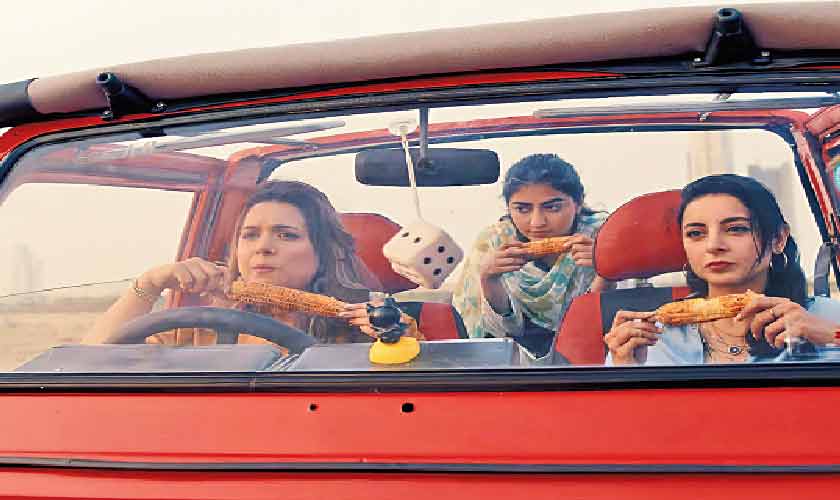
On the surface, it is a retelling of Jabbar’s 1996 telefilm of the same name, which many remem-ber for the easy, conversational bond between Marina Khan, Sania Saeed and Huma Nawab. But while that original version had its own charm, this new series is a different beast entirely. It’s tighter, more intense and far more questioning. Rida Bilal’s script centres on three women in Karachi, each moving through her life beneath the weight of a pressure that is never named but always felt.
Produced for Zee5, which previously backed projects such as Churails and Qatil Haseen-aon Ke Naam, the series has been released on the streaming platform Begin this month. Over the six episodes, you don’t simply watch plots unfold, you feel the emotional weight slowly building.
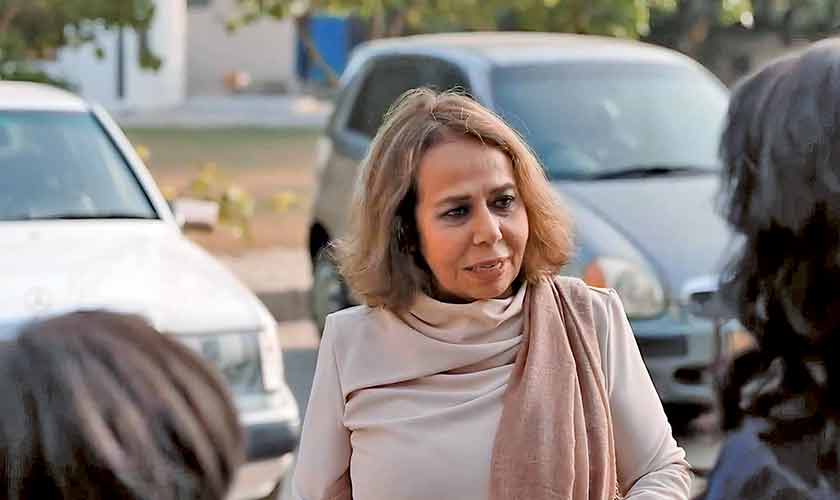
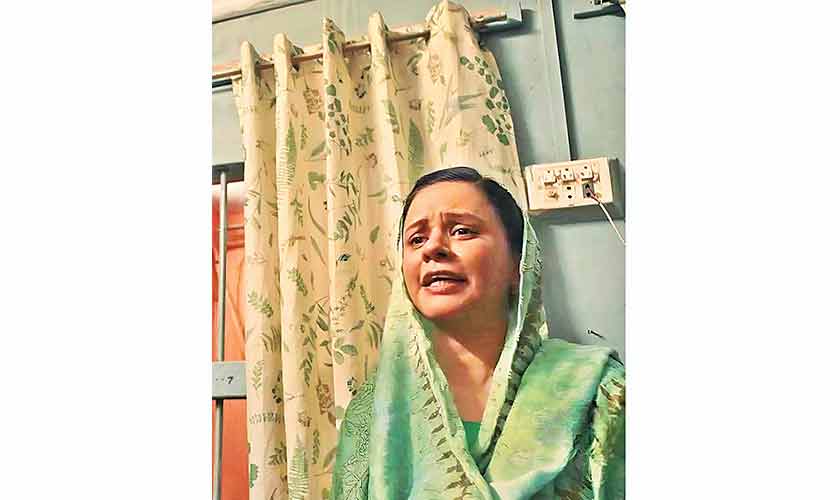
The series sets its tone in the first few minutes with a simple school pickup scene. Sabrina (Sarwat Gilani) panics for a split second when she sees her son is already gone, only to find that his grandmother picked him up.
When the grandmother ques-tions Sabrina’s lateness, she isn’t actually worried, just furtively accusatory. Yet, the questioning isn’t belligerent. No one is screaming, but you can feel the air leave the room. It’s a brutal little moment where Sabrina is made to feel small in front of her own child and a sharp one for how control works within families.
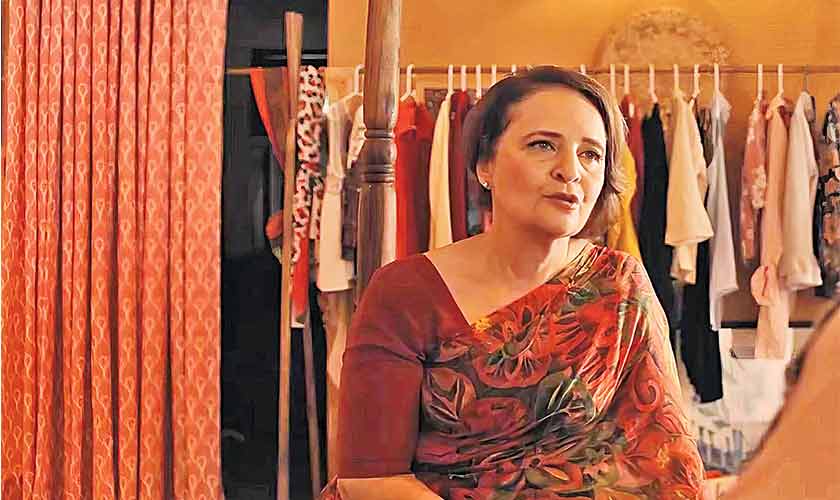
There are many moments such as this but none are loud or explosive; it’s just a constant, suffocating pressure where everyone pretends things are totally fine.
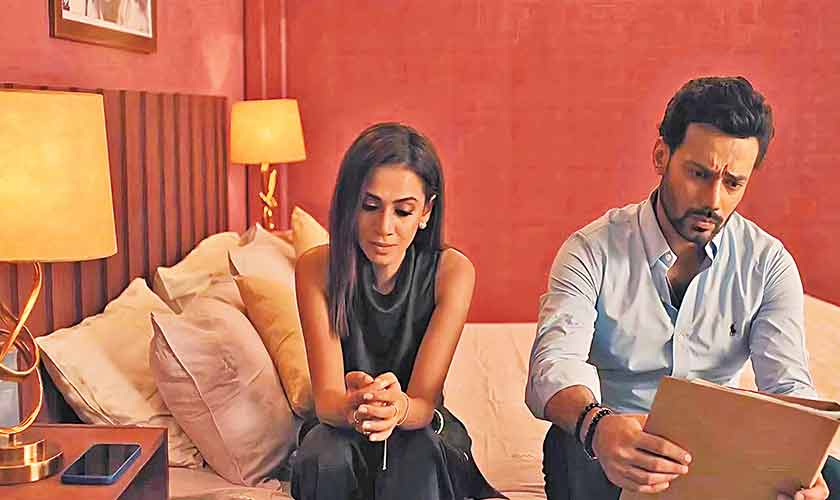
That same logic bleeds into every relationship. Sabrina is involved with Aamir (Zahid Ahmed), a married man and the series doesn’t romanticise the arrangement.
When Sabrina calls it exactly what it is, “an extramarital affair on your end and an act of desperation on mine,” she pun-ctures whatever illusion the audience might have been constructing. Aamir’s response is not denial but justification. It just happened, he says, leaning on inevitability as though that settles anything. The series doesn’t judge its characters, nor does it explain them to the audience.
“ In Farar, all three women are navigating different pervasive conventions within the same system. You’re allowed to make “choices” until they become inconvenient for someone else and you’re given “support” only if you are willing to sacrifice something close to your heart in return. It’s a world where love often exists right alongside the damage it causes. Farar doesn’t try to lecture you or turn these little fires into over-the-top crises. Instead, it shows them as part of everyday reality in a city like Karachi, a place that asks a great deal from women but rarely acknowledges what each ask will cost.”
Rather, it lets people draw their own conclusions from what the characters say and more tellingly, what they don’t. Aamir isn’t some broken, tragic figure. He’s unreliable. Farar’s real strength lies in how it insists on that distinction. There are no moral monologues, just a snap of what life is.
Running alongside Sabrina’s story is Huma’s (Maha Hasan). She is an athlete and her father is her biggest fan until she says no to a marriage proposal, at which point support vanishes and her training is dismissed as just a “hobby.” It’s a stinging reminder that sometimes, what looks like encouragement is actually just control that hasn’t been challenged yet. The series never underlines this; it simply lets it sit there.
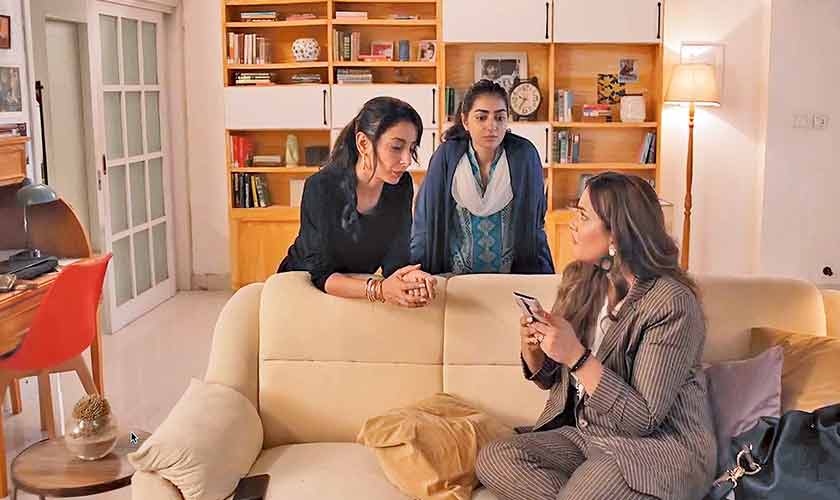
And then there’s Tania (Mari-am Saleem), an aspiring actor who has a breakdown over her body image. It’s not “drama” for the sake of it; it’s just pure exhaustion from the constant, nasty comments and the pressure to look perfect online. When she asks, “If I’m fat, does that mean I should just cease to exist?” it’s heartbreaking because she’s not looking for pity, she’s just tired of the larger question that plagues her life.
Beauty standards have be-come so exhausting and so ubiquitous, particularly in this age of social media and filters, that they sit at the back of the mind for so many.
In Farar, all three women are navigating different pervasive conventions within the same system. You’re allowed to make “choices” until they become inconvenient for someone else and you’re given “support” only if you are willing to sacrifice something close to your heart in return. It’s a world where love often exists right alongside the damage it causes. Farar doesn’t try to lecture you or turn these little fires into over-the-top crises.
Instead, it shows them as part of everyday reality in a city like Karachi, a place that asks a great deal from women but rarely acknowledges what each ask will cost. What’s interesting about Farar is how Karachi itself is used. It is a place where these lives come into contact with each other, but it is also a character in its own right, reflecting the viewpoints of a country where women are always valued less than their male counterparts. The series never says this plainly. It puts the idea forward as an undercurrent. That specific focus on Karachi, its particular pre-ssures and silences, is exactly what makes the series so arti-culate and relatable.
To really understand why this approach works, you have to understand Jabbar’s DNA as a storyteller. From Doraha, Daam, Jackson Heights to Ramchand Pakistani and Ek Jhoothi Love Story, she’s always cared more about the inner life of a person than any big, flashy plot twist. She’s interested in the lives people lead beneath the surface, behind closed doors and far away from the melodrama. As a director, she communicates this through what she chooses not to show. Scenes don’t build to confrontations, they stop just short of them.
The camera holds on a face a beat longer than comfort allows, and in that extra second, you understand everything the cha-racter isn’t saying.
“On the surface, it is a retelling of Jabbar’s 1996 telefilm of the same name, which many remember for the easy, conversational bond between Marina Khan, Sania Saeed and Huma Nawab. But while that original version had its own charm, this new series is a different beast entirely. It’s tighter, more intense and far more questioning. Rida Bilal’s script centres on three women in Karachi, each moving through her life beneath the weight of a pressure that is never named but always felt.”
In Farar, this restraint isn’t just a style, it’s the engine of the whole series. The story breathes through long pauses and the writing matters because of what goes unsaid. It intentionally holds back on any big emotional release, which can test your patience in the early episodes. Sometimes the stillness feels so palpable you think it might never break. But as the series goes on, that quietness starts to feel cumulative and purposeful. By the finale, you realise that the lack of an easy resolution isn’t a mistake. It’s actually the whole point.
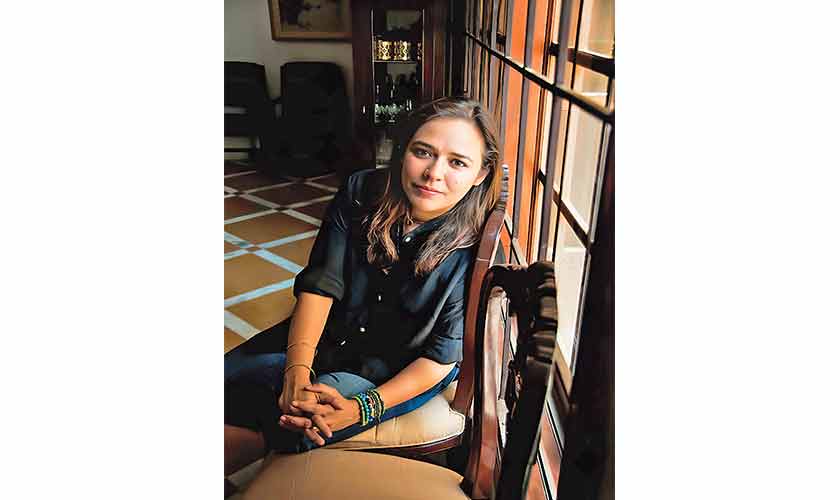
The acting in Farar is just as disciplined as the directing. Sarwat Gilani plays Sabrina as a woman who’s constantly nego-tiating with herself: deciding what to show, what to hide and how much she can actually bottle up before she breaks. In the beginning, it looks as if she has it all together, but by the middle of the series, you realise that “composure” is just another word for barely holding on. This is where the series forces those two states to collapse into each other and it is where Gilani does her finest work.
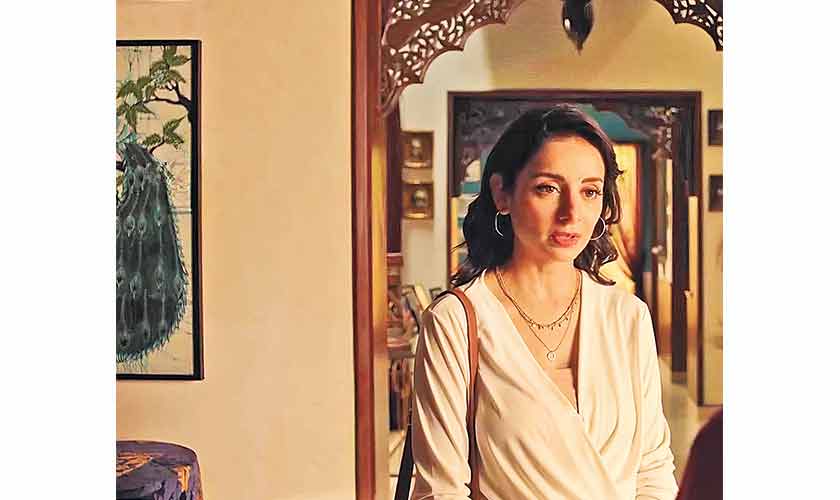
Tooba Siddiqui is incredible as Inaya. Married to Aamir, she evolves almost entirely through what she withholds, moving from composed observer to someone who has calculated exactly how much she knows and when she wants to use it to the detriment of others and herself. In one of the most precisely constructed scenes of the series, she and Aamir sit for what appears to be a polished display of partnership: professional admiration and mutual respect, but the camera lingers just long enough to register the gap between what is said and what is true. It is not deception in any simple sense; it is compartmentalisation, the kind people learn to live with as life goes on. When she eventually discovers the fracture in her marriage, her response is not a breakdown but a recalibration: pointed, controlled and far more unsettling. Her line, “sometimes we fall in love with their thoughts and not with the people,” doesn't just end a marriage, it reframes everything that came before it. She doesn’t compete for what she’s owed and doesn’t ask to be chosen. She simply withdraws from a marriage she has seen clearly for longer than anyone realised and her parting words carry no generosity in them, only the quiet recognition that she was never truly competing. It is one of the most chilling and devastating things the series pulls off.
Zahid Ahmed also nails his character’s difficult balance. He plays Aamir as a guy who is both sincere and yet living in self-denial. He genuinely believes his own excuses and Ahmed holds onto them even as the story slowly tears his justifications apart. Mariam Saleem takes Tania from desperate ambition to something much more grounded and self-aware. There’s a scene where she confronts Aamir, telling him, “I won’t ruin anything for you, because you’re doing it to yourself.” She delivers it without rage, with a calm, cutting clarity that lands perfectly.
Maha Hasan makes Huma’s defiance feel entirely real. Every time she stands up for herself, you see what it costs her. It’s not just a “brave” performance, it’s an honest look at what integrity actually looks like when life is pushing you against the wall and you push back. Even the supp-orting cast, from Saleem Mairaj to Hina Khawaja Bayat and Rabita Ali, helps the world feel lived-in without ever stealing the spotlight from the larger story Jabbar is telling.
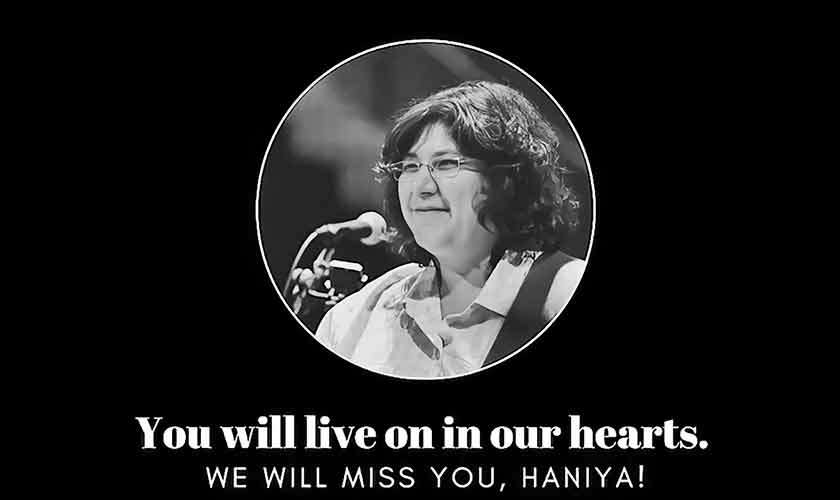
One of the series’ most affec-ting elements is its music. The background score and title track ‘Aye Re’ by the late Haniya Aslam doesn’t tell you how to feel, it finds a spot in your heart without catchy hooks designed to a specific trend. Sparse and quiet, the music mirrors the way the characters hold everything in. Little melodies drift in and out like half-formed thoughts and the silence is used just as much as the sound. Haunting, beautiful and unresolved, ‘Aye Re’ doesn’t scream for attention, it just lingers, which is exactly how the whole series stays with you.
Technically, Farar is incred-ibly tight, almost to a fault. The colours are muted and the rooms feel claustrophobic. Even in the wider shots, you feel like the characters have no room to breathe. None of this is an accident. The way it’s shot is a constant reminder that the walls these women are navigating might be invisible, but they are very much there. The editing is crisp because the story demands to be told in a certain way and every single moment mounts the pressure to a boiling point.
At its core, Farar is a series about escape that gradually dismantles the idea that escape is rarely clean. Over the six epi-sodes, the idea of escape goes from a sudden impulse to a plan and eventually to an illusion. By the end, every character reaches the same conclusion: you can walk away from the troubles in your life, whether that means a suffocating marriage or a toxic space, but you can’t leave behind the decisions that led you there or how each choice made you the person that you are, for good or bad.
The finale doesn’t offer free-dom. It offers clarity, a sharper sense of what you’ve been carrying and why you picked it up in the first place. The char-acters don’t sprint to a “finish line.” They just keep going, a bit more honest but just as uncer-tain as before.
Farar asks a lot from you. It requires patience and real emo-tional investment. There are no huge blowups, no bad guys to point at and no easy answers. In revisiting her own earlier work, Jabbar does not recreate. She reframes and what she finds inside that reframing is some-thing much deeper and more honest about the unseen cost of the lives women lead. If you’re willing to sit with it, it’s easily one of the most accomplished pieces of television in years.
Jabbar has spent decades making work that looks inward rather than upward and Farar is perhaps the fullest expression of that instinct yet. Missing it would be a mistake.