Print Story
X




Teachers and parents weigh in on the demerits of frequent school closures and shift to online classes
| O |
n a usual workday, the vicinity of Ghalib Market — home to three of the city’s elite schools — is choked with traffic. Today, it is deserted. Following the recent Middle East conflict, the government has pivoted to aggressive austerity drive to combat a looming fuel shortage. Unfortunately, the first casualty of this policy is the classroom.
By shuttering schools nationwide and moving to a digital-only model, the government hopes to save on the national fuel bill. However, critics argue the price being paid in human capital is far too high.
The austerity drive, mandated by both federal and provincial governments, includes a four-day work week and 50 percent attendance in offices. Yet, it is the school closures that have sparked the fiercest backlash.
Dr Farid A Malik, a public figure and activist-scientist, calls it an irrational move.
“In the year 2024 the fuel bill of Pakistan stood at $22.1bn. This year it’s going to be higher,” Dr Malik argues. “Once an energy surplus nation, today we are struggling to survive.
“By shutting educational institutions and going online, our future is at stake. Perhaps our brothers in uniform have been smarter this time as schools are open in the Cantonments.”
Mian Imran Masood, the president of Pakistan Education Council and the VC of the University of South Asia, notes that school owners mind their business and never try to exert political clout, which is why the governments shut down schools without taking them on board.
He terms it a “sort of terrorism, jeopardising the future generations of Pakistan.”
According to Mian Masood, every “crisis in our country leads to fuel shortage - be it smog, a war-time situation or anything. Schools are the first to take the hit. Why? Already, there are roughly 190 working days for schools which are not sufficient. And when you close schools at one pretext or another, you are doing a disservice to education.”
He believes that schools should be the last to be shut.
“Ironically, the markets are open, parks are open, cinemas are open, but schools are closed.”
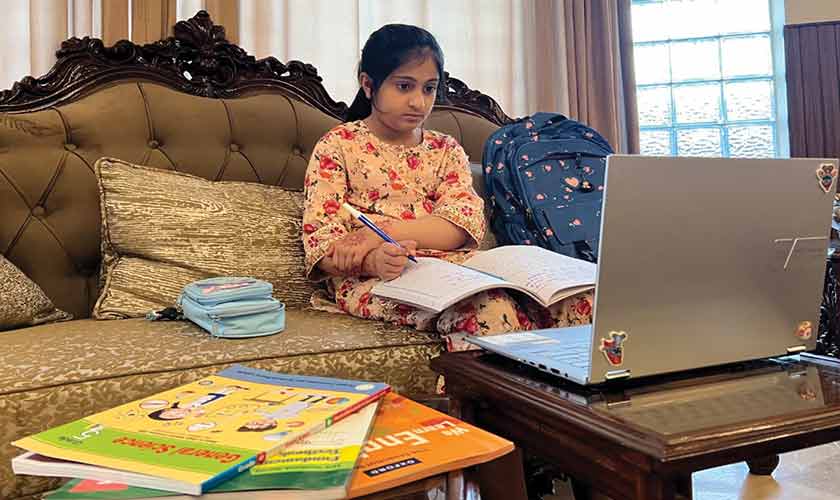
In response to a query, he says that contemporary remote/online learning methods aren’t available in Pakistan. So the students can’t truly benefit from these classes, particularly those based in rural areas.
He concludes by saying that the government should consider schools as a priority. “Please remember that we are talking about a generation whose education was already affected by the Covid lockdowns.
Muhammad Kamran Malik, the principal of KIMS on Chaudhry Zahoor Elahi Road, says the school closure at will has a long history. “In recent years, it has accelerated.” He expresses serious concerns over the growing number of unnecessary holidays in schools and their impact on students’ education.
“By shutting educational institutions and going online, our future is at stake.”
According to Malik, the example of O-Level students is part of a wider problem. “Even if I discuss O-Level schedules, the issue affects students across all streams,” he says, adding that since schools were asked to shut abruptly, they weren’t ready to adjust their calendars/schedules, including unnecessary summer breaks and rescheduling of exams.
Narrating the chain of disruptions, he says that schools reopened in September last year, followed by a two-week closure in December. Exams were scheduled after these breaks, leaving students only six weeks to prepare. “This period is totally inadequate. A proper term is normally 16 weeks. Cutting it down to six [weeks] is simply not enough.”
Malik also criticises the approach of the education authorities regarding holiday notifications. “Notifications about school closures arrive without proper planning. For instance, in October a notice came on a Sunday evening stating that schools would not open before 8:45 AM due to serious air quality issues. Parents and teachers were obviously slow to adjust to new, sudden changes in routines.”
Such last-minute decisions show a lack of understanding of how schools operate and how students’ learning is affected, he argues. “These breaks do not just disrupt lessons; they break students’
focus and reduce the
seriousness with which they engage in learning.”
He says the education authorities often blame such measures on fuel shortage, environmental or administrative reasons. However, he insists there must be a balance: “If authorities have data confirming a genuine need for a closure, that is understandable. But decisions made without considering academic schedules only harm students.”
| P |
arents are equally disturbed by extended and unscheduled holidays.
“Children are used to a disciplined routine - good sleeping habits and fixed study hours etc - when they are going to schools. All this is disrupted when they are stuck home,” says Fakhra Shabbir, a mother of four.
“Trust me, my children are sick of staying at home; they miss school like anything.”
Kashif Mirza, the president of All Pakistan Private School Association, says the right to education is fundamental “and under no circumstances should it be suspended.”
He says that historically, even during global crises such as World War II, education continued through alternative arrangements.
“Today, even though Pakistan faces no such crisis, schools are closed.”
Another important aspect of this situation which impacts the parents is that there is no fee adjustment in the event of school closures. “Unfortunately, the government has provided no clear instructions to private schools in this respect.”
Mirza further says that over 90 percent of private schools operate in rented buildings, and while they may be willing to cooperate, the government should extend support to manage teachers’ salaries and operational costs of schools.
On the other hand, the Punjab government has announced that schools would reopen from April 1, instead of April 12. It is also expected that this year the summer vacations will be reduced to 50 days to compensate for the learning losses.
Ahsan Raza is the editor of Minute Mirror. He can be reached at [email protected]