Print Story
X




Pakistan has taken centre-stage in a diplomatic push to end the US-Iran hostilities
| W |
hen the United States and Israel launched their joint assault against Iran in February, the military venture was neither sudden nor strategically isolated. The antecedents of this confrontation lay in decades of accumulated mistrust and competing geopolitical interests in the turbulent region. The US had long regarded Iran’s clerical regime as a principal source of regional instability — one that funded proxy networks across the Middle East and posed a direct challenge to American strategic interests and allied security apparatuses.
For Israel, particularly for Benjamin Netanyahu, the threat from Iran carried an additional dimension. It was framed not merely as a regional security challenge but as an existential one for the Israeli state. Bibi’s frequent visits to the White House ahead of the war and the domestic political pressures bearing on President Trump — including those emanating from the Epstein affair — arguably accelerated Washington’s alignment with Tel Aviv’s maximalist strategic posture toward Tehran.
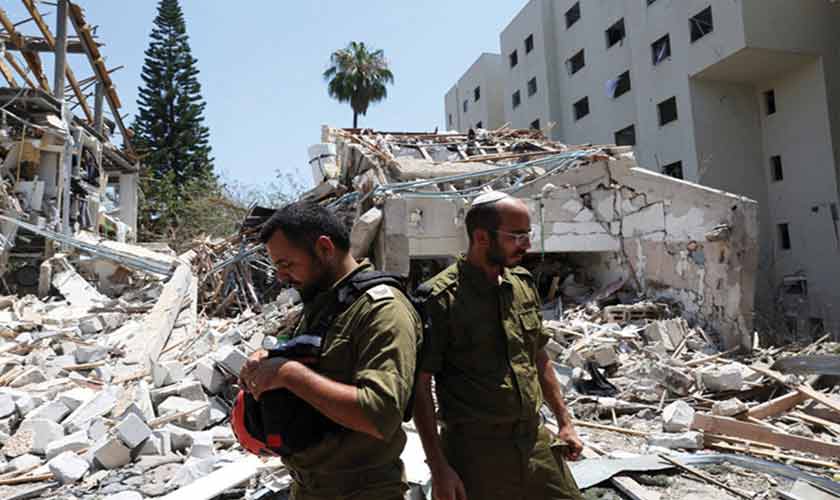
The humanitarian consequences of the ensuing war have been staggering. These have been well-documented by television reporting. Strikes on civilian infrastructure — including schools, hospitals and cultural heritage sites — have drawn formal condemnation from various countries such as Spain, regional bodies and international humanitarian organisations. Under established principles of international humanitarian law, the protection of civilian infrastructure constitutes a non-derogable obligation binding on all parties to an armed conflict. The targeting of such sites, whether deliberate or resulting from use of disproportionate force, represents a material breach of the laws of armed conflict and has substantially eroded the moral and legal legitimacy of the military campaign in the eyes of the international community.
Iran’s military response was, as expected, swift and calibrated. The Islamic Revolutionary Guard Corps, the principal instrument of Iran’s strategic military doctrine, launched retaliatory strikes against American installations across the Gulf — including bases in the United Arab Emirates, Qatar and Saudi Arabia — framing these operations as self-defence under Article 51 of the UN Charter. The civilian toll on all sides, particularly among non-combatants and children, underscores the broad failure to uphold obligations under international humanitarian law. No strategic rationale, however compelling to its masterminds, can offset that human cost and/ or relieve the responsible parties of legal accountability.
Beyond the humanitarian dimension, the war has exposed a fundamental deficit in strategic coherence on the part of the intervening powers - especially the US. To be successful, a military campaign requires clearly defined and consistently held objectives. This one has conspicuously lacked both. Washington’s stated war aims have shifted with troubling frequency — from the elimination of Supreme Leader Ali Khamenei, to regime change, to the collapse of the Iranian political system — thus reflecting not a dynamic strategic adaptation but an absence of coordinated planning.
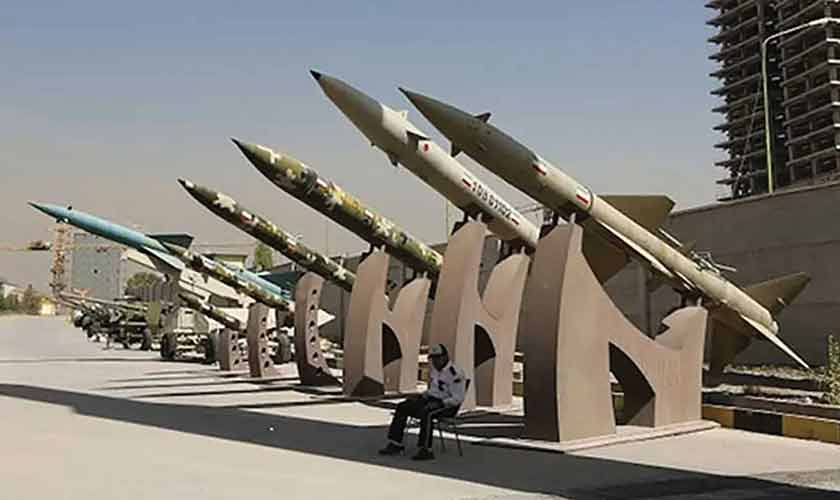
Israel’s strategic objectives, by contrast, have been more consistent if no less ambitious: a permanent dismantling of Iran’s military capacity and regional influence. Its systematic targeting of physical infrastructure, state institutions and organised resistance capabilities has been modelled on the Gaza campaign. However, Iran has proven to be a fundamentally different theatre of operations. A sovereign nation-state of ninety million people, Iran possesses a seasoned establishment, institutionally experienced strategic planners and a political leadership that has sustained itself through five decades of sanctions, proxy wars and international pressure. The IRGC, in particular, has demonstrated sophisticated targeting capability, operational depth and the capacity to sustain a coordinated multi-front response. Iran’s strategic resilience seems to have surpassed the assessments of both Washington and Tel Aviv, which had possibly anticipated a relatively swift degradation of Iranian resistance.
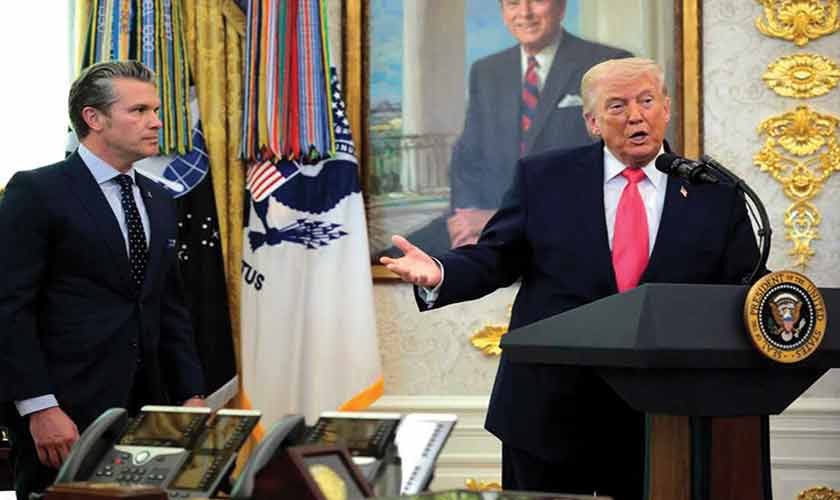
President Trump last week signalled an openness to establishing a diplomatic channel with Tehran via Pakistan. The development attracted considerable international attention, with some analysts commending Islamabad’s diplomatic positioning.
Nearly a month into the war, neither the US nor Israel has achieved its stated objectives. The economic fallout has been considerable. Oil prices have risen sharply, disrupting global markets and generating significant inflationary pressures across import-dependent economies such as Pakistan. The effective closure of the Strait of Hormuz — a chokepoint through which a substantial proportion of global energy supply transits — has compounded these effects to a degree that some economists have compared it to the combined oil shocks of 1973 and 1979. It is this convergence of military stalemate and escalating economic cost that appears to have prompted a recalibration in American strategic calculus.
Against this backdrop, President Trump last week signalled an openness to establishing a diplomatic channel with Tehran via Pakistan. The development attracted considerable international attention, with some analysts commending Islamabad’s diplomatic positioning. Pakistan’s credibility as a mediator is derived from a distinctive set of structural advantages. It maintains functional relations with the US, shares civilisational, geographical and religious ties with Iran and through its strategic defence agreement with Saudi Arabia, concluded in late 2025, has cultivated meaningful leverage within the Gulf that few regional actors can replicate. Pakistani leaders’ engagement in diplomacy, including the critically important assurance to Tehran that Saudi territory will not be used as an operational platform against Iran, reportedly prevented Iranian retaliatory strikes against Riyadh. Moreover, Pakistan’s longstanding role as the de facto diplomatic intermediary between Iran and the US — a function it has performed since the severance of US-Iran diplomatic relations in 1979 — lends Islamabad institutional credibility.
However, structural obstacles to a negotiated settlement remain formidable. The American agenda, reportedly transmitted to Tehran via Pakistani channels, encompasses sweeping demands: the removal of enriched uranium stockpiles, a comprehensive halt to nuclear enrichment, restrictions on ballistic missile development, joint oversight of the Strait of Hormuz, and most contentiously a fundamental reorientation of Iranian political leadership. Taken together, these constitute less a negotiating framework and more a demand for strategic capitulation. Iran’s counter-proposals, by contrast, centre on reparations for destroyed civilian infrastructure, the unfreezing of Iranian sovereign assets held abroad and the withdrawal of American military forces from the GCC states. In addition, Tehran has been unequivocal regarding its distrust of the Trump administration, with IRGC officials noting pointedly that Iran was subjected to military strikes on two occasions while engaged in negotiation with Washington. Whether this constituted deliberate bad faith or a failure of inter-agency coordination, its effect on Iranian willingness to re-engage diplomatically has been deeply corrosive.
On the face of it, the negotiating positions are far apart. Nevertheless, a functional common ground is not analytically inconceivable, provided that both sides approach prospective talks as a genuine exercise in termination of hostilities rather than as a continuation of coercion by diplomatic means. A prerequisite for any meaningful progress is the implementation of confidence-building measures such as verifiable cessation of hostilities, the elevation of diplomatic representation beyond the intermediary level and a shared acknowledgment that neither side can achieve its maximalist objectives through military means.
The principal risk to a diplomatic process emanates from Israel. Netanyahu’s strategic objective — namely the irreversible neutralisation of Iran as a military and political force in the region — is essentially incompatible with a negotiated outcome that leaves Iran sovereign and intact. Israel therefore carries a strong incentive to act as a spoiler in terms of escalating at precisely the moment diplomatic momentum builds. This represents a serious risk to regional stability and demands urgent attention from responsible international actors such as the Unites Nations, the European Union and China.
Given the precarious context, Pakistan ought to sustain and deepen its mediatory engagement. Islamabad is uniquely positioned to communicate with most parties — the US, Iran and the Gulf states especially Saudi Arabia — toward a negotiated exit from a war whose human and economic costs continue to mount. For any diplomatic process to advance, however, a halt in hostilities is an inescapable prerequisite. So is the willingness of senior decision-makers on all sides to engage directly and with strategic clarity. That remains, as the history of this region consistently demonstrates, considerably easier to prescribe than to achieve. The trajectory of the coming weeks will ultimately be determined not by the quality of diplomatic design alone, but by whether the political leadership on all sides can subordinate short-term coercive imperatives to the longer-term requirements of a durable and negotiated peace.
The writer has a PhD in political science from Heidelberg University and post-doc research experience at University of California, Berkeley. He is a DAAD and Fulbright fellow and an associate professor. He can be reached at [email protected].