Print Story
X




Jeelani Bano (1936–2026) brought a rare breadth of voice to South Asian literature
| J |
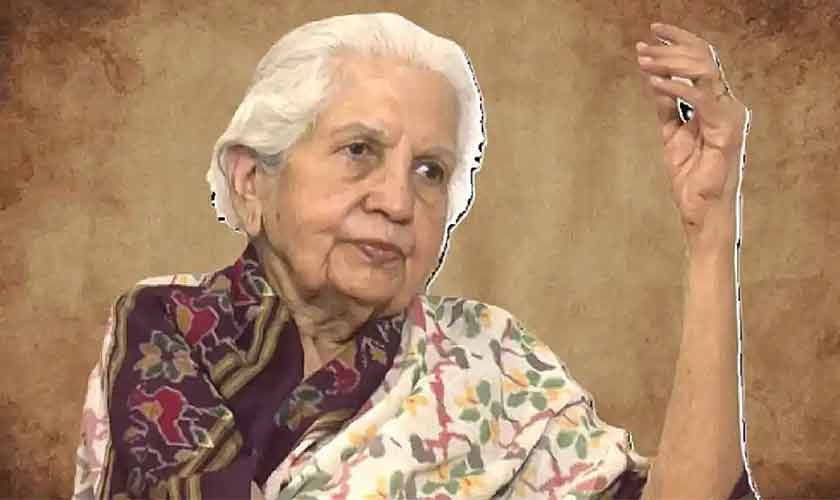
Jeelani Bano, 89, passed away in Hyderabad on March 1. The date coincided with the birthday of two of her distinguished Pakistani contemporaries, Mustansar Hussain Tarar and Ahmad Mushtaq, who turned 87 and 93, respectively.
Bano remained a part of the literary conversation to the very end. At this year’s Karachi Literature Festival, I had referred to Bano as one of the last surviving representatives of a remarkable generation of Urdu women writers born between 1925 and 1940. This cohort had included novelists such as Qurratulain Hyder, Masroor Jahan, Altaf Fatima, Nisar Aziz Butt, Umm-e-Ammara, Khadija Mastoor, Perveen Atif, Khalida Hussain and Razia Fasih Ahmad; as well as short story writers Hajra Masroor, Tasnim Manto and Afra Bukhari.
Jeelani Bano occupies a significant place in the history of Urdu fiction. She was born on July 14, 1936, in Badayun, a historic town in Uttar Pradesh that also produced Ismat Chughtai, Ada Jafri and Aziz Bano Darab Wafa. When her father, Hairat Badayuni, moved to Hyderabad for employment, Bano came to regard the city as her home.
Educated largely at home, she did not attend formal school or college. Pursuing her studies privately, she earned an MA in Urdu. Her first short story, Mom ki Maryam appeared in the annual issue of Adab-i-Latif.
Alongside her short fiction, Bano wrote two major novels, Aivaan-i-Ghazal (1976) and Baarish-i-Sang (1985), as well as novellas Jugnu Aur Sitaray (1965) and Naghmay Ka Safar (1977). Her autobiography, Mein Kaun Hoon? was published in 2014.
Bano was associated with several literary and cultural organisations and contributed to radio and television. Her work was widely recognised. She received the Soviet Land Nehru Award in 1985, the Kul-Hind Award from the Maharashtra Urdu Academy in 1988, and the Nishan-i-Imtiaz from Majlis Farogh-i-Urdu, Doha, in 1998. In 2001, the Government of India honoured her with the Padma Shri. She was also awarded an honorary D Litt by the Maulana Azad National Urdu University.
In her fiction, Jeelani Bano often returns to the quiet injuries of everyday life: the preference for sons over daughters; the anxious wait for a suitable match without dowry; and the casual disregard for women’s emotion. These tensions surface in both grief and sharp irony. In one story, a daughter reflects: “Father understood that to educate boys money had to be lent, to be received afterwards with interest” (Sati Savitri, Nirvan, p. 79). Elsewhere, the bitterness overflows: “Now I am a red flag of danger, a horrible warning for the human skeleton” (Piyaasi Chiriya, ibid., pp. 214-15).
Bano’s artistic range extends well beyond social critique. It is most fully realised in two strands of her short fiction. The first explores the inner worlds of psychologically troubled individuals. The second turns outward, addressing collective suffering with a sensitivity that resists easy divisions. In these stories, hunger, loss and deprivation cut across borders, making distinctions between India and Pakistan seem almost irrelevant.
The shifting rhythms of middle-class lives in India are a recurring concern. Her stories trace both familial tensions and wider social change and are anchored in a deeply human perspective. Even when she engages with historical rupture, the division of families, the strain on inherited relationships andthe decline of feudal values, her focus remains on lived experience rather than abstractions.
In Aik Anaar, the rupture of Partition is captured through its impact on everyday life. In Dreamland, disillusionment with changing social structures finds a sharp edge: “To hell with the raj that has robbed our children of their peace and comfort and relegated us in our old age” (p. 53).
Such moments reveal Bano’s ability to connect intimate lives with broader historical change, without losing the human core that runs through her work.
Kifayat Shiaar, is a testament to her psychological insight. Its characters and atmosphere invite comparison with the work of Rajinder Singh Bedi, recalling the depth and restraint associated with his finest stories.
Bano’s fiction is firmly rooted in social realism. Much of it draws on the feudal milieu of Hyderabad, where economic hardship and social hierarchy shaped everyday life. The influence of Munshi Premchand is evident, particularly in her portrayal of moral ambiguity under pressure. In Aaina, for instance, an elderly mother, hardened by deprivation, steals food meant for her sick grandson to satisfy her own hunger. Like Madhav and Ghisu in Premchand’s Kafan, she is untouched by guilt.
Stories such as Dreamland, Nirvaan, Chhutkaara, Chammiya, Raat KayMusafir, Chori Ka Maal, Sati Savitri and Talchhat illustrate this engagement with social reality. Together, they form a body of work that captures the tensions of class, survival and human frailty.
translating Abdullah Hussein’s novella Qaid into English. He may be reached at [email protected]. He tweets @raza_naeem1979
The image of ordinary middle-class woman, caught in the crosscurrents of domestic politics, lies at the centre of much of Jeelani Bano’s short fiction. Her protagonists are often engaged in a quiet but persistent struggle to shape an identitythat is continually made and unmade across changing circumstances. At times, this woman appears resigned, narrating her helplessness and constraint; at others, she is defiant and speaks with great clarity, drawing on a more assertiveimpulse to challenge injustice. In Scooter-Vaala, Bano captures this tension through the mental disarray produced by superstition and fragmented belief systems.
In stories such as Kedarashe demonstrates a refined understanding of music. Yet it is in Zill-i-Subhani that this sensibility is most strikingly fused with political and social critique. The story moves with great ease between metaphor and satire.
Catastrophic events such as the demolition of the Babri Masjid and the Gujarat massacre once allowed for sympathetic commentary from across the border. In her later stories, Jeelani Bano gave voice to the anxiety and grief of Muslims in India, creating characters that stand in quiet defiance of the political forces that cloud the country’s democratic and secular ideals.
In Dasht-i-Karbala Say Door, this moral hesitation is expressed with striking clarity: “I am the weak person born in the time of Imam Hussain (with whom Allah was pleased) who lacked the courage to join those who went with him” (Sookhi Rait, p. 11). Elsewhere, in Aik Poori, an agent of the state is unsettled by the violence he is asked to justify: “But sir, we cannot shoot them. We have brought them from their homes. They are villagers” (p. 75).
Bano’s creative power is most luminous in quieter, more intimate moments: in the evocation of a child’s smile, a woman’s wounded heart or the shifting textures of life in her adopted home, Hyderabad. The recurring images of the doll and the doll’s house become central to her fictional universe, gathering memory, loss and longing into a single, evocative frame.
In Guriya Ka Ghar, this world unfolds in a layered, almost dreamlike sequence: beneath a sky draped like a mosquito net of moon and stars; delicate princesses sit on pavements, reading Marx’s Capital;fantasy bridegrooms arrive on elephants, scattering gold coins, only to survey their own empty pockets moments later. The scene moves fluidly between fantasy and disillusionment, between spectacle and absence. “If someone is happy, let them be happy; that is the greatest virtue. Poor Vanita has gone mad; didn’t you hear? Prakash did not marry her.”
In such passages, Bano brings together the personal and the political, the imagined and the real, revealing the fragile emotional worlds that lie beneath larger histories.
In both her novels, Aivaan-i-Ghazal and Baarish-i-Sang, Jeelani Bano explores women’s position in the feudal society of Hyderabad. She writes about the lives of upper- and middle-class women marked by constraint, suffocation and quiet endurance. Her female characters stand apart from others in Urdu fiction.
Bano presents the realities of oppression and exploitation with clarity, yet her women are not defined by victimhood alone. The image that emerges is one of resilience. Her protagonists endure hardship, often placing the needs of husband and children above their own, but they are neither passive nor without agency. They recognise injustice and, at times, find the strength to resist it.
From Roshni Kay Minaar through Baarish-i-Sang to Raasta Band Hai, her literary journey spans more than half a century. The body of work secured her a distinct and lasting place in Urdu fiction.
She once explained the impulse behind her writing: “There is just one purpose to my writing: that a single line written by me should give someone the power to speak the truth, the courage to call a thief a criminal.”
The writer is a critic, translator and researcher. He is currently