Print Story
X




University autonomy is not merely an administrative arrangement; it is a foundational principle of higher education
| T |
he debate over university autonomy has acquired renewed significance in Pakistan as the higher education sector confronts an increasingly severe financial crisis. Globally, universities are recognised as autonomous institutions governed through statutory bodies such as senates, syndicates and academic councils. These bodies are entrusted with the formulation of academic policies, administrative regulations and long-term institutional strategies, thereby ensuring that decisions concerning teaching, research, faculty appointments and academic standards remain under the stewardship of scholars rather than political actors.
University autonomy is not merely an administrative arrangement; it is a foundational principle of higher education.
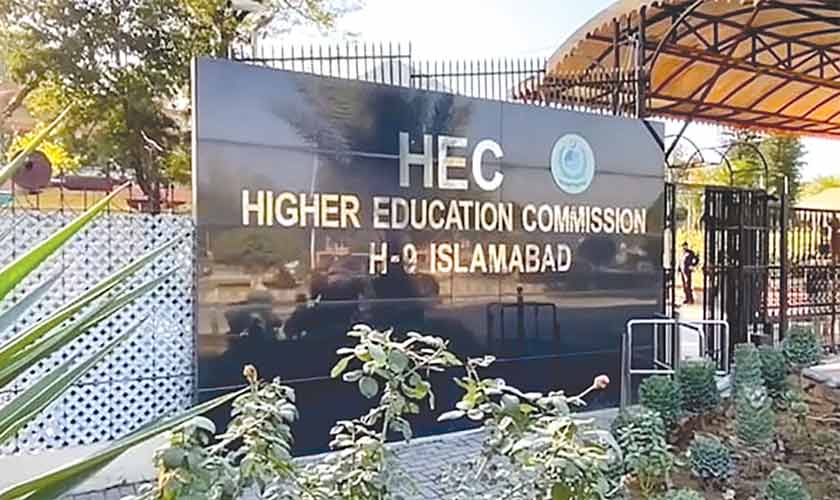
In Pakistan, however, the effective exercise of institutional autonomy is increasingly constrained by financial dependence. Although public universities are formally autonomous, most remain heavily reliant on government funding. Over the past several years, the Higher Education Commission and university administrations have repeatedly warned that public investment in higher education has failed to keep pace with inflation, rising student enrolments, the expansion of the university sector, increasing institutional responsibilities and escalating operational costs. Consequently, universities across the country are experiencing acute financial pressures.
The consequences of these financial constraints are evident throughout the sector. Many institutions are struggling to meet recurring expenditures, including salaries, pensions, utility payments and research-related costs. Simultaneously, declining real-term investment per student has adversely affected the quality of educational services and academic resources.
These challenges have been further compounded by the constitutional changes introduced through the Eighteenth Amendment. Following devolution, higher education is increasingly viewed as a provincial responsibility. While the federal government has continued to provide support through the HEC, it expects provincial governments to assume a greater role in financing and administering public universities. Yet this transition has remained incomplete. This ambiguity has created a significant gap between formal autonomy and practical capacity. Universities may possess legal authority over their academic affairs, yet financial vulnerability often constrains their ability to exercise that authority effectively. Institutions facing chronic budgetary shortfalls are frequently compelled to prioritise short-term survival over long-term academic development. Reduced research activity, delayed faculty recruitment, increased reliance on visiting faculty and growing dependence on student fees are manifestations of this broader structural challenge.
It is important to recognise that university autonomy does not absolve governments of responsibility. Governments retain a continuing obligation to provide stable and predictable financial support while respecting institutional independence. Addressing these challenges requires both financial and governance reforms. Universities need a stable, transparent and predictable funding framework that facilitates long-term planning and sustainable growth. At the same time, public investment must be accompanied by robust accountability mechanisms, including financial transparency, merit-based recruitment and effective institutional management. Autonomy and accountability should be viewed as complementary principles rather than competing objectives.
The consequences of these financial constraints are evident throughout the sector. Many institutions are struggling to meet recurring expenditures, including salaries, pensions, utility payments and research-related costs.
An important component of the reform agenda is the strengthening of provincial higher education commissions. Where such bodies already exist, they should be empowered to coordinate policy implementation, ensure equitable resource allocation and provide strategic oversight. Where they are absent, their establishment should be prioritised. Their role, however, should remain facilitative rather than interventionist, preserving institutional autonomy while enhancing coordination and accountability.
The HEC has frequently been criticised for policy inconsistency. Frequent changes in regulations relating to admissions, accreditation, quality assurance and university governance have often generated uncertainty for institutions. Higher education systems require stability and predictability to support long-term planning. Policy fluctuations can impede institutional development.
Questions have also been raised regarding the emphasis placed on quantitative indicators such as publication counts and the number of doctoral graduates. While expanding research output and doctoral education was an important objective, numerical growth alone does not guarantee academic excellence, innovation or meaningful contributions to national development. Sustainable progress requires a balance between expansion and quality, with greater emphasis on originality, relevance and scholarly impact.
To its credit, the HEC has sought to address these concerns through accreditation processes, programme evaluations and quality assurance initiatives. However, the effectiveness of these measures has often been constrained by implementation challenges and the absence of a coherent long-term strategy. Improving research quality remains one of the most pressing priorities facing Pakistan’s higher education sector. Greater attention must be devoted to rigorous research training, international collaboration, original scholarship and publication in reputable academic journals. Assessment frameworks should also recognise disciplinary diversity and national research priorities rather than relying exclusively on standardised quantitative metrics.
The relationship between universities and government, therefore, requires careful reconsideration in light of constitutional reforms and contemporary fiscal realities. Higher education is neither solely a federal responsibility nor exclusively a provincial one; it is a shared national responsibility. Only through a clearly defined partnership between federal and provincial governments, supported by sustainable funding and respect for institutional autonomy, can Pakistan develop a higher education system capable of delivering quality, stability, innovation, and international competitiveness.
The writer is a former chairman of the Social Anthropology Department, University of Peshawar.