Print Story
X




Lahore’s pedestrian spaces have shrunk over the decades. Authorities, however, claim that the trend is now changing
| L |
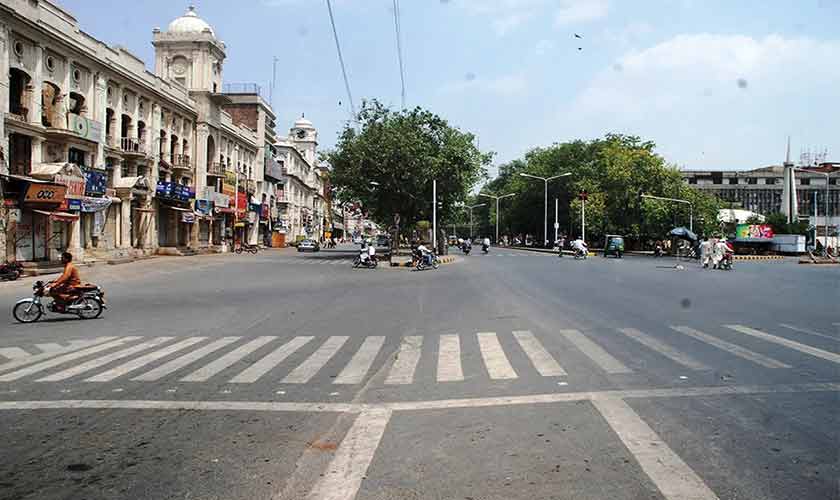
ahore was once a walk-friendly city. Among its familiar pedestrians was poet Nasir Kazmi. The bard would walk through Lahore’s many roads and streets late into the night. This was back in the 1960s and 1970s. Some Lahoris maintain that the streets were walkable even till the late 1990s. Now, the provincial metropolis looks like a city built for cars, not pedestrians. As environmental activist Ahmed Rafay Alam puts it, the city has developed into one with “car-driven housing societies.”
Lahore no longer encourages pedestrian activity.
If you walk along Gulberg’s Gurumangat Road, you discover that vendors have encroached upon the footpath on several stretches. Starting from Ramada Hotel, you come upon a tyre-puncture repair shop, a flower vendor near the graveyard, a goat-selling point, a barbecue stall and several fresh fruit sellers. So where does one walk?
Shahid Mehmood lives in Gulberg’s N Block. His office is located at Hussain Chowk. He says he loves walking but cannot go to his office on foot.
“The first biggest hurdle is that you cannot walk with peace of mind,” he says. “One has to navigate through not only broken and ‘occupied’ footpaths but also rickshaws and motorcycle riders that often violate the one-way rule.”
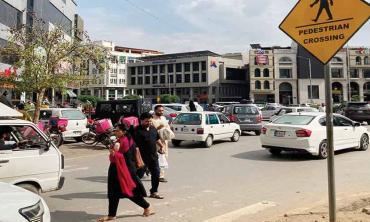
Dr Ajaz Anwar, a Lahore Conservation Society activist, says he can hardly find a stretch on The Mall where one can walk without an incident. He says crossing a road is next to impossible for pedestrians, as zebra crossings hardly exist.
Sections of pedestrian footpaths are routinely set for grabs—both by private parties and government agencies. The provincial government has allocated many stretches of footpath, mainly along parks, for cart and Sahulat-on-the-Go bazaars. These are government-regulated bazaars that have made room for cart vendors at the cost of walking space.
Shahid Mehmood says there is no stopping the government.
“To ensure that there are walking spaces for people is the government’s duty.”
Osama Mahmood, the Lahore Development Authority spokesperson, says things are starting to change, at least in some parts of the city.
Speaking about the Authority’s ongoing efforts to make Lahore walkable again, Mahmood says that under LDA’s Sustainable City Programme, footpaths are being completed along several major roads, including Mahmood Kasuri Road, Fashion Avenue, Sir Syed Road, College Road and eight commercial corridors in Gulberg as well as the DHA Y-Block.
These footpaths, he says, are eight to ten feet wide and built at a comfortable height, “which makes it easy for people to walk without obstruction.” He agrees that a footpath raised a foot and a half above the road gives vendors a perfect spot to set up shop.
Dr Ajaz Anwar, a Lahore Conservation Society activist, says he can hardly find a stretch on The Mall where one can walk without an incident. He says crossing a road is next to impossible for pedestrians, as zebra crossings hardly exist.
“We have lowered the footpath level. These walkways now run along roads without creating a divider. This will discourage encroachment.”
But the re-worked footpaths along Zahoor Elahi Road have become permanent parking spaces, leaving no room for pedestrians. Mahmood says the issue of building walkways should be separated from the issue of enforcement.
Even though the LDA has its own enforcement squads, the government has added another layer of enforcement: the Punjab Enforcement and Regulatory Authority, better known as PERA Force. This is a law enforcement agency tasked with tackling some of the province’s biggest everyday problems: keeping prices under control; removing illegal encroachments from public spaces; and ensuring that shopkeepers and businesses follow government price regulations.
Mahmood says the footpaths are not built in disconnected patches, adding that they are designed to run continuously from one point to another.
He says the whole city will soon have pedestrian-friendly walkways. Mahmood says the LDA is now turning its attention to Liberty Road, adding that it has already completed footpaths on Gulberg’s Main Boulevard and another nearby road. He says that the Authority is developing a “Gulberg model,” aimed at making the entire area walkable on a sustainable basis.
Beyond Gulberg, the LDA is focusing on areas around the City Railway Station as part of its urban regeneration plan. According to Mahmood, footpaths in this zone, stretching from the Railway Station all the way to Circular Road, are being converted into safe pedestrian pathways. One such footpath begins near Lakshmi Chowk, next to a school, and leads to the Railway Station. From there, the network extends toward Circular Road, Mori Gate and surrounding areas, with pedestrian-friendly footpaths planned throughout.
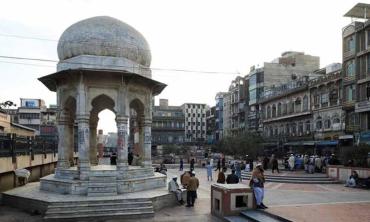
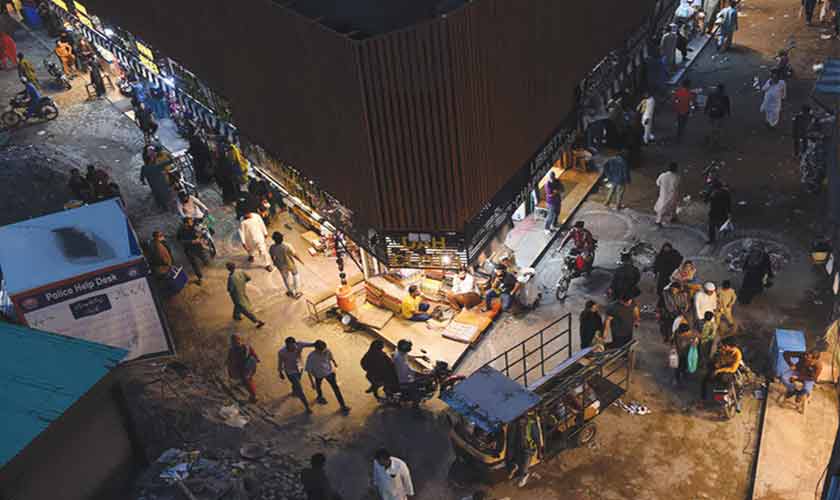
A major focus is the area surrounding Data Darbar—one of Lahore’s busiest sites. Mahmood says new footpaths and dedicated pedestrian zones are being added there as well.
So why weren’t these areas pedestrian-friendly earlier?
Mahmood mentions an important reason: many of Lahore’s older, densely populated neighbourhoods were never originally designed with footpaths in mind. Encroachments—shops, stalls and other structures spilling onto walking spaces—have blocked other pedestrian spaces.
Mahmood also mentions ongoing work near Gurumangat Road and adjoining areas, where footpaths are currently being built.
As socio-economic factors force large vehicular traffic volumes, the lack of parking spaces and poor enforcement continue to deny people the ability to walk at will and in peace.
The writer is the editor of an English daily. He can be reached at [email protected].