Print Story
X




In an age of AI-generated summaries, literary criticism must do more than describe books
| A |
fter years of reading book reviews in our newspapers, literary magazines and international publications, I have come to a conclusion: we need better book reviews. Yet any discussion of the state of reviewing must begin with the acknowledgement of a broad reality: books and book reviewing are facing a crisis worldwide.
Two recent incidents illustrate the problem. First, Granta published a story that appears to be AI-generated by an author, with an AI-generated photograph and social media profiles full of AI hype. Second, The New York Times cut ties with a reviewer who was caught using AI to plagiarise a review of the same book from another website. Both incidents reveal the disruptive effects of AI, exacerbated by the very human temptation to seek shortcuts.
Much has already been written about AI, declining attention spans, the erosion of critical thinking and the emergence of a post-literate culture. There is little value in going over those arguments here. What matters is the question they raise: how do we rethink serious criticism?
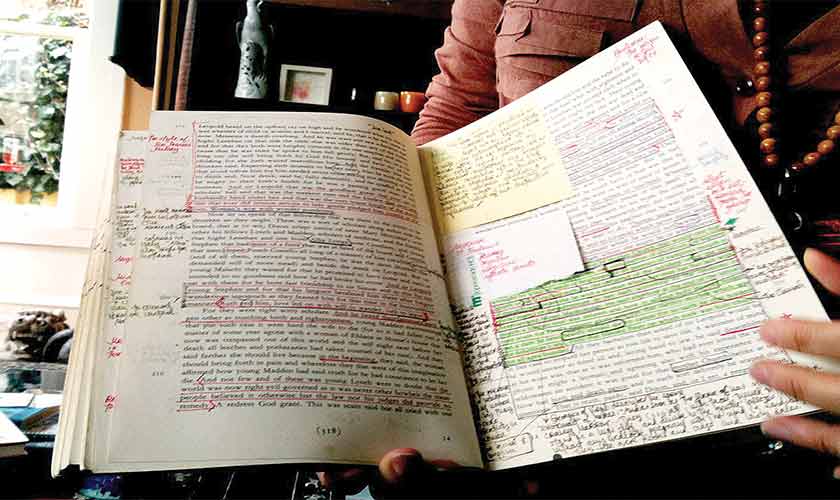
First, one cannot read everything. Life is too short. There needs to be some guidance on what is worth reading. In this sense, book reviews serve a reader-centric function. Second, a good reviewer engages closely with a book.
This matters at several levels. For writers, reviews provide feedback and can help improve future work. They may also help aspiring writers avoid some of the shortcomings of contemporary writing. For readers, reviews highlight a book’s themes, help them decide whether it aligns with their interests, and, at times, draw attention to nuances they might have missed. In this sense, book reviews function as a form of interpretive mediation. They do not merely tell us what to read; they also suggest how to read it.
More broadly, reviews shape the literary ecosystem. They help move literature beyond closed circuits of writers and reviewers, contributing to higher standards, greater expectations and a richer public discourse.
It is possible that, right now, we are falling short on both counts. We rarely see negative reviews and this is hardly a uniquely Pakistani phenomenon. According to research, less than 1 percent of reviewed novels since 2020 have received predominantly negative reviews.
There are good reasons for this. Reviewers are often writers themselves. Favouring another writer may be repaid when that writer, in turn, reviews their work. Many reviews are also written by freelancers whose primary interest lies elsewhere. Given the effort involved, they may seek visibility in return. A line from the review might appear on a future edition of the book, or the author may share it on social media. Either way, the reviewer gains access to literary circles that are often difficult to enter.
The result is an increase in lukewarm reviews: pieces that largely summarise a book’s contents and focus on a few familiar critical clichés. They tell us what a book contains, but rarely offer a serious assessment of why/ or why not the reader should read it.
One might argue that it is difficult to produce an insightful review within 800 to 1,000 words. But if one can critique the reports of international financial institutions or the government within the confines of an op-ed, one can also write a rigorous review while observing the same economy of words.
Reviewing books, or literary criticism more broadly, is more than an academic exercise. It is an act of cultural repair: a way of restoring the public-ness of reading and making literature part of everyday conversation rather than private consumption.
Another common defence is that most reviewers write for free and that one should not expect high quality and dedicated effort from unpaid work. But this argument is flawed. If I am undertaking a job and attaching my name to it, I cannot trade off economics and quality.
The next question, then, is: what should a book review look like? There is no fixed formula, just as there is no fixed formula for good writing. But we can identify a few principles, even if they sometimes overlap or pull in different directions.
First, a reviewer should say what they genuinely think. An award-winning book can be disappointing; an unknown one can be worth reading. A book should not be rated highly merely because it has been published by an independent press. Also a reviewer must have a distinct voice rather than delivering aloof, mechanical pronouncements.
Second, a reviewer should strive for neutrality. No bias or undue influence should shape the evaluation of a book. Complete neutrality is impossible. Every reviewer brings their particular tastes to a text. If, for instance, I prefer rigid poetic forms such as the ghazal and am reviewing a collection dominated by free verse, I should acknowledge that preference at the beginning. It is important that the book is assessed on its own terms.
Third, a reviewer should cultivate an analytical, even vivisectional, outlook. A review should engage deeply with the text and, where relevant, with the ideas that surround it. But this requires balance. The extraction of ideas should not overshadow the book itself. A review of a novel with feminist undertones, for example, should not become a general essay on feminism.
Fourth, a reviewer should be sceptical. Unless a book proves itself exceptional, it should not be assumed to be so.
Consider a thought experiment. If 100 books are published and criticism remains overly positive, as is often the case today, the following year may see 110 books but little improvement in quality. Now imagine those same 100 books subjected to rigorous, even harsh, criticism. The number of books published will probably rise anyway, but the quality is more likely to improve. Even if established writers ignore criticism, emerging writers may learn from it.
In the long run, the relationship becomes mutually reinforcing. The quality of criticism can shape the quality of literary output. Stronger literary output, through recognition and awards, can further raise standards and expand readership.
There are some silver linings. Substack, for instance, is emerging as a promising space for criticism, resisting the prevailing culture of positivity and encouraging reviewers to call a bad book a bad book, and a good one a good one.
Those of us who work as editors, reviewers and writers should pay closer attention to how criticism is being produced elsewhere. A sloppy, sugar-coated review that merely summarises a book and delivers a favourable verdict, without engagement with larger ideas, cannot be criticism. At a time when AI can already produce competent summaries, the value of the human reviewer increases manifold.
Reviewing books - literary criticism more broadly - is more than an academic exercise. It is an act of cultural repair: a way of restoring the public-ness of reading and making literature part of everyday conversation rather than private consumption. It is time to move beyond reflexive praise and to keep literature at the centre of our cultural conversations.
The writer is a Peshawar-based researcher who works in the financial sector. He can be reached at:[email protected]