Print Story
X




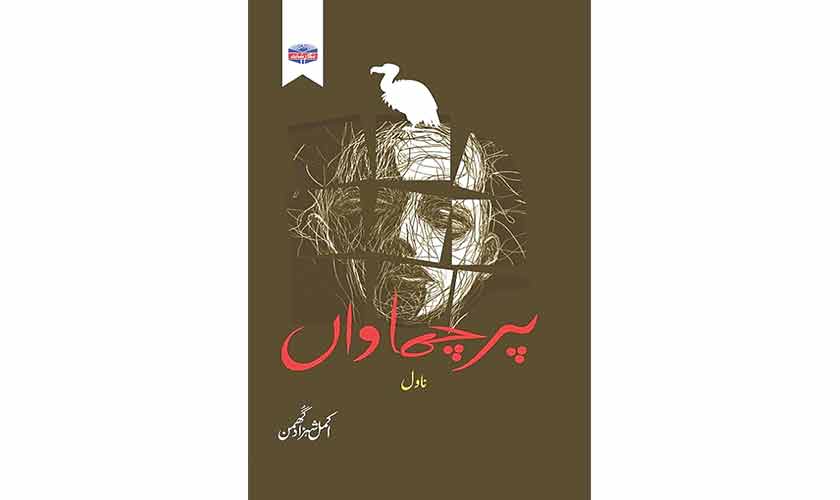
Akmal Shahzad Ghumman’s Parchavaan is a layered and deeply human portrait of rural Punjab
| S |
ome books end with the last page. Parchavaan did not.
Having now read Akmal Shahzad Ghumman’s fourth novel three times, I still feel there is something in it that I have not fully grasped. Perhaps that is why I keep returning to it. To be honest, I sometimes feel possessed by Parchavaan, not by the title, but by what lies within.
The novel unfolds as an ambitious and layered narrative that paints a kaleidoscopic portrait of rural Punjab. It offers a complex snapshot of a landscape many believe they understand, yet few manage to capture with such authenticity. Akmal does not merely describe village life; he excavates it. He reveals its traditions, contradictions, loyalties, fears, aspirations and silences.
What impressed me most was the confidence with which he navigates the complicated social terrain of the Punjab.
This is not easy territory.
The novel moves through the domains of the chaudhrys, the landlords and traditional custodians of power who often shape social and economic realities. It enters the spaces occupied by maulvis and examines the influence they exert over communities. It explores the myths, perceptions and lived realities surrounding transgender identities. It also acknowledges the often-overlooked world of mirasis - performers and cultural custodians - who occupy a complex place in the social hierarchy.
These are sensitive subjects. Handled poorly, they can become caricatures. Handled carelessly, they can become ideological sermons. Handled by Akmal, they become human.
That is perhaps one of the novel’s greatest achievements. It refuses simplistic moral binaries. Its characters are neither heroes nor villains. They are shaped by circumstance, history, desire, fear and belief. Flawed and contradictory, they remain deeply recognisable. The result is a narrative world that feels lived rather than constructed.
Equally remarkable is Akmal’s command of language. His use of Punjabi is not ornamental but organic. It is rooted in the world he depicts. Every phrase seems to carry cultural memory; every emotion feels inherited rather than invented.
In many ways, Parchavaan functions not only as a novel but also as a linguistic archive. Scholars of Punjabi language and literature may find significant value in the lexical richness within its pages. Akmal understands that language is more than communication; it is identity, geography, history and worldview.
This is no exaggeration. The novel’s reach is already being felt across the border. It has been published in Gurmukhi in Gurdaspur, India, introducing it to a wider Punjabi readership. The prose carries the rhythms of oral storytelling while retaining literary sophistication. That balance is difficult to achieve. Yet Akmal manages it effortlessly.
Some of his The characters deserve special mention. Whether readers admire them or dislike them is ultimately irrelevant. What matters is that they remain with you. They linger long after the final page has been turned. They occupy the imagination in much the way real people do. You remember their voices, their choices, their ambitions and their failures.
That, to me, is the mark of successful characterisation. Many novels create memorable worlds. Few create memorable people. Parchavaan succeeds in doing both.
Another fascinating aspect of the book is its engagement with memory and history. Through its narrative, readers encounter the emergence of faith-based phenomena in a rural setting. They witness how narratives of belief are constructed, sustained and transformed over time. The novel subtly captures the interaction between power and spirituality, between public performance and private conviction.
At various moments, haunting figures in olive green drift through the narrative like echoes from another era. For Generation X, they may trigger memories. For Generation Z, they provide a historical frame of reference. For future generations, they may serve as a reminder of roads once taken and possibilities foreclosed. Either way, they matter.
Akmal demonstrates a keen awareness of how history operates, not merely through major events but through everyday lives. He understands that the grand narratives of nations often reveal themselves most clearly in villages, streets, homes and conversations.
His restraint, too, stands out. Many writers dealing with political, social and religious themes succumb to excess. They either become overly cautious or excessively confrontational. Akmal chooses a different path. He shows us both the backstage reality and the public performance, rarely telling us what to think. He reveals tensions, contradictions and absurdities without turning the novel into a manifesto.
He roasts the content. Then cools it off before the burns become a blaze. This balance is an art he has clearly mastered.
I have known Akmal for a long time. I sat beside him in classrooms at the National College of Arts in Lahore. I listened to his ideas and watched him think through stories. Even then, there were signs of what he would eventually become. He was already a writer. The storyteller was merely waiting for the right trigger.
What ultimately makes Parchavaan significant is its honesty. Beneath its social observations, cultural commentary and narrative complexity lies a commitment to truth, not factual truth alone, but emotional truth as well; the truth about how communities function; the truth about how people negotiate power; the truth about how memory shapes identity; the truth of how faith, fear, love and ambition coexist in the same heart.
For Akmal, the sacred appears remarkably simple. Perhaps that simplicity is the novel’s greatest strength.
Parchavaan is, at its core, a portrait of rural life entangled in gains, grabs, loyalties, losses and sacrifices. It is a story about people living within systems larger than themselves and helping sustain those systems.
It is brusque yet compassionate; blunt yet nuanced; local in setting yet universal in resonance. Some books entertain; some books inform; and then there are books that linger. Parchavaan belongs firmly in the last category.
The reviewer, a novelist,lives in Canada.