Print Story
X




Technology has continually reshaped how Muharram’s rituals of remembrance are heard and performed
| W |
ith the arrival of Muharram, the rituals of azadari are once again being broadcast across the country. Today, television channels, social media platforms and digital networks dominate both coverage and screen time. Yet the relationship between technology and the sonic traditions of Muharram has a much longer history.
When Pakistan was created, Quaid-i-Azam Muhammad Ali Jinnah directed that during the first ten days of Muharram music programmes on radio be suspended and replaced with declamations, recitations and renditions commemorating the tragedy of Karbala. Later, when Pakistan Television began transmission, the first ten days of Muharram were similarly free of music, with programming devoted to majalis, marsia, soz and salam.
Today, however, most private television channels observe this solemnity only on Ashura itself.
This raises an interesting question: how have different media altered the aural forms of azadari over the past century?
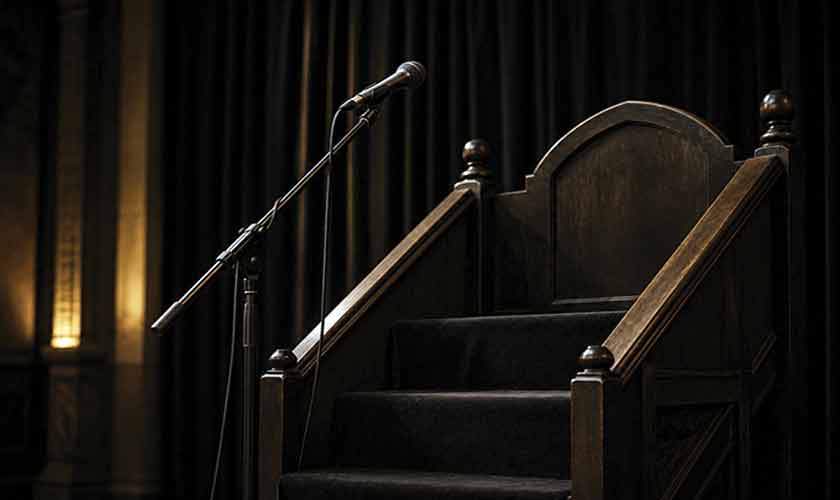
The loudspeaker, when first introduced, was widely criticised. Yet it was eventually embraced and its adoption transformed voice modulation and methods of delivery. Similarly, with the emergence of formal broadcasting in the subcontinent by the mid-1930s, various forms of recitation and rendition were compelled to adapt to technological requirements. Gramophone recordings introduced further changes, as the limitations and possibilities of recording technology began to shape the voice culture.
Previously, recitation, rendition and declamation were direct acts. The zakir, marsia khwan or speaker addressed a physically present audience. The loudspeaker altered that relationship. Radio transformed it further, not only through strict time slots but also through the controlled environment of the studio. The capabilities and limitations of recording equipment became significant variables in shaping performance.
A similar phenomenon can be observed in music. Vocalisation in live concerts before the widespread use of microphones and amplification differed markedly from singing into them. Some vocalists struggled to adapt and faded from prominence. Others flourished because their voices suited the new technologies.
The process continues. With the arrival of artificial intelligence, voice production, intonation and post-recording manipulation are likely to reshape vocal culture once again.
Over the decades, it has been observed that the quality of sozkhwani has declined, particularly in performances that find their way onto formal broadcast platforms. In the past, celebrated gawaiyas participated alongside professional reciters in Muharram commemorations, helping to maintain exceptionally high standards of rendition. Today, however, professional reciters, influenced by contemporary changes in intonation and vocal style, increasingly follow different tonal paths.
More broadly, traditional vocalisation itself appears to be in decline. Top-class vocalists are becoming rare. The day may not be far off when it becomes difficult to identify a leading gawaiya rendering a ghazal.
For this reason, it is important to document and analyse the vocal changes that have taken place in the recitation and rendition of forms traditionally associated with the remembrance of the lives and sacrifices of the Ahl al-Bayt.
The writer is a culture critic based in Lahore.