Print Story
X




| S |
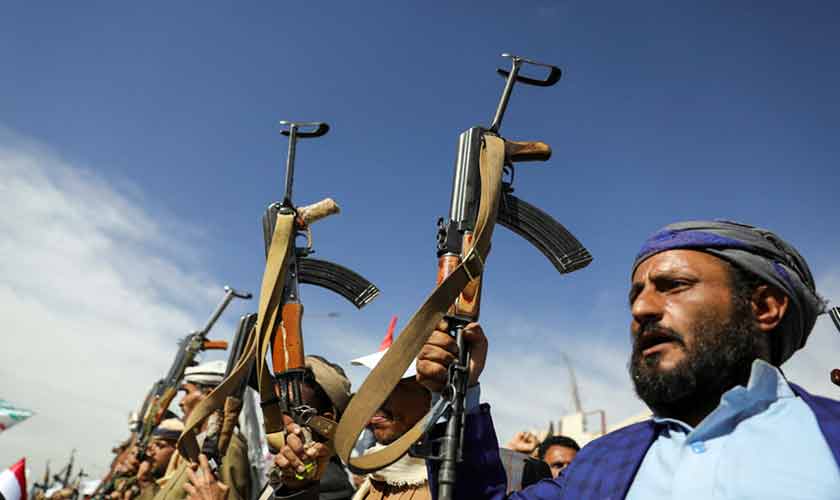
audi Arabia interpreted the Houthi takeover as a direct strategic threat. Riyadh feared the emergence of an Iranian-aligned force on its southern border and launched a military intervention in March 2015 with the support of a regional coalition. Saudi leaders initially expected a swift victory, but the war instead became one of the most devastating and protracted conflicts of the Twenty-First Century. Air strikes destroyed infrastructure, blockades contributed to famine and disease outbreaks spread across the country. Yet despite overwhelming firepower, the coalition failed to defeat the Houthis. Instead, the movement adapted to the pressures of war and consolidated its authority over large parts of northern Yemen.
The Houthis demonstrated remarkable resilience by combining guerrilla warfare, tribal alliances, ideological mobilisation and increasingly advanced military technologies. Their control of Hodeidah, a crucial Red Sea port, allowed them to maintain supply lines and revenue streams even under blockade. At the same time, Iranian assistance enabled them to acquire ballistic missiles, drones and sophisticated targeting capabilities. By the late 2010s the movement was capable not merely of defending territory but also of projecting power beyond Yemen’s borders. Attacks on Saudi oil facilities and cross-border missile strikes exposed the vulnerability of Gulf states despite their superior military budgets.
The killing of Ali Abdullah Saleh in 2017 marked another turning point. After attempting to open negotiations with the Saudi-led coalition, Saleh was killed by Houthi forces, who then tightened their grip on Sanaa. This event demonstrated the movement’s determination to eliminate rivals and maintain dominance over the territories it controlled. It also reflected the ruthless pragmatism that increasingly characterised Houthi strategy. Although the movement continued to portray itself as a revolutionary force defending Yemen against foreign aggression, it simultaneously developed many attributes of an authoritarian government, including centralised control, suppression of dissent and monopolisation of coercive power.
By 2020, the Houthis appeared to hold the upper hand in the civil war. Saudi Arabia, burdened by financial costs and international criticism, sought ways to extricate itself from the conflict. Ceasefires reduced the intensity of fighting and negotiations between Saudi officials and Houthi representatives suggested the possibility of a political settlement. However, the movement’s growing regional ambitions soon expanded the conflict beyond Yemen.
The outbreak of the Israel-Hamas War in October 2023 transformed the Houthis from a regional insurgency into a global geopolitical actor. Presenting themselves as defenders of Palestine and members of the Iran-backed Axis of Resistance, the Houthis launched missiles and drones toward Israel and targeted commercial shipping in the Red Sea. These attacks had enormous international consequences because the Bab el-Mandeb Strait is one of the world’s most critical maritime chokepoints. Disruptions forced ships to reroute around Africa, increasing costs, delaying deliveries and destabilising global supply chains. Using relatively inexpensive drones and missiles, the Houthis demonstrated how non-state actors could disrupt the infrastructure of globalisation.
The history of the Houthis ultimately illustrates how local grievances can become inseparable from international politics. Their emergence was rooted in the specific historical experience of Zaydi marginalisation in Yemen.
The strategic significance of these operations cannot be overstated. For the Houthis, attacks on Red Sea shipping served multiple purposes simultaneously. They reinforced the movement’s anti-Israel credentials, strengthened ties with Iran and allied groups, pressured international actors involved in the Gaza conflict and elevated the Houthis’ status within the Arab and Muslim worlds. At the same time, these actions revealed the extent to which the movement had transcended its original local agenda. What began as a struggle over Zayd identity in northern Yemen evolved into participation in a broader regional confrontation involving Israel, Iran, the United States and the Gulf monarchies.
The United States and the United Kingdom responded with air strikes against Houthi targets beginning in January 2024. Israel conducted attacks against Houthi-controlled infrastructure, including the port of Hodeidah. These military responses failed to decisively deter the movement. The Houthis continued missile launches and maritime attacks, displaying both resilience and strategic calculation. Their willingness to endure retaliation reflected a broader political logic: confrontation with major powers enhanced their legitimacy among supporters who viewed resistance itself as a form of victory.
The Houthis’ rise raises profound questions about governance and legitimacy in Yemen. Although they present themselves as defenders of sovereignty against foreign intervention, critics accuse them of authoritarianism, ideological indoctrination, repression of dissent and exploitation of humanitarian suffering. Their governance combines elements of revolutionary populism, religious authority and militarised control. In many respects, they resemble other armed movements that emerged from weak states and prolonged wars: simultaneously resistance organisations, proto-states and ideological projects.
The international community’s response to the Houthis has often been inconsistent and shaped by competing priorities. Designations of the movement as a terrorist organisation have alternated with diplomatic engagement, reflecting tensions between security concerns and humanitarian realities. Yemen’s humanitarian crisis remains among the worst in the world. Policies that isolate the Houthis too aggressively risk worsening civilian suffering because the movement controls territories where millions of Yemenis reside. Yet, failing to confront Houthi militarisation also risks inviting further regional escalation.
The history of the Houthis illustrates how local grievances can become inseparable from international politics. Their emergence was rooted in the specific historical experience of Zayd marginalisation in Yemen. Regional rivalries and global conflicts transformed them into actors with influence far beyond their homeland. The movement embodies the fragmentation of state authority in the modern Middle East, where non-state actors increasingly shape regional order through asymmetric warfare, ideological mobilisation and strategic alliances. It also demonstrates the limits of military intervention in resolving deeply rooted political conflicts. Despite years of bombardment, sanctions, and diplomatic pressure, the Houthis have not only survived but also expanded their influence.
In this sense, the Houthis are not merely a Yemeni phenomenon. They represent a broad transformation in contemporary geopolitics in which movements born from local discontent can evolve into transnational forces capable of affecting energy markets, maritime trade, regional alliances and the strategic calculations of global powers. Their rise reflects the enduring consequences of state collapse, sectarian polarisation, foreign intervention and unresolved historical grievances. Whether the Houthis eventually become a recognised governing authority, remain a permanent insurgent force or fragment under future pressures, their impact on Yemen and the Middle East has already become historically irreversible.
(Concluded)
The writer is a professor in the Faculty of Liberal Arts at the Beaconhouse National University, Lahore.