Print Story
X




With listening habits evolving and rap artists becoming household names, Rap Icon arrives at exactly the right moment. Featuring judges Talha Anjum and Bohemia, the new reality show could prove to be one of the most exciting additions to Pakistan’s musical landscape.
“My DNA not for imitation
Your DNA an abomination”
– ‘DNA’ by Kendrick Lamar
| E |
very generation finds its own soundtrack. The demographic may remain the same but the music that resonates with it inevitably changes. For years, Pakistan’s music industry was dominated by pop, rock, Sufi rock or a combination of the three. Today, however, Gen Z has embraced electronic music and hip-hop with remarkable enthusiasm. The shift is impossible to ignore. Artists who once occupied the periphery have become mainstream stars.
Rap, in particular, has experienced extraordinary growth. Talha Anjum, Talhah Yunus, together known as Young Stunners, Faris Shafi, Rap Demon and JJ47 have fundamentally reshaped contemporary Pakistani music. According to Spotify, local hip-hop streaming has risen by 245 percent since 2022. Hasan Raheem has also emerged as one of the country’s biggest names, blending rap with R&B and melodic pop influences to create a sound that resonates with younger audiences.
Electronic music has witnessed a similar rise. Producers such as Umair, Abdullah Siddiqui and Talal Qureshi continue to push creative boundaries, while independent labels devoted entirely to electronic music have flourished. Alongside them, artists across the country are experimenting with pop melodies layered over electronic production, creating music that feels both fresh and contemporary.
Rap itself has always been about more than fast rhymes and clever wordplay. Competition is a part of its DNA, with diss tracks often sitting alongside deeply personal storytelling. Fans judge artists by the quality of their bars, both lyrically and technically, rewarding those who combine sharp writing with compelling narratives.
Pakistan has reached a point where rap is no longer a niche genre sustained by only a handful of notable voices. Listeners today have genuine variety. From introspective lyricists like Sunny Khan Durrani to collaborations that bridge generations, including Faisal Kapadia with Young Stunners, Meesha Shafi with Talhah Yunus, Eva B with Kaifi Khalil and Wahab Bugti and Atif Aslam with Faris Shafi, the genre continues to expand its reach. Then there are rap beefs, a defining element of hip-hop culture, exemplified globally by Kendrick Lamar and Drake’s widely discussed rivalry that culminated in the Grammy Award winning single, ‘Not Like Us’.
At its best, rap explores identity, politics, social realities and personal struggles while reflecting the culture that produces it. Those themes are just as relevant to Pakistani artists as they are to their counterparts elsewhere.
Against that backdrop, it made perfect sense for Pakistan’s newest reality competition to centre entirely on rap music. Yet Rap Icon felt very different from a conventional singing competition. The format, the contestants and even the judging process suggested something audiences had not really seen before. Before dismissing it as a music reality show that is not your cup of tea, it is worth watching to discover the talent Pakistan has to offer in this genre. It is, after all, a genuinely fresh format, both in terms of its contestants and the artist who will ultimately emerge victorious.
“I said, tell me who you’re loyal to
Is it anybody that you would lie for?
Anybody you would slide for?”
– ‘Loyalty’ by Kendrick Lamar & Rihanna
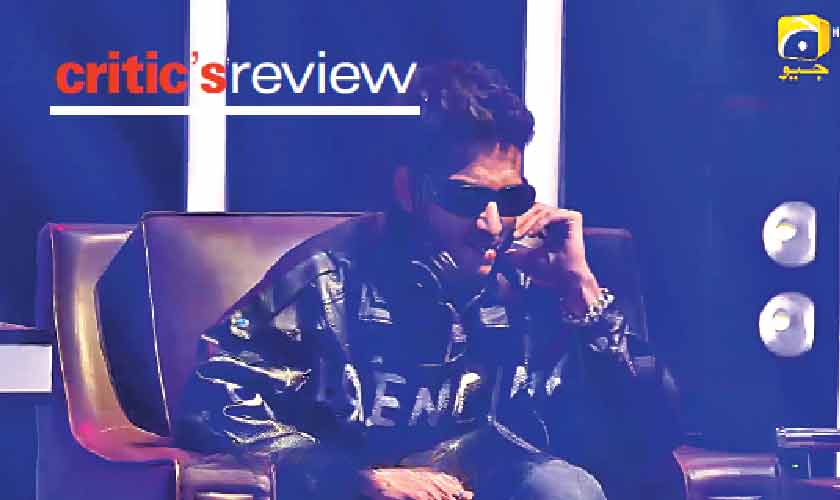
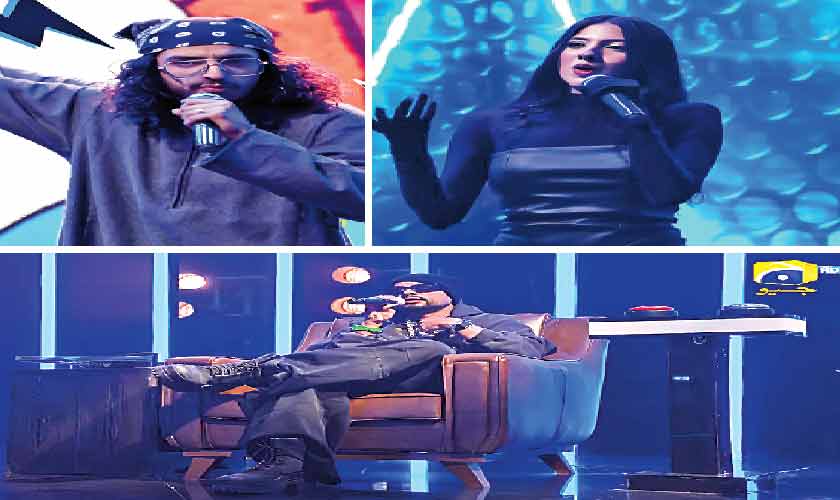
The opening episode introduced Rap Icon, produced by Pixel Entertainment and Red Shoes Productions in collaboration with Geo TV, with Talha Anjum, one of Pakistan’s biggest rap stars, and Bohemia, the Pakistani-American rapper and music producer whose influence extends well beyond Pakistan, serving as judges.
“Rap, in particular, has experienced extraordinary growth. Talha Anjum, Talhah Yunus, together known as Young Stunners, Faris Shafi, Rap Demon and JJ47 have fundamentally reshaped contemporary Pakistani music. According to Spotify, local hip-hop streaming has risen by 245 percent since 2022.”
The 12 contestants earned their places after outperforming thousands of hopefuls from across the country. SLA, Xug, Talon, Shishu Herry, King Hassan, Bad Boy, Sarmad Zeeshan, Fauji, Yung Shady, Romi, Double Bee and Ak Sky (the competition’s only female contestant), all made the final cut. The premiere devoted a fair amount of time to introducing the contestants before they began their respective performances.
One immediate standout was host Shehzehra. Rather than opting for a conventional entrance, she opened the programme with a rap performance of her own, confidently setting the tone for the series. It was an energetic introduction that instantly established her credibility within the format. More importantly, she avoided the forced exuberance that often plagues reality show hosts, bringing a natural ease that made her instantly likeable. It was an impressive start and raised expectations for what she might bring to future episodes. What an opening. Kendrick Lamar and Rihanna would certainly approve.
As the introductions unfolded, viewers got to know the people behind the stage names and what rap meant to each of them. While their backgrounds differed, many of the contestants shared a common belief that rap is a vehicle for self-expression and transformation.
SLA, whose real name is Syed Laiq Ahmed, came from Lahore and saw the genre as a way of expressing himself, while fellow Lahori Bad Boy, born Waqas, said putting difficult emotions into rap felt easier than speaking about them directly. Karachi’s Fauji, born Elisha Elore, described himself as representing “street culture”, while Romi who performs under his own name, wrote music drawn from his lived experiences. Xug, or Muhammad Hussain, also hailed from Lahore. For Shishu Herry, whose real name is Syed Haroon, rap represented hope. The Karachi-based artist had spent six years making music and believed that success could transform both his own life and that of his family. Fellow Karachi contestant Yung Shady, born Muhammad Asfandiyar, said he had started writing in primary school and had already gained experience recording in professional studio. Rawalpindi’s Talon, whose real name is Abdullah Ali, explained that after trying conventional jobs, he realised rap was both his passion and the career he wanted to pursue. Double Bee, or Bilal Bhatti from Jhelum, traced his love of performing back to school competitions. King Hassan, born Raja Hassan Khan and representing Muzaffarabad in Azad Jammu and Kashmir, saw rap as an art form built on self-expression. Ak Sky, whose real name is Ayesha Kanwal, said she hoped her presence on the show would challenge perceptions surrounding women rappers, describing Rap Icon as an opportunity to break preconceived notions. Meanwhile, Lahore’s Sarmad Zeeshan, who performs under his own name, said the positive response to music he released in 2022 had convinced him to pursue rap seriously.
Collectively, the contestants represented different cities, backgrounds and ambitions, yet many were united by the belief that rap offered a voice to those who might otherwise go unheard. Even so, the line-up raised an interesting question. With such a heavy concentration of contestants from Lahore and Karachi, I wondered whether enough effort had been made to uncover talent from smaller cities. Future episodes may well answer that concern.
With the introductions complete, the spotlight shifted to the judges, who received an equally enthusiastic welcome. Their pairing worked well. Talha Anjum represents the modern Urdu rap movement while Bohemia remains one of Punjabi rap’s defining figures. Together, they embody two influential strands of rap that span different generations.
“Where the hypocrites at?
What community feel they the only ones relevant?”
– ‘N95’ by Kendrick Lamar and Baby Keem
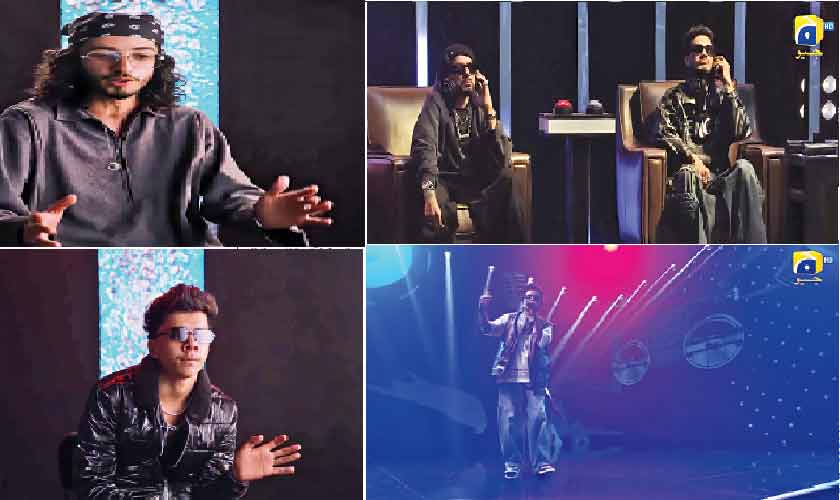
The competition follows a straightforward format. Each week features a challenge and an elimination, with the judges selecting the strongest performer to receive immunity. Bohemia and Talha Anjum have the final say over who stays and who is eliminated, although viewers can save one eliminated contestant through the PUBG Mobile app, one of the show’s sponsors. The catch is that this option can only be used once.
Fortunately for the contestants, the opening episode ended without an elimination, giving audiences time to get familiar with the participants before the competition begins properly. The performances themselves were understandably marked by nerves and excitement but largely justified the contestants’ inclusion in the competition.
Among the standouts, King Hassan delivered one of the evening’s strongest performances. Representing Kashmir before an audience in Karachi, he commanded the stage by mixing together social commentary, political observation, identity and subtle disses into a strong narrative. His references to tourism in Kashmir created vivid imagery that distinguished his storytelling and made his performance difficult to ignore.
Equally impressive was the role played by the judges. Rather than simply scoring performances, Bohemia and Talha Anjum offered feedback that felt more like mentorship than criticism, helping contestants refine both their artistry and their stage presence.
The episode’s biggest weakness was its pacing. Balancing introductions with performances inevitably slowed the momentum, making the premiere feel more like groundwork than genuine competition. Now that those formalities are out of the way, the series has the opportunity to find its rhythm.
As a fan of rap, I am looking forward to seeing how the competition develops in the weeks ahead.