Print Story
X




The PCB has announced a 22-man camp as preparations begin for a two-Test series against the Windies from July 25
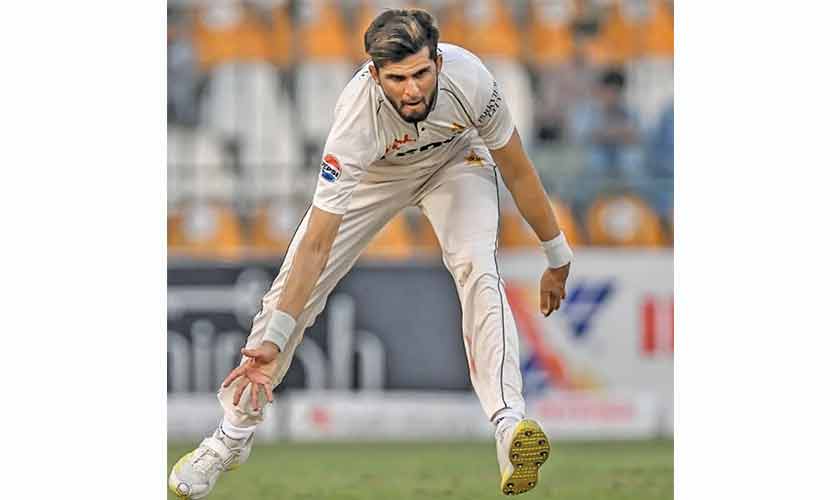
The Pakistan Cricket Board (PCB) has invited 49 players to training camps in Lahore ahead of the upcoming international schedule. Of these, 22 cricketers have been selected for a Test camp, while 27 players have been chosen for a separate white-ball camp that runs until September 18. With a preparatory camp for the West Indies tour expected to follow on July 15.
Notably, PCB’s think tank has decided not to include ODI captain Shaheen Shah Afridi in the Pakistan Test squad camp. However, his name remains on the list for the white-ball camp and he is expected to report for duty on June 15.
Shaheen, the 26-year-old left-arm fast bowler from Khyber Agency, made his Test debut against New Zealand at the Sheikh Zayed Cricket Stadium in Abu Dhabi in December 2017. Across 34 Tests, he has taken 126 wickets at an average of 28.13, conceding 3,545 runs in 1,114 overs.
One of the major concerns surrounding Shaheen Shah Afridi in recent years has been the noticeable decline in his bowling speed. Once regularly clocking between 140-145kph, the left- arm pacer has often struggled to exceed 132-135kph in recent outings.
Cricket analysts attribute the drop to a combination of factors, including a heavy workload across international cricket and franchise leagues, recurring knee injuries, and changes in his bowling action aimed at reducing physical strain. While Afridi continues to rely on swing, accuracy and experience to remain effective, the reduction in pace has diminished some of the threat that made him one of the world’s most feared fast bowlers.
His most recent Test appearance came in May 2026 against Bangladesh in Mirpur, where Pakistan suffered a crushing 2-0 defeat in the red-ball series. In that match, Pakistan lost by 104 runs in the first Test and were whitewashed on Bangladeshi soil for the first time in the red-ball format.
In Mirpur, Shaheen recorded figures of 3-113 in 31.1 overs in the first innings and 2-54 in 16 overs in the second. After the tour, his pace and workload came under scrutiny: despite often bowling above 140 kph for Lahore Qalandars, he struggled to consistently exceed that level and frequently operated around 134 kph during the Bangladesh series.
PCB officials have reportedly expressed serious concerns over Shaheen Shah Afridi’s limited involvement in four-day domestic cricket, a factor they believe has adversely affected his growth and effectiveness in the longer format of the game.
While Afridi remains one of Pakistan’s premier white-ball bowlers, selectors and team management perhaps feel that the lack of sustained exposure to first-class cricket has restricted his ability to develop the endurance, consistency and tactical discipline required for Test cricket.
Sources suggest that the PCB has reviewed his recent performances and concluded that regular participation in red-ball domestic competitions is essential for any player seeking a place in the national Test setup.
As a result, the left-arm pacer is reportedly unlikely to feature in future Test selection plans unless he demonstrates a stronger commitment to first-class cricket and proves his credentials in the domestic red-ball arena.
The statistics appear to support the PCB’s concerns. Since making his professional debut in 2018, Afridi has played only 43 first-class matches, a remarkably low number for a frontline fast bowler aspiring to succeed in Test cricket. In contrast, he has featured in around 260 Twenty20 matches during the same period, reflecting the growing appeal of franchise cricket and the substantial financial rewards available in the shortest format. The lucrative opportunities offered by domestic and international T20 leagues have encouraged many players to prioritise
white-ball cricket, often at the expense of their red-ball careers. While this approach has enhanced Afridi’s reputation as a sought-after T20 specialist, critics argue that the imbalance between his first-class and T20 commitments has contributed to concerns about his long-term suitability and effectiveness in the demanding environment of Test cricket.
Pakistan are currently on an international break of more than 50 days following their third consecutive ODI series victory over Australia, which they sealed with a four-wicket win in the final low-scoring ODI. The team will return for a two-match Test series against the West Indies in Trinidad and Tobago, scheduled from July 25-29 and August 2-6.
According to the details provided, the Test camp list includes: Aamir Jamal, Abdullah Fazal, Abrar Ahmed, Ali Usman, Amad Butt, Azan Awais, Babar Azam, Imam Ul Haq, Khurram Shahzad, Mohammad Abbas, Mohammad Ali, Mohammad Rizwan, Muhammad Awais Zafar, Muhammad Ghazi Ghori, Obaid Shah, Sajid Khan, Salman Ali Agha, Saqib Khan, Saud Shakeel, Shahnawaz Dahani, Shahzad Gul, and Shan Masood.
Meanwhile, PCB has also named the 27-member white-ball group for the separate camp ending September 18, in which Shaheen is included and expected to report on June 15.
Shaheen Shah Afridi made his Test debut against New Zealand in Abu Dhabi on December 3, 2018. The left-arm pacer endured a difficult start to his red-ball career, claiming three wickets while conceding 137 runs in the match.
Despite the modest beginning, Afridi soon established himself as one of Pakistan’s leading fast bowlers and became a regular member of the national side across all formats.
Since his debut, Afridi has featured in 34 Test matches, taking 126 wickets at an average of 28.13. While his performances in the longest format have produced several memorable spells, concerns have recently emerged regarding his consistency and development in Test cricket, particularly in comparison to his achievements in white-ball formats. Afridi’s record in limited-overs cricket has been considerably more impressive.
In One-Day Internationals, he has claimed 146 wickets in 77 matches at an average of 24.5, underlining his value as a strike bowler. The T20 format, however, has been his most successful arena.
Since 2018, he has played 103 T20 Internationals and taken 136 wickets at an outstanding average of 21.35, cementing his reputation as one of the world’s premier T20 fast bowlers. His extensive involvement in white-ball cricket, particularly T20 competitions around the globe, has contributed significantly to his success in the shorter formats while also fueling debate over its impact on his red-ball career.