Print Story
X




Lahore reveals another side of itself in the hours before the crowds arrive
| M |
orning in Lahore has a magic of its own. The City of Gardens offers early risers rare pockets of serenity and calm before the day gathers pace. It is also a breakfast paradise. From street vendors to high-end restaurants, taste is the one constant. Nowhere is it more abundant than in the city’s traditional breakfast spots.
As a breakfast person, I am always looking for new places to try. Lakshmi Chowk offers plenty of options and early one morning in April, I found myself there. The area was only just waking up. The silence was punctuated by the occasional rattle of a three-wheeler. The Orange Line train was yet to begin its run.
Even with so many halwa puri options around, I made my way to the famous Kashmiri Hareesa shop on Nisbet Road. The menu is simple, but the taste is extraordinary. I enjoyed a sumptuous serving of mutton hareesa with hot kulcha topped with sesame seeds. Nothing beats it.
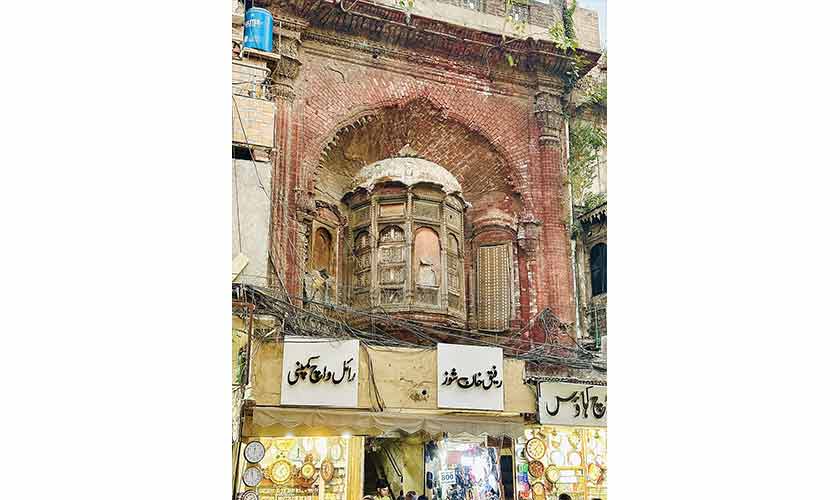
A short walk away lies Gowalmandi, the city’s first formally proclaimed Food Street, waiting to be rediscovered. The title has long since been forgotten. In 2000, the buildings had received fresh paint, the pavement new tiles and the shops new signboards. All that has largely faded. Although a handful of food outlets still attract visitors, much of what sets the pedestrian street apart is gone.
For me, Gowalmandi is a window to the past. Old buildings with traditional jharokas, niches and wooden balconies still line its streets. After breakfast, it is the perfect place for a stroll, letting the photographer in you linger over the architecture.
It is painful to see some of the buildings in a dilapidated state. One still cannot help but marvel at the skill of the artisans whose work continues to stand out amid today’s monotonous concrete facades. I enjoy spending time there in the morning, imagining a Lahore that once was and hoping that some part of it will endure.
Next, I made my way back to the Orange Line station for a ride to The Mall. I got off at the General Post Office station. The GPO and Anarkali stops are underground, resembling stations on the London Underground.
According to some accounts, there were once plans to build an entire subway in Lahore. As the train gradually descends and enters the tunnel beyond Lakshmi Chowk, the sound and light shift noticeably. Children riding the train are fascinated by the transition, often moving closer to the windows.
Emerging from the GPO station, I had two choices: heading north would take me towards some of Lahore’s best-known historic sites; heading south meant walking past buildings that showcase a blend of British colonial and Indo-Saracenic architecture. Constructed in the late 19th and early 20th Centuries, these buildings combine classical European design with Mughal and Islamic influences. Though many have been altered over time, they retain their distinctive character.
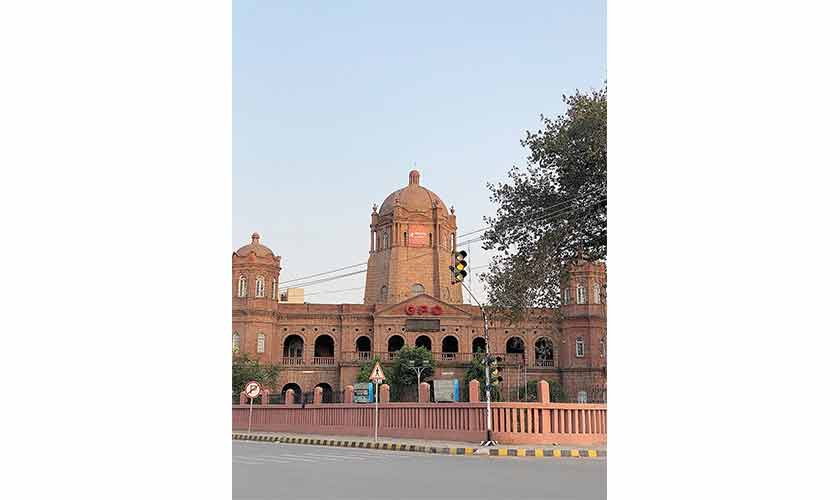
That morning, I chose to head north. The red-brick GPO building glowed in the early sunlight. Built by Sir Ganga Ram, this colonial-era landmark has been a hub of postal operations since 1887. The postal service has long passed its heyday. Like several other public institutions in Pakistan, it is struggling to survive.
People invoke Lahore Lahore ae when words fail them, when they cannot quite explain the glorious city that refuses to be anything other than itself.
I found myself thinking about the countless letters that must have passed through these halls; today, it is mostly bills and bank statements.
I wanted to visit Neela Gumbad, which is currently undergoing extensive renovation. Deliberately taking the longer route, I walked past the Pak Tea House.
The café was once closely associated with writers, poets and intellectuals. As writer Intezar Hussain observed: “No other literary institution in the country, including the Academy of Letters, has the same credibility as Pak Tea House.”
Faraz, Faiz, Manto, Ahmad Nadeem Qasmi and Amrita Pritam are mentioned among the regulars. The Tea House closed in 2000 because of dwindling patronage. It was reopened in 2013 by the Punjab government through the Walled City of Lahore Authority.

For a while, I stood in front of the building hidden behind scaffolding. The place was under renovation once again.
Will they ever succeed in bringing back the conversations?
The thought lingered as I stood beneath the shade of a giant tree opposite the building. Without quite realising when, I had slipped into a kind of pessimism.
A fruit seller’s call brought me back to the moment. A little further ahead, I came across a road closure sign blocking the way to Neela Gumbad.
The mausoleum, attributed to Sheikh Abdul Razzaq of Makkah, is distinguished by its blue-tiled dome. According to local tradition, he arrived in the region during the reign of Humayun in the mid-16th Century. Settling in Lahore, he became a disciple of Miran Muhammad Shah Mauj Darya Bukhari.
The monument became so well known that the neighbourhood eventually took its name. Before the current restoration project, however, it had become increasingly difficult to spot as commercial buildings crowded it on all sides.
The Walled City of Lahore Authority has begun work to restore the site and create a more pedestrian-friendly environment. For now, barriers and construction machinery dominate the scene, but the project promises to reveal the monument once again and restore some of its place in the urban landscape.
With the passage to Neela Gumbad blocked, I took a detour past the striking white building of King Edward Medical University. Founded in 1860, it is one of the oldest medical institutions in South Asia. Generous donations from Nawab Sir Sadiq Muhammad Khan Abbasi V, the ruler of Bahawalpur, played an important role in its survival and growth.
As an Old Ravian, I have always had a soft spot for the building. We would often pass by and see students in white overalls striding along the footpaths. Their cars bore stickers proclaiming: “Kings and Queens all at KE.” We were fascinated by the world of professional colleges. Standing there briefly, I smiled at how much of that fascination remains.
I soon found myself in Anarkali Bazaar, a place with a character all its own. The very name stirs the imagination. Named after a legendary court dancer, it remains one of Lahore’s most famous landmarks. For visitors interested in history and architecture, exploring the neighbourhood can take several days.
I walked towards the tomb of Qutb-ud-Din Aibak, the Turkic general who went on to establish an independent sultanate after the death of Muhammad Ghori in 1206, laying the foundations of what became the Delhi Sultanate. Four years later, while playing chaugan, an early form of polo, he fell from his horse in Lahore and died.
The mausoleum, painted in white and yellow, stands quietly amid a maze of shops and residential quarters. I paused beside the grave of a ruler remembered for his generosity and sense of justice. Around it, commerce carried on as usual. There were no cafés, museums or storytelling kiosks, only the everyday rhythms of a busy marketplace.
Anarkali was unusually quiet that morning. In that silence, it was easy to imagine another Lahore: the City of Gardens. A city also of tombs and Mughal monuments. When I finally looked at my watch, more than two hours had passed. For anyone with an interest in history, that is hardly surprising. Such walks almost always take longer than planned.
The Old Campus of Punjab University gleamed in the morning sun. Traffic was beginning to build although it was far thinner than it would be by midday.
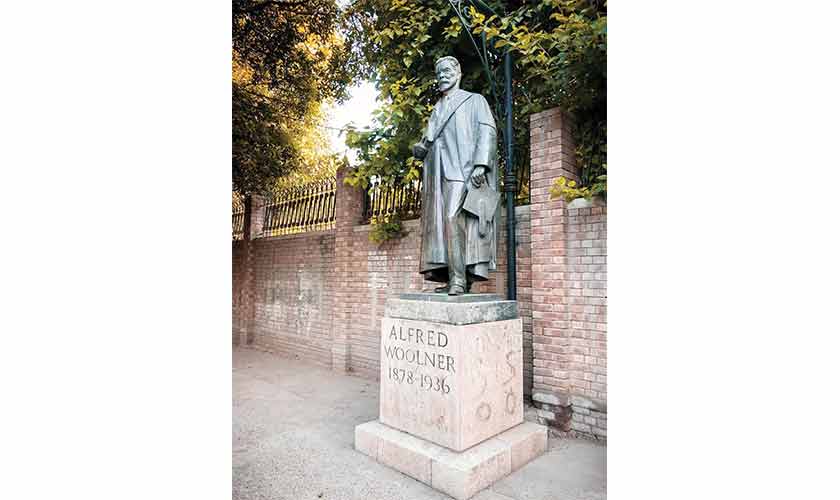
I stopped next to the statue of Dr Alfred Cooper Woolner (1878-1936), the Sanskrit scholar, linguist and vice-chancellor of Punjab University.
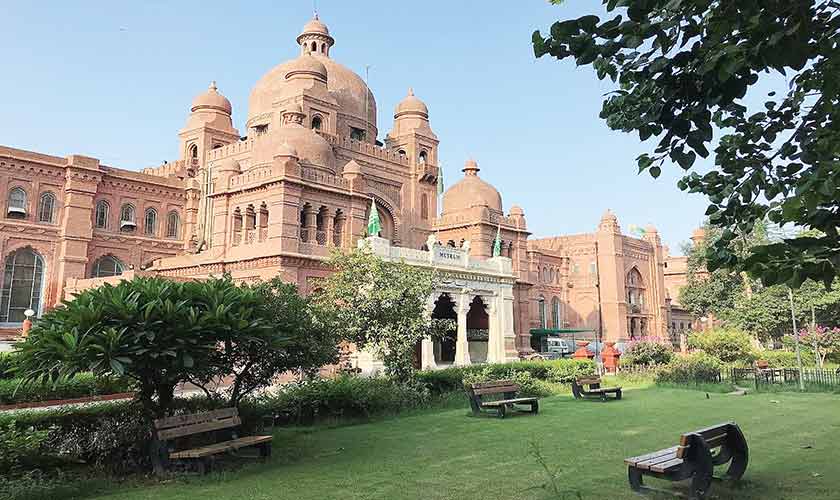
From there, I looked across at the imposing Lahore Museum, the largest museum in Pakistan. Within its walls are artefacts, paintings and stories spanning centuries. The main gate was still locked and there was no one around. Standing by the fence, I found myself wondering what the building might reveal if its walls could speak.
Pigeons clustered around the massive gun next to the museum. Known variously as the Zamzama Gun, Kim’s Gun and the Bhangianwali Toap, the 14.5ft bronze cannon was cast in 1757; served in the third Battle of Panipat and was later immortalised in Rudyard Kipling’s novel Kim. Today, it is treated as a historical artefact rather than an instrument of war.
From the museum, I walked towards the Wazir Khan Baradari. Wazir Khan was the local governor during the reign of Shah Jehan. Birds chirped in the large banyan trees lining the road. The street was empty. In the quiet, the birdsong felt like a reminder to keep moving.
The early hours of the day are made for walking. I could not resist turning towards the Old Anarkali Bazaar.
Congested, yet rich in character, this place is Lahore at its most intense. I was enjoying the atmosphere. The streets offer everything from traditional Lahori breakfasts to all kinds of traditional sweet treats: milk enriched with almonds, khoya and rabri; refreshing bowls of falooda, capable of cooling even the hottest summer day.
Tucked away in the area is Kuri da Maqbara (the Daughter’s Tomb), a monument known to relatively few visitors. It was commissioned in 1827 by General Jean-François Allard, the French officer who served in Napoleon’s army before joining Maharaja Ranjit Singh’s Khalsa army. The monument was built in memory of his eldest daughter, Marie Charlotte, who died in Lahore at a young age.
Peering through the grilled doorway, I found myself thinking about the Sikh era in Lahore and its lasting imprint on the city. Lahore is full of such hidden places. In recent years, some YouTube mavens have begun documenting them. Some of the work has been excellent.
By now, the heat was beginning to build. It was time to head home. I walked towards Anarkali station on the Orange Line, perhaps the most beautiful of the underground stations. Nearby stands an elegant historic building and a small public space where one can linger for a while.
I could have continued the walk but decided instead to make my way back.
During the journey home, a familiar saying stayed with me: Lahore Lahore ae. People invoke it when words fail them; when they cannot quite explain the glorious city that refuses to be anything other than itself.
I knew I would return. Perhaps early in the morning once again, to enjoy the three-hour window when the crowds are absent, the light is soft and history seems close by.
The writer is a professor at the National University of Sciences and Technology.