Print Story
X




The growing desire among young Pakistanis to leave the country is rooted in economic insecurity
| A |
narrative suggesting that the Pakistani youth are increasingly showing radical and violent tendencies is being pushed currently. Young people, including educated people, are often criticised for expressing their views in an extremist idiom. They are perceived as lacking respect for other opinions and asserting their own perspectives as absolute truth. Tolerance for contradiction appears weak. Youth leaders vocal on digital media face particularly strong criticism from various segments of society.
There is no denying that radicalisation is indeed a growing trend in Pakistan. Efforts at government level to curb extremist tendencies among the youth are quite visible, particularly at university campuses.
The radical trends are not limited to religious extremism alone. Political, regional and linguistic extremism are also increasing. Political polarisation in particular has become deeper and highly divisive.
The radicalisation so apparent among the youth is directly related to the weakening social contract between the state and its citizens. Many young people appear dissatisfied with the governance systems. They feel politically, socially, economically and legally marginalised. Trust in state institutions remains weak. A widening gap now exists between the youth and the state. It is largely rooted in the failure to ensure basic rights and access to opportunities.
Pakistan’s governance structure offers limited participation and representation to the youth. Economic instability and unemployment have intensified their frustrations. At the same time, violations of political and social rights and limited access to justice have further alienated them. Neither the state nor dominant political parties appear to have a coherent and long-term strategy for youth development that enjoys their trust.
The youth increasingly feels sidelined. Their concerns often go unheard. When they come up with alternative viewpoints or criticise the system, the policymakers often fail to engage them constructively.
Feelings of despair, uncertainty and insecurity about the future are becoming widespread among the youth. When their concerns are ignored and their protest suppressed, their resentment only increases. While government leaders often express concern about the youth, they rarely examine the political, social and economic reasons behind their agitation.
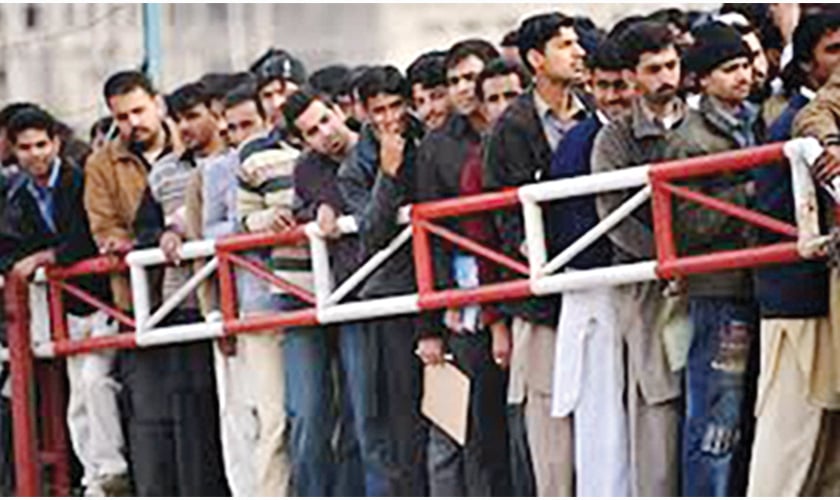
The growing desire among young Pakistanis to leave the country is also rooted in economic insecurity. Decent employment opportunities remain scarce. Government initiatives to deal with unemployment are often limited to short-term welfare schemes. Insufficient attention is paid to creating sustainable jobs through industrial growth, entrepreneurship and investment.
In their reactions to their circumstances, the youth can sometimes appear rigid and harsh. However, it is important to focus on the underlying causes of their anger and frustration. When there are no opportunities for progress, frustration inevitably sets in. Political and economic policies of the incumbent governments have created a strong sense of deprivation among the youth, who feel excluded from national priorities.
In political discourse, emotional slogans about youth empowerment are common. In practice, youth participation in development remains limited. The socio-economic indicators reflect gross inequalities in youth development. Gender disparity, too, weakens trust among women in state institutions. While most educated urban youth face these challenges, the situation is even more severe for young people in rural and small towns, where educational and employment opportunities are even fewer.
The youth increasingly feel sidelined. Their concerns often go unheard. When they come up with alternative viewpoints or criticise the system, policymakers frequently fail to engage them constructively.
The governance system does not make for meaningful youth participation in decision making. Youth development programmes at federal and provincial levels face serious questions regarding effectiveness. Real change in young people’s lives will not come through slogans or speeches, but through practical and sustained policy action.
Considering the challenges facing Pakistani youth have reached an extraordinary level, the state’s response must also be extraordinary. Currently a large share of public spending goes toward infrastructure development. Investment in human development remains limited. This reflects weak prioritisation of the youth development in state planning.
Until such time that the youth are provided politically, socially, economically, and legally enabling conditions, the credibility of the state among the younger generation will continue to decline. A class-based system divides the society into powerful and powerless strata.
When young people are denied basic rights and a dignified life, extremist elements are able to exploit their frustrations. Whenever the state leaves a vacuum, forces seeking to destabilise the society take advantage of it.
To reduce radicalisation, extremism and violent tendencies among its youth, Pakistan must reassess outdated and discriminatory policies. A system that fails to ensure fairness and opportunity cannot expect its young people to remain consistently moderate or patient.
It is unfair to dismiss the Pakistani youth as incompetent. The same people often demonstrate strong performances when given opportunities abroad. However, frequent and consistent criticism and discouragement deepens feelings of alienation and anger.
Educational and research institutions must study youth radicalisation carefully and identify its real drivers. Policymakers must then design inclusive and practical strategies to address these issues. While educating the youth to become responsible citizens is important, it is equally important for the state to uphold the fundamental rights guaranteed under Articles 8 to 28 of the constitution. Without this, the social contract between the state and citizens will continue to weaken.
The responsibility for extremism in the society cannot be placed solely on the youth. State institutions must engage in self-accountability and find out why so many young people feel disconnected and dissatisfied. The young people are perennially asking questions. If their concerns remain unanswered and their problems unresolved, extremist tendencies will continue to grow. The responsibility lies not only with the youth but equally with the state and the governments.
The writer is a political analyst and public policy advisor.[email protected]