Print Story
X




The public-sector universities are facing an unprecedented financial crisis
| A |
s government of Pakistan prepares to present the budget for fiscal year 2026-27, voices from academia, university managements and other stakeholders are calling for a substantial increase in funding for the higher education sector. The demand is not just about money; it is also about the future of millions of learners and the need to preserve the nation’s ability to innovate, conduct research and sustain its economy.
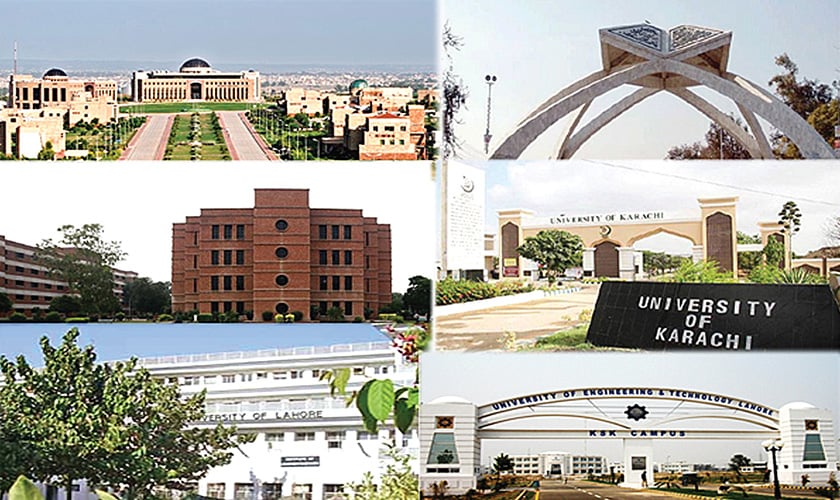
The public-sector universities are facing an unprecedented financial crisis. Over the last ten years, the higher education system has grown exponentially. According to the Higher Education Commission, there are 278 higher education institutions with 146 sub-campuses. Out of these, the HEC funds approximately 156 Universities and research centres. The number of students and faculty and the operating expenses have skyrocketed. Federal support for higher education has not kept pace.
Since 2017-18, the HEC’s budget has been fixed at Rs 65 billion. The number of students, however, has risen 1.4 million to almost 3 million; the faculty strength has risen to more than 65,000. The salary bill alone has risen by 170 percent. Meanwhile, students’ expectations of universities, too, have risen significantly in recent years.
The effects of runaway inflation and currency devaluation have worsened the crisis. Economists say the real value of the HEC’s recurring budget is almost half of what it was in 2017-18 – nearly Rs 32 billion in 2017 rupees. Public universities are thus being called upon to provide an increasing number of services for an increasing number of faculty and students, with less “real resources” available than eight years ago.
The price is beginning to show its face. Many public universities are struggling with pensions, salaries and utility bills. Some institutions have had to incur bank loans to pay salaries. There is a concern that such borrowing creates the habit of debt and allows universities to divert scarce resources to debt servicing rather than academic programmes, research and infrastructure.
The underdevelopment of national investment in higher education is even clearer when viewed in the context of the national economy. The share of HEC in Gross Domestic Product has declined from ~0.16 percent in 2016-17 to ~0.06 percent in 2025-26. This sharp decline is troubling in view of the reorientation of government priorities.
Apparently, education has been treated as a burden rather than a wise investment. The contemporary world recognises that universities are the greatest source of innovation, economic growth, technological development and social development. In the long run, investments in education produce skilled workers, scientific advances, entrepreneurship and competitiveness.
The total budget of Pakistan’s higher education system is less than that of a single institution like Harvard University, the Massachusetts Institute of Technology or Stanford University.
Against this grim backdrop, the HEC has formally requested an increase in the recurring budget from Rs 65 billion to Rs 100 billion for the financial year 2026-27. The commission has worked out the rationalised recurring requirement amounting to about Rs 138.7 billion. The rationale has been outlined in a letter written by the HEC executive director to the Ministry of Federal Education and Professional Training.
Many public universities are struggling with pensions, salaries and utility bills. Some institutions have had to incur bank loans to pay salaries.
The Federation of All Pakistan Universities Academic Staff Associations has repeatedly demanded that the government settle the financial and administrative issues facing the universities. The demands include increased school funding and the restoration of the tax exemption previously available to university teachers. Without adequate incentives in both monetary and career terms, the faculty associations argue, it will become ever harder to attract and retain top researchers.
The effects of chronic underinvestment extend far beyond the university campuses. Higher education in Pakistan is important for the improvement and development of the information technology sector, the health care system, engineering skills, scientific research and public administration. The institutions of higher learning are the cradle of innovation and a source of skilled human resources for national development. Erosion here adversely affects Pakistan’s competitiveness in the world’s knowledge-based economy.
Provincial governments have a big role to play, too. More than 80 percent of the universities have a provincial charter recognised by the HEC. Hence, the provincial governments are asked to significantly increase their funding for higher education in their budgets. Shared responsibility means the cost of sharing.
The nation’s policymakers should consider how to make universities financially sustainable. Legislative amendments could enable public universities to leverage their land and assets more actively to generate income through activities such as technology parks, research centers, innovation hubs and industry linkages. This will provide greater diversification of income sources and in the long term reduce the need for government funding.
The good news is that the HEC has taken the first step by creating task forces to promote research commercialisation, offices of research, innovation and commercialisation (ORICs), and business incubation centres. Such initiatives can help link academia to industry and enable entrepreneurship and technology development.
Pakistan can learn from Southeast Asian countries. South Korea, Singapore and Malaysia are examples of countries that have made great strides in boosting national economies through education, science, technology and research. They are aware that the quality and functioning of higher education institutions are linked to their success.
As a new fiscal year begins, policymakers in Pakistan can continue to view higher education as either an expense to be cut or a wise investment in the country’s future. We recommend increasing the HEC budget to at least Rs 100 billion. This amount will not solve all the problems that public universities are facing. Still, they will go a long way in securing the future of higher education and ultimately the future of Pakistan.
Muhammad Murtaza Noor is a senior analyst with more than 25 years of experience in the higher education and development sectors. He can be approached at [email protected].
Mazhar Abbas, author of The Aftermath of the Bangladesh Liberation War of 1971: Enduring Impact (Routledge, 2024) has a PhD in history from Shanghai University. He is a lecturer at GCU, Faisalabad, and a research fellow at PIDE, Islamabad. He can be contacted at [email protected].His X-handle is @MazharGondal87.