Print Story
X




Ali Akbar Natiq explores the depths of human longing through stories rooted in rural Punjab
| I |
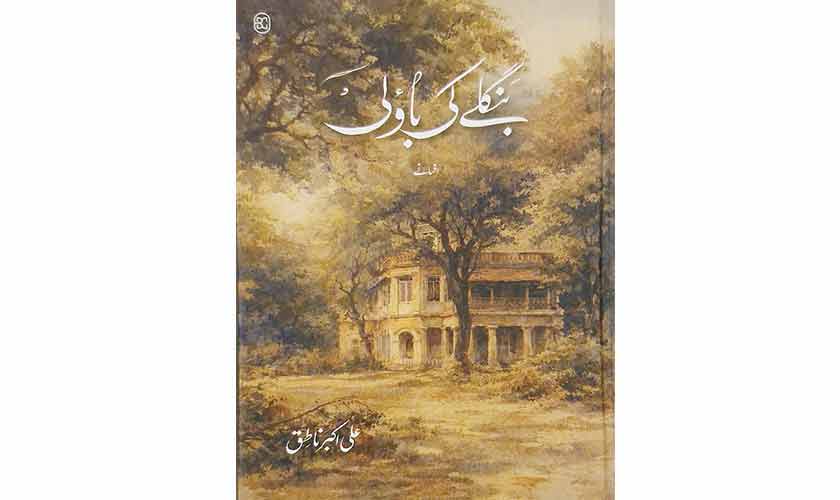
n one of the most arresting stories in Ali Akbar Natiq’s new collection, a man returns to his village after years, looking for a life that no longer exists. What he finds instead, and what it costs him, captures everything this collection reveals about the conflict and complexity of human behaviour. Across fifteen stories, Banglay Ki Baoli maps various colours of human desire - from love to betrayal; from courage to revenge; and from greed to nostalgia - with the eye of someone who has seen what we’re capable of when we want something badly enough.
Natiq is among the foremost writers in Urdu today. He is the author of more than fifteen books spanning fiction, poetry, biography and literary criticism. His work enjoys the rare distinction of being both critically acclaimed and bestselling. It has been translated into English, Hindi and German. Hailing from rural Okara, Natiq writes with undistorted directness, capturing raw emotion in language accessible to contemporary readers. His prose doesn’t ornament or philosophise; it observes with the clarity of someone who has lived among the people he writes about. The collection is dedicated to celebrated writer and translator Musharraf Ali Farooqi.
The collection’s strength lies in how it circles a single truth: push people to their limits and they reveal who they truly are. In Darvaish Ka Maqbra, a malang defends his shrine with such ferocity against land grabbers, sacrificing everything, that the site becomes genuinely sanctified through the blood he spills for it. The irony is devastating: here’s authenticity born from deception. What begins as a con artist’s hustle transforms into something resembling genuine faith, though the question of whether it’s the shrine or the malang that is transformed remains unanswered.
In the title story, Sherazi sahib’s revenge for an attack on his honour unfolds with chilling patience. He waits fifteen years, lets his enemy believe himself safe, then strikes. This is not hot-blooded vengeance but something cold and unsettling: revenge as a form of architecture, carefully designed and executed.
The range of human behaviour on display is remarkable. A poet’s desperate hunger for respect in Izzat Ka Sawal will feel uncomfortably familiar to anyone who has attended literary festivals and watched artists perform their work for an indifferent audience. Dhaan Ki Fasal aches with loss as nature surrenders to modernisation, not with dramatic protest but with the quiet resignation of the inevitable. Basti Dulraas captures the pain of a lifetime of love missed, akin to Munir Niazi’s “Hamesha dair kar deta hun.”
Perhaps the most chilling story, Maulvi Kay Parinday, is about a man consumed by a vendetta against a deceased leader - a madness so complete that his obsession becomes indistinguishable from revenge. Natiq shows us that two people who trust each other with their lives can later betray each other and become sworn enemies. The emotions are universal; what changes is the direction they take and what one is willing to destroy to satisfy them.
Natiq’s language is deceptively simple. He writes in the cadence of rural Punjab. A pause can mean more than a paragraph and restraint is a form of power. This is Urdu stripped of its ornamental tendencies, muscular and direct, letting the stories carry their own weight. Within this economy of language, he paints remarkably vivid scenes, whether describing a sunset or the floor tile pattern in the bungalow; each detail arrives with precision, creating clear images that linger long after you’ve turned the page.
What lingers after each story is a peculiar satisfaction of knowing exactly when to stop, the narrative equivalent of a perfect last bite. Natiq understands the power of restraint. His endings arrive with precision, leaving you overwhelmed, amused, shocked or quietly devastated, but never cheated. On several occasions, I reached the final line thinking: I did not see that coming.
For those seeking an entry point into contemporary Urdu literature, Natiq offers a compelling answer. His voice is strong and engaging, his style direct, his narratives bold. I used to suggest that beginning readers might start with the likes of Shafiq-ur Rehman’s Hamaaqtain or Patras Bokhari’s. Today, such readers can discover writers like Hassan Miraj and Ali Akbar Natiq, who combine proficient storytelling with clarity and punch.
If you want to experience the full spectrum of human emotion, journey through memory’s contested territory and witness excellent storytelling at work, Banglay Ki Baoli delivers.
Banglay Ki Baoli
Author: Ali Akbar Natiq
Publisher: Book Corner
Pages: 224
Price: Rs 1,200
The reviewer is a digital communication expert. He is the mastermind behind digital platforms Sukhan, Mani’s Cricket Myths and Over The Line.