Print Story
X




Failing public services have spawned a parallel economy forcing people to pay for electricity, gas and water twice. The second bill is crushing them
| Z |
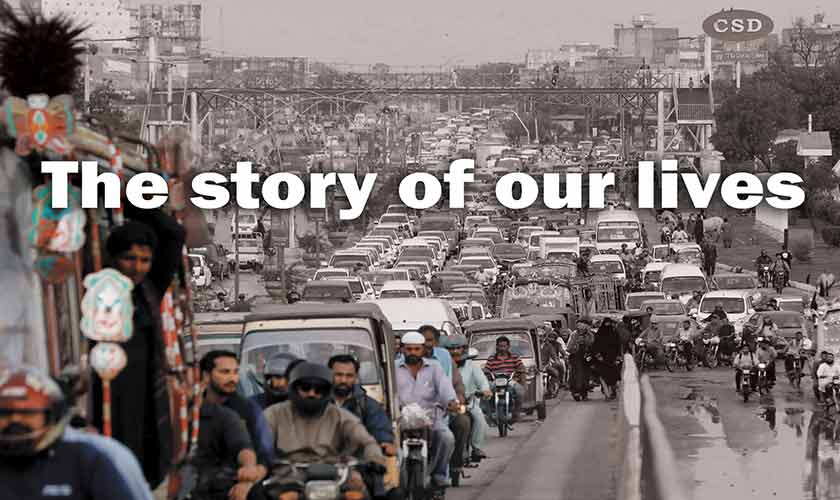
ainab has not ironed her husband’s clothes in four days. The UPS battery ran out on Monday. The grid lacks power 14 hours a day. The washing machine sits idle, so does the refrigerator. She cooks when there’s gas in the stove, which is not often; when there isn’t, she sends her eldest child to buy food from a dhaaba down the street. The child comes back with a Rs 200 meal. This they do twice, sometimes thrice, a day.
“Men want food, washed and ironed clothes; they want these on time. The unavailability of water, gas and power makes it very difficult.” Her voice carries no particular anger. This is simply the texture of her days.
Zainab is not poor by Pakistani standards. She is one of the millions caught between a state that collects tariffs and a market that actually delivers.
She pays both. Many, if not most, do.
Pakistan has built, largely by accident, a shadow utility system. Once the grid fails, generators and UPS units take over. Where gas lines are empty, LPG cylinders fill the gap. Where municipal taps run dry, water tankers arrive—at a price.
The market alternative costs more than the public service it replaces. It is purchased on top of whatever official tariff the household already pays.
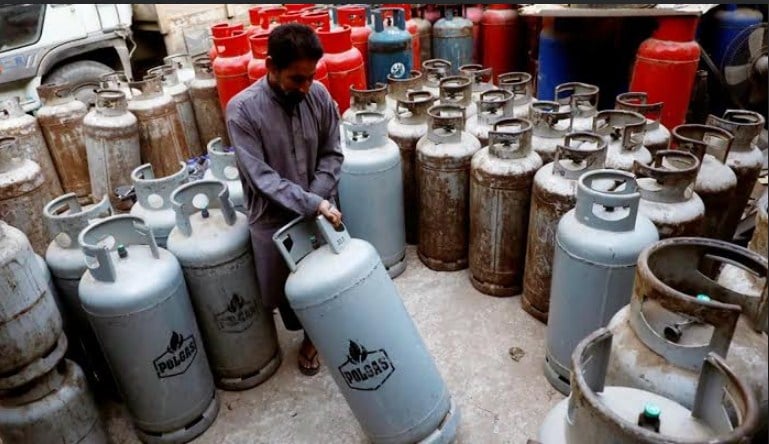
No government agency formally tracks the size of this parallel economy. The numbers are striking. LPG, the cylinder gas that millions now depend on, costs nearly double the price of regasified liquefied natural gas—three times the average system gas price and almost eight times what a residential consumer connected to the gas network pays per unit, according to Muhammad Awais Ashraf, director research at AKD Securities.
“Delays in rationalising energy tariffs have created significant inefficiencies,” Ashraf says. “Abrupt upward adjustments after delays of four to five years, coupled with inefficient supply due to underinvestment, have pushed consumers toward alternative energy sources.”
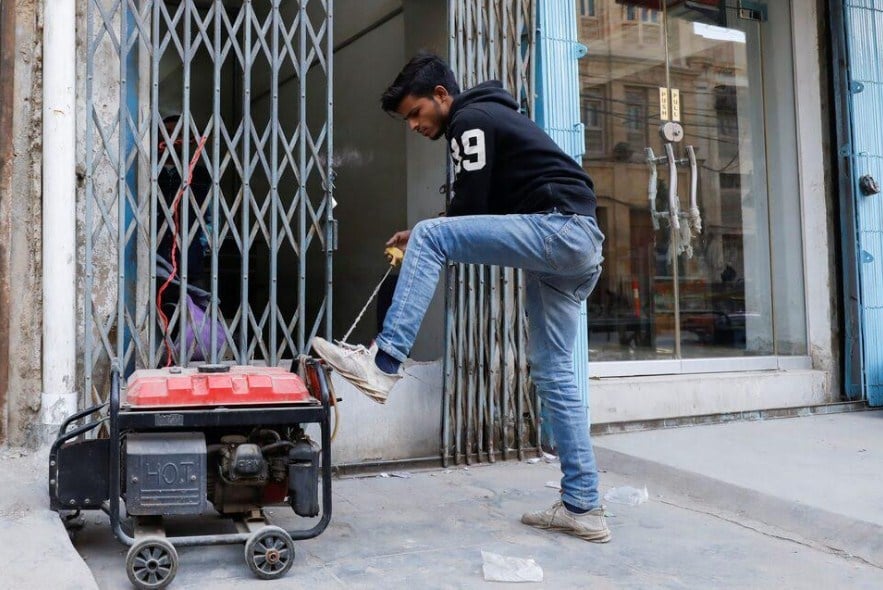
That shift carries a hard economic logic: when the official system becomes unreliable, consumers substitute. But substitution comes at a price. Ashraf estimates that imported solar capacity currently in use has added roughly Rs 7 per kilowatt-hour to electricity tariffs for those who remain on the grid, because the consumer base is not growing fast enough to spread fixed capacity payments across more users.
Once the grid shrinks, it gets more expensive. More people then leave the grid.
The cycle tightens.
Drive south from Karachi along the coast, past Gizri, Sheri Jinnah Colony, Mubarak Village, Karachi’s coastal belt runs approximately 90 kilometres—from Mubarak Village to Lath Basti. Millions of fishing families live along this stretch. They supply much of Pakistan’s seafood export base.
They have no reliable electricity; no gas network; and no consistent water supply. They have had neither for decades.
Kamal Shah, an activist from Ibrahim Hyderi, one of the largest fishing settlements on the coast, has watched the problems compound year after year.
“The people living in these coastal areas face severe gas load shedding, unannounced electricity outages, water shortages, inadequate healthcare and poor educational opportunities,” Shah says. “Due to prolonged power outages, poor fishermen cannot afford solar systems. The lack of gas forces many families to buy expensive cylinders that are beyond their financial capacity. Many households are compelled to cook using firewood.”
When water supply is suspended for days, Shah says, poor fishing families simply cannot afford water tankers. They drink what they can find.
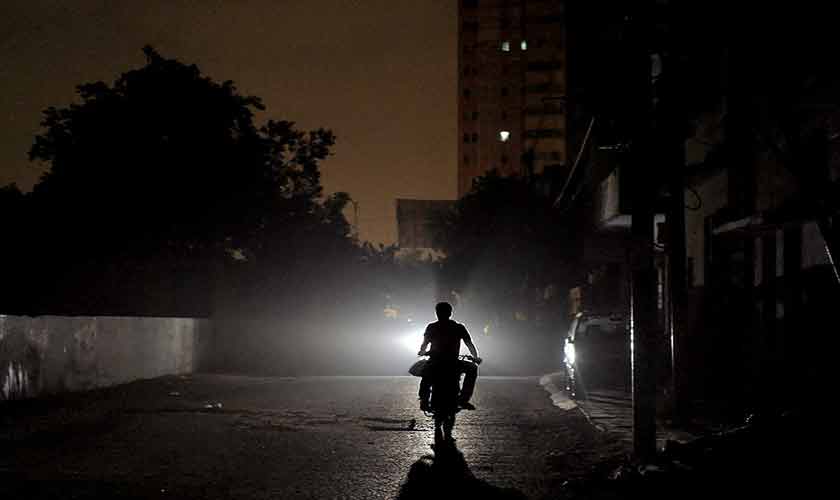
Localities including Mubarak Village, Shams Pir, Abdul Rehman Goth, Sango Goth, Deh Allah Dino Goth, Younisabad, Qabil Shams Pir and dozens of smaller settlements along the belt remain in the same condition.
Names change; the problem does not.
A family in a mid-tier Karachi neighbourhood that loses reliable grid power runs the numbers quickly. A UPS system with adequate battery backup costs between Rs 60,000 and Rs 80,000 for installation. Monthly charging and maintenance come to Rs 2,000 to Rs 3,000. Generator fuel—for households that go that route—adds further more.
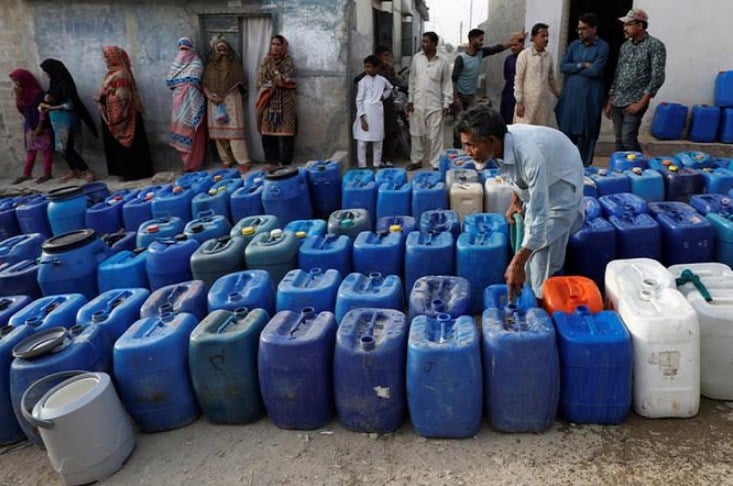
A single water tanker costs Rs 5,000 to Rs 6,000. Families that need two or three a month pay Rs 12,000 to Rs 18,000 for water alone. An LPG cylinder has crossed Rs 10,000 in many parts of Karachi.
Add these for a household that has lost all three utilities: water, gas, electricity. The informal monthly utility bill can easily exceed Rs 20,000. For a family earning Rs 50,000 a month, that is 40 percent of income spent on services that a functioning state provides free at the margin once the tariff is paid.
A viral Urdu post Saans leti laashein (breathing corpses) circulated widely this week across social media platforms in the country. So when petrol touches Rs 415 a litre and the gas cylinder, the water tanker and the UPS battery are all billed together, life simply does not stop—it empties out.
This is not a crisis without beneficiaries.
The water tanker network in Karachi is a documented industry, long studied, never adequately regulated. It takes much of its water from sources that are either illegal or environmentally harmful, and sells it at prices calibrated to what a desperate household will pay. The LPG distribution chain adds margin at every stage. The generator fuel market follows diesel prices set by global shocks and local levies.
Ashraf, however, notes a partial exception.
Solar installations in the agriculture sector have been genuinely productive. They replace expensive diesel consumption; improve farmer competitiveness; and reduce pressure on foreign exchange reserves. That is a parallel economy that is doing good. The household UPS placed in Zainab’s sitting room is not the same. It is compensation for failure.
“This shift to alternative sources has not only increased pressure on foreign exchange reserves. It has also proven more expensive in many cases,” says Ashraf.
A viral post frames this as a geopolitical injury: Iran and the United States in confrontation; the Strait of Hormuz under pressure; global energy markets tightening; and the bill landing in a Karachi alley where a rickshaw driver has not started his engine in three days because petrol at Rs 415 a litre makes every fare a loss.
The external pressure is real.
Pakistan imports LNG. Pakistan imports petroleum. When those markets move, Pakistan moves with them. It moves faster than most because its buffers are thin and public finances stretched.
But the structural condition that makes external shocks so devastating is domestic. Years of deferred tariff adjustments. Decades of underinvestment in distribution networks. A water governance system in Karachi that has never been reformed. A gas network that has not expanded to coastal communities that have waited a generation.
The question then is: when a citizen has no electricity, no gas and no water, what is their life?
For Kamal Shah, abstract postulations are of no interest. He wants uninterrupted gas supply; water that arrives without a tanker; and for his neighbours to be able to have and afford electricity.
For now, a majority cooks food on firewood and waits.
The writer is a senior financial correspondent at The News. He holds Alfred Friendly, Daniel Pearl and Geo Journalism fellowships. He can be reached at [email protected].